Is globalization on irreversible retreat?
 |
|
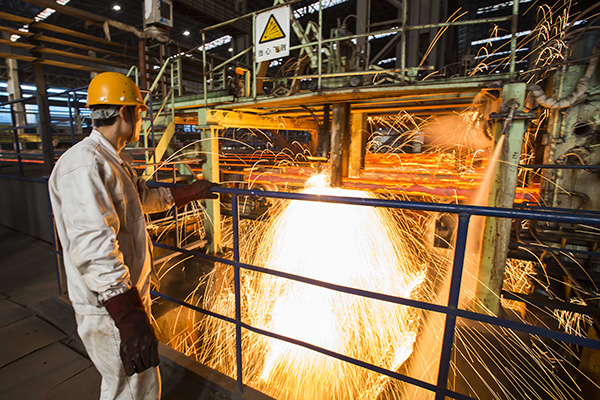
A worker at a steel company in Lianyungang, Jiangsu province, in January 2015.[Photo/China Daily] |

Editor's Note: This week we are presenting a year-end review of the global economy, China's economy, society and diplomacy, and the international situation. Today, four researchers review the international situation and give their predictions for next year.
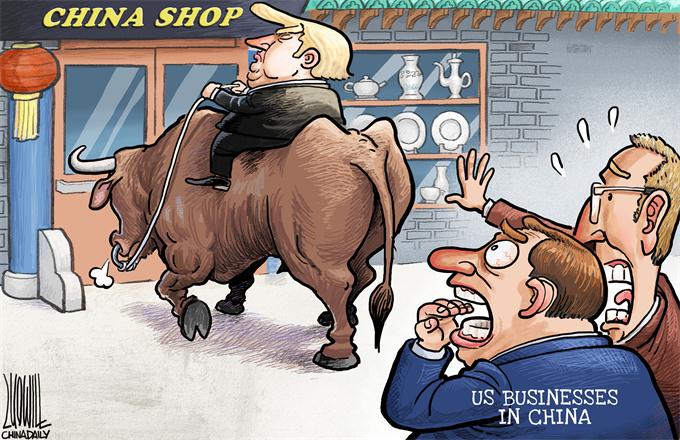
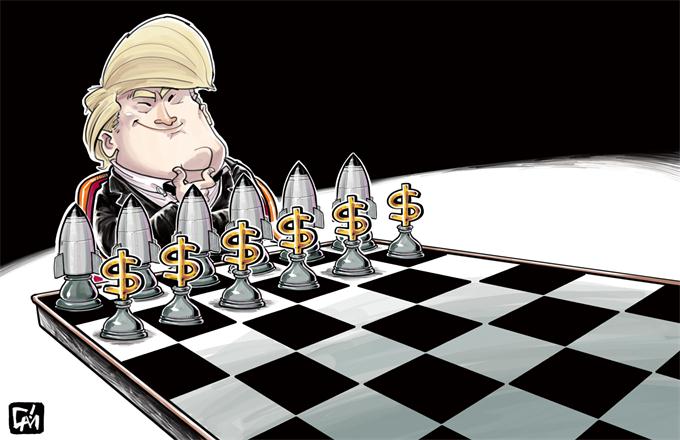
Shock waves generated by "black swan" events have been and are still being felt by the world. Targeted against the West-led globalization, they started with the United Kingdom voting to break away from the European Union, and helped Donald Trump to win the United States presidential election in November. Recently, the Republic of Korea parliament voted to impeach President Park Geun-hye, marking a turning point in the country's politics and fueling concerns that the "only certainties are uncertainties" in today's world.
The world is in consistent transition, a process that may continue into the 2030s, even the 2040s, according to the 2010 Global Strategic Trends issued by the Development, Concepts and Doctrine Center of the UK.
The major challenges facing the economies across the world include climate change, increasing population, resource shortage, and the shifting of power from the West to the East. More important, the West-led globalization seems to be going downhill. Western powers like the US and the UK are no longer able to provide enough public goods to the international community, nor can the emerging economies immediately fill the void.
That, to some extent, has caused turbulence across economies. The extensive use of mass media, too, has dealt a blow to the authority of governments and mainstream elite values.
From a middle-term perspective, the dominance of neo-liberalism in the post-Cold War era is responsible for many of today's problems. It has not just widened the income gap in a number of economies but also led to high unemployment in the manufacturing sector of Western countries because of excessive outsourcing. As such, Brexit, bitter and counterproductive as it might be, represents the will of many anti-elite voters who are worried about more than just the refugee crisis in Europe.
Even after eight years, the world has not overcome the impact of the global financial crisis. And that has contributed to people's resentment against globalization. The rise of populism in some advanced economies and opposition to globalization have a lot to do with the shrinking middle class and rising unemployment among youths.
Despite the global financial crisis, many governments refused to accept the disconnect between international economic and political situations and thus didn't even try to reform their institutions to meet the challenges of economic globalization.
The West's arduous efforts to promote "universal values" and Western democracy have, in fact, backfired. The privileged few in the US have managed to tighten their grip on the country's wealth and power, misleading the underdogs to oppose globalization and wrongly make China the scapegoat for the US' economic woes.
The EU has been struggling to tide over the financial and sovereignty debt crises, and to solve the political and social problems created by the influx of refugees from the Middle East. And the fact that the EU has been hit hard by terrorism in the past few years has cast a shadow over the fate of globalization. It is thus clear that in these trying circumstances, the world needs a more inclusive, balanced and open economic globalization, as proposed by China and other emerging economies.
The author is a professor of international relations at Renmin University of China.