Urbanization requires market-based planning
 |
|
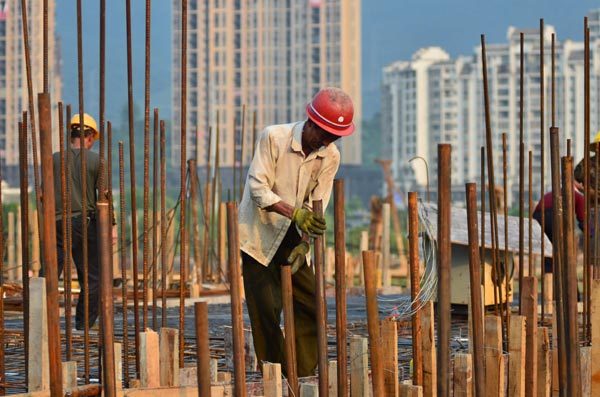
Workers at a property project in Chenzhou, Hunan province. Property developers are facing the pressure of a decline in net profits in the first half of 2014. [Photo/China Daily] |
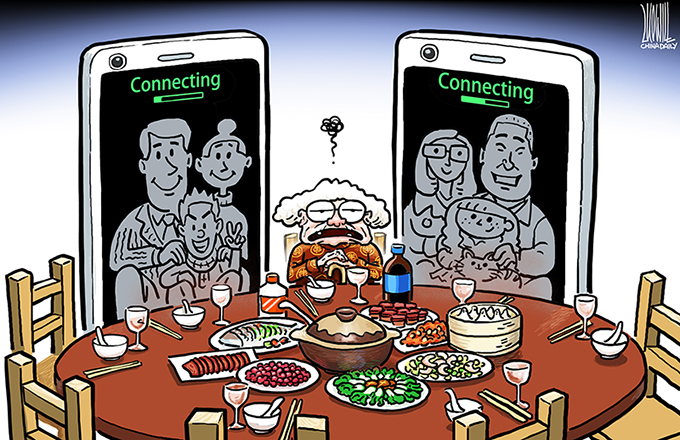
With many rural migrants in cities going back to their home villages for Spring Festival, the holiday is an opportunity for many empty-nested villages to come alive again.
Admittedly rural residents should be welcomed to work and eventually resettle in cities. But if not handled properly, it could backfire and hurt both the countryside and small cities aspiring to grow. Successful urbanization lies not just in rural residents buying homes in the cities and settling in them, but also in market-based planning.
Many third- and fourth-tier cities in central and western China have to offer preferential property purchasing policies to attract potential rural homebuyers. Some of these smaller cities have even incorporated schools in their residential developments as a means of tempting parents in rural areas to purchase urban properties for "educational purposes".
China's efforts to clear the housing glut especially in remote, small cities are praiseworthy, but simply enticing villagers to buy an apartment or two in cities and live there, has in some cases put a burden on urban management.
Ideally, cities where resources and capital gather on the basis of market-oriented demand should become the destinations for the majority of rural residents. The shrinking rural population, to some extent, points to the fact that most of the farm work no longer requires many farmers these days and people have to leave hometowns to find work. And the flip side of this is rural areas do not need a large number of farmers to prosper. Instead they should be transformed into large swathes of mechanized farmland.
Therefore, the trend of urbanization is inevitable.
However, to facilitate it, more sustainable investments are called for to maintain the production efficiency and the value of farmland. There is a long way to go to modernize rural China as a number of Chinese villages still lack functioning roads, let alone expressways.
Another side-effect of blindly luring rural homebuyers is the farm-like, overburdened cities. Believing that owning an urban property will automatically grant them the privileges of living in cities, some newcomers have found it difficult to afford or become accustomed to their new urban lifestyle. In some cases ducks are kept in the public swimming pools and vegetables planted on green belt land.
That, in fact, is a result of a disregard of market rules. For rural residents, living in cities will cost more than in the countryside; hence they have to earn more to afford it. Better pay basically hinges on improved skills and more value-added jobs. Neither option is easy. The former requires professional training which can take long, while the latter depends more on a city's economic well-being.
It will take time and suitable urban planning for a small city to grow into a major one. Attracting non-local rural laborers to live in and help build the cities is necessary. However, some local governments especially those in the third- and fourth-tier cities tend to put GDP growth and real estate prosperity before everything, which eventually comes at the cost of urban governance and newcomers' well-being. Inviting rural residents to relocate to the cities without offering them needed training, public services, and quality urban resources is not the right direction for moving forward.
The author is a researcher at Shanghai Institute of Finance and Laws.
- People-oriented urbanization
- Successful urbanization not just homebuying
- Urbanization to unleash China's growth potential
- Strategic Partnership Agreement on National Sustainable Urbanization Big Database signed at Tsinghua University
- Equitable access key to healthy urbanization
- China Sustainable Urbanization Forum and TUCSU conference held in Beijing
- Urbanization of rural area benefits millions ofrural residents