GDP growth is vital for China, so is better welfare for people
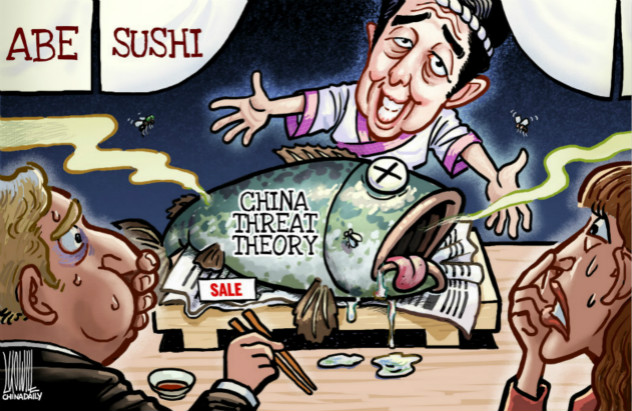
The Chinese economy could be the world's most perplexing phenomenon. Although a number of experts and columnists have repeatedly forecast that China's economy would collapse, it has grown steadily to become the second largest in the world in terms of GDP and is set to overtake the United States' economy to become the largest.
Chinese people have now become familiar with the China-collapse rhetoric, from the collapse of the Chinese society as a whole two decades ago to the more recent forecast of a financial and economic crisis triggered by its high debt levels and the bursting of real estate price bubbles. Contrary to such projections, the country's economy has been resilient since the reform and opening-up were launched over 35 years ago.
During the past more than three decades, China has indeed encountered some setbacks. But thanks to its resilience, it has overcome many a hurdle. Reflecting that resilience, a number of international agencies have raised their forecast for China's near-term growth. The International Monetary Fund, for example, has raised its forecast for this year from 6.2 percent to 6.5 percent.
The adjustment came amid clearer signs of the Chinese economy stabilizing after January indicators, such as the Purchasing Managers Index and the Producer Price Index, beat market expectations to point to improving fundamentals.
In a long-term forecast, the latest report of accountancy firm PricewaterhouseCoopers, released on Feb 8, says the emerging economies will dominate the world's economic landscape in the 21st century. By 2030, the report says, China will become the world's largest economy in terms of market exchange rates. By 2050, the rankings will further tilt toward the emerging market and developing countries, with China consolidating its leading place and India edging past the US into the second place.
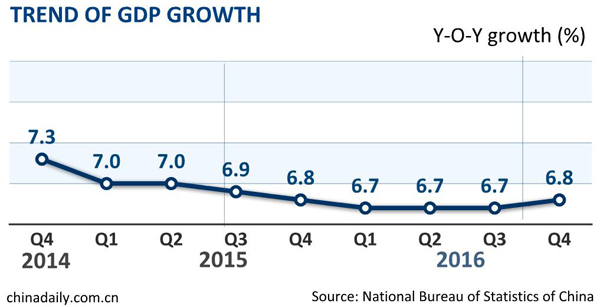
The PwC forecast is a due recognition of China's effective macroeconomic management in recent years amid the global economic and financial turbulences. True, the Chinese economy's growth has slowed down, but it has managed to fluctuate between 6.5 percent and 7 percent, which is impressive amid the global uncertainties.
Given the much faster annual GDP growth, it should not be surprising to see China overate the US to become the world's largest economy by 2030. In fact, in terms of purchasing power parity, China is already the world's leading economy, according to several international institutions.
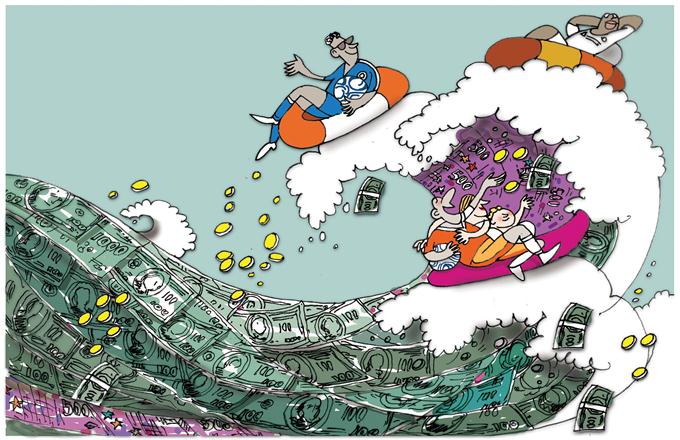
While it deserves praise for its economic achievements, China should now pay greater attention to making its economy more resilient and competitive. Which means it should not only focus on the size of its economy, but also expedite its economic restructuring and balanced wealth distribution, in order to ensure the economy and the people both become more capable of sustaining future contingencies. In particular, China needs to accelerate its wealth distribution reform to allow ordinary people to share more fruits of economic development.
In recent years, an increasing number of big Chinese companies, mostly State-owned enterprises, have entered the list of the world's top-500 biggest enterprises, but the proportion of profits those enterprises share with the public remains very low. The ratio should be gradually raised so that more profits can be transferred to the national exchequer to provide better services for the people.
Official statistics show that China's Gini coefficient, a measure of wealth equality, fell for seven consecutive years to 0.462 in 2015, but the figure is still higher than the internationally accepted warning line of 0.4. While it is set to become the world's largest economy-whether by 2030 or later, China needs to make its income distribution more balanced and equitable to allow its people to benefit more from its long-term stable growth.
The author is a senior writer with China Daily.
xinzhiming@chinadaily.com.cn