It's official - money can't buy happiness
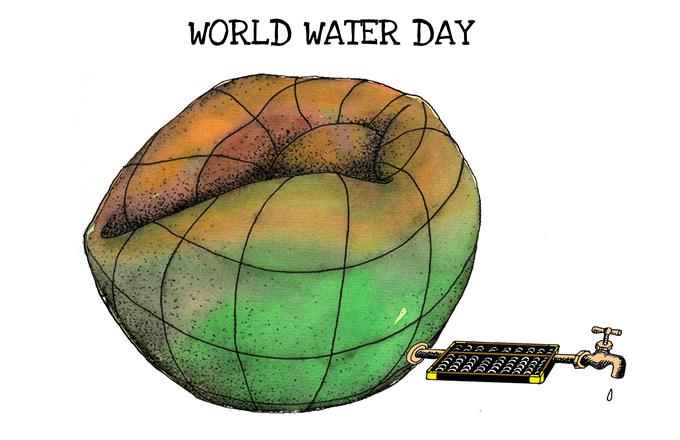
Every day seems to be international day of something or the other. March 20, for example, was the fifth United Nations International Day of Happiness. The next day was UN World Poetry Day, but that's another story.
Few of us would argue against the importance of happiness, or indeed poetry. The challenge comes in trying to quantify such intangibles, particularly on a global scale. It was the tiny Asian state of Bhutan that introduced an index of Gross National Happiness to supplement Gross National Product, on the logic that a country should be judged on the well-being of its citizens and not just its economic output.
The idea caught on and in 2012 independent experts at the Sustainable Development Solutions Network produced the first World Happiness Report under UN auspices. The latest edition was published this week to coincide with the International Day of Happiness.
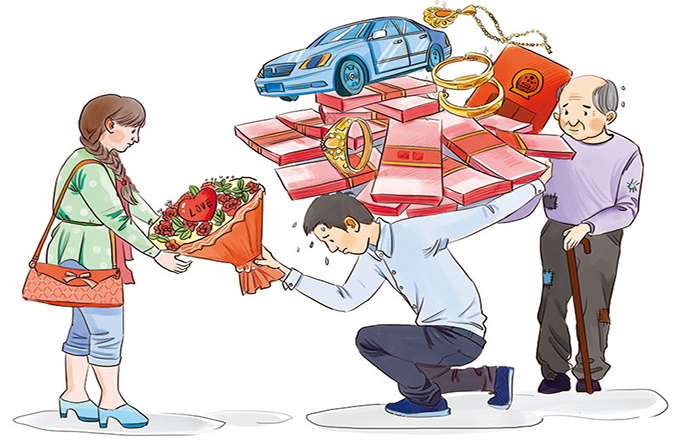
We all know money can't buy us happiness. But, as the latest survey of 155 countries shows, it helps. As in previous years, the top-10 states on the Subjective Well-Being index were the prosperous Scandinavian countries, with Norway topping the rankings this time. It will also come as no surprise that states caught in the web of poverty or war, such as Syria, Burundi and the Central African Republic, figured at the bottom of the happiness scale.
But proof that national wealth does not guarantee national happiness is shown in the survey's figures from the United States. Although the per capita income in the US has risen threefold since 1960, the measure of happiness has not. In recent years, though the US economy has grown, happiness is now actually falling, putting the country in the 14th place on the international scale.
"The predominant political discourse in the US is aimed at raising economic growth, with the goal of restoring the American Dream and the happiness that is supposed to accompany it," the report said. "But the data show conclusively that this is the wrong approach."
The report bases its global findings on interviews with thousands of people in each country surveyed. Income is only one measure of well-being, the others being healthy life expectancy, access to social support, the freedom to make life choices, generosity, and levels of government and business corruption.
The situation in China, almost exactly halfway on the index in 79th place, is unique enough to merit a separate section in this year's findings. The good news is that a sense of well-being among Chinese is on the rise after a rapid fall in the decade and a half to 2005. The report noted that, while GDP in China has increased more than five-fold over a quarter of a century, subjective well-being over the same period fell for 15 years before starting to recover.
"Current levels are still, on average, less than a quarter of a century ago," the report said. Describing China's unprecedented economic advance, the report noted that by 2012 virtually every urban household had a color TV, air conditioner, washing machine and refrigerator. And almost nine in 10 Chinese had a personal computer and one in five a car.
However, rapid change brought not just prosperity but also anxiety about such issues as access to jobs. That explained the marked decline in China's subjective well-being score from 1990 to about 2005, the report said. On a positive note, though, job prospects and social safety nets played key roles not only in explaining the post-1990 happiness deficit but also the subsequent recovery.
The data found that government action to curb unemployment and restore the safety net, the two pre-eminent measures of Chinese people's sense of well-being, had prompted a turnaround in the happiness index.
The report said there could hardly be a better example than China for showing the futility of comparing well-being with GDP. "If the objective of policy is to improve people's well-being, then SWB is a more meaningful measure than GDP, as China's experience attests," it concluded.
The author is a senior media consultant for China Daily.
(China Daily 03/25/2017 page5)