Mutual benefits important to Sino-US ties
 |
| SHI YU/CHINA DAILY |
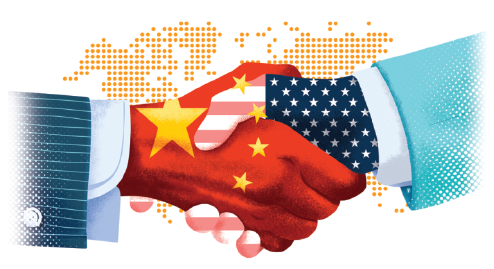
The first set of meetings between Chinese President Xi Jinping and US President Donald Trump looks likely to prove a great disappointment to the crisis mongers in the media, since both leaders recognize the value of economic cooperation over rivalry, the importance of a balanced and thriving global trade system and the mutual interdependence and shared interests of their nations.
The first face-to-face meeting between the heads of the world's two most powerful nations will be of great significance for the healthy and stable development of ties as well as the peace, stability and prosperity of the Asia-Pacific region and the world. Xi and Trump both know this. They have more in common that meets the eye.
Trump wants to emulate Xi's success in spreading economic growth, opportunity and prosperity throughout the country, not just the eastern coastal areas. The revival of US industry in its heartland is the emphasized priority of Trump and his strategists as well.
Careful listeners to Trump's speeches through the long 2016 US presidential campaign will have heard him repeatedly express his sincere admiration for the achievements of China's leaders in the modern era and recognize the success of their economic and social policies. Trump's argument throughout his campaign was that US economic policy could learn from China.
Trump's own professional background is crucial to understand this shrewd pragmatist. Trump defines himself above all as a hard negotiator and dealmaker. He understands the necessity of compromise. His aim as a businessman has always been to achieve the goals he has set for his companies and improve their prospects. That is now the aim for the trade and security goals of the United States.
The 45th US president does not see international relations as a Darwinian struggle to survive where one nation can only prosper and gain at another's expense. His approach is to offer concessions to negotiating partners as the understandable price in order to get the key concessions he seeks for his own country. This conception of international pragmatism, if maintained, will be a welcome relief from the moralism, double standards and ideological fantasies pursued by previous US administrations in the recent past.
Above all, Trump came to the White House with the strongest economic and business background of any US president in the modern era. He therefore well understands the complex web of interdependence, investment and trade that have benefited the US and China so profoundly over the past four decades.
Trump's message during President Xi's visit can therefore be expected to be clear: While seeking cooperation on dealing with the Democratic People's Republic of Korea nuclear issue and a reduction of tensions in such regions as the South China Sea, he will be focusing primarily on mutual respect, cooperation, especially on economic affairs and trade, and win-win results instead of conflict and confrontation.
This does not mean that Trump and Xi cannot or will not talk about difficulties and challenges: They certainly will, precisely because such inevitable issues need to be recognized and managed. But that is precisely because the mutual benefits enjoyed by China and the US are so important to both nations.
The world has benefitted immeasurably over the past two generations from the flourishing Sino-US interaction: Trump recognizes this. Above all, his strong sense of financial probity will be welcomed by Beijing policymakers and money managers in Shanghai. For decades Chinese leaders have expressed concern about the feckless domestic economic policies of previous US presidents. China continues to recognize that a stable, solvent United States is in its own best interests too.
The author is a senior fellow at the Global Policy Institute in Washington.