HK can learn national security from Macao
 |
|
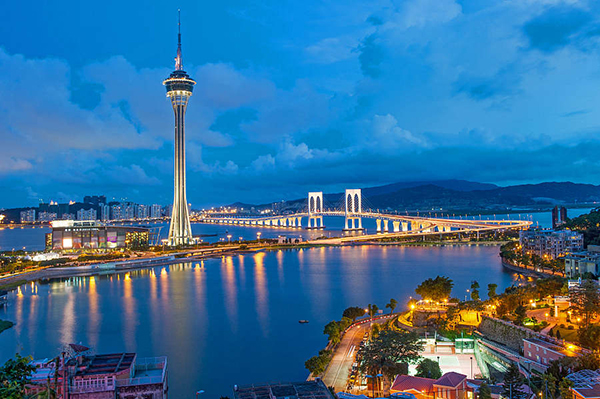
The Macao Tower, 338 meters tall, is the world's 10th highest tower. [Photo/VCG] |
The election to the Legislative Council of the Macao Special Administrative Region on Sunday will ensure that "Macao people govern Macao" under the "one country, two systems" principle.
Macao has made great achievements in political, economic, social and cultural fields since its reunification with the motherland in 1999, because it has strictly followed the "one country, two systems" principle and the Basic Law of the SAR.
In contrast, some people in the Hong Kong Special Administrative Region are trying to undermine the principle and defy the will of the majority of Hong Kong residents. A few have even taken a "pro-independence" stance, which is threatening the livelihoods of Hong Kong residents and creating disorder in Hong Kong society.
Under the "one country, two systems" principle, Macao has found a development path that suits its actual situation. First, under the "one country" principle, Macao has safeguarded the country's sovereignty and security well. For instance, in February 2009 Macao implemented the National Security Law in accordance with Article 23 of its Basic Law. But Hong Kong has failed to enact any such law, which has given rise to voices and activities of "Hong Kong independence" that undermine national sovereignty and security.
Second, the Macao government has struck the right balance between progressive democracy and economic development. As a result, Macao has a stable political environment that has facilitated the peaceful development of democracy. Unlike Hong Kong, the Macao Basic Law doesn't stipulate universal suffrage, but that has not prevented it from finding a democratic development path that suits its actual situation. For instance, the degree of democracy in Macao's Legislative Council election has continuously increased.
The first Macao Legislative Council had 23 members: eight of whom were directly elected, eight indirectly, and seven nominated. Its second Legislative Council had four more members: two more directly elected and two more indirectly. Its third and fourth legislative councils had 29 members, and the fifth 33. And the new Legislative Council to be formed after Sunday's election will continue to have 33 members.
Third, Macao has clear development goals. In 2001, Macao laid stress on the tourism and gambling industries to boost its economic growth while focusing on developing its service sector.
China's 11th Five-Year Plan (2006-10) and 12th Five-Year Plan (2011-15) promoted the moderate and pluralistic development of Macao. The 13th Five-Year Plan (2016-20) pays greater attention to enhancing communication and cooperation between the Chinese mainland and Macao in various fields. It also aims to enhance the positions and functions of Hong Kong and Macao in national economic and social development as well as opening-up. Macao's main goal is to build world-class tourism and leisure centers, as well as act as a platform for economic and trade cooperation between China and Portuguese-speaking countries.
And fourth, maintaining the right balance between economic development and people's livelihoods, the Macao government has focused on improving people's welfare. In 2016, Macao's GDP amounted to 358.2 billion patacas and percapita GDP was 554,619 patacas (about $69,372). And Macao doesn't have wide wealth gap like Hong Kong. Macao has also implemented a 15-year free compulsory education program, and its residents' pension has also increased.
Since Hong Kong and Macao are both special administrative regions under the "one country, two systems" principle, Hong Kong should learn from Macao's successful development experience.
The author is a professor of law at Peking University.
- China's Hong Kong, ASEAN to sign FTA, investment agreement soon: chief executive
- Hong Kong Tourism Board to launch 12-mln-HKD plan to attract visitors
- Separatism has no place on or off Hong Kong campuses
- Hong Kong tourist slightly injured in terrorist attack in Barcelona
- Don't try to fool the Hong Kong people
- Hong Kong influenza activity drops notably: health department