The global economy's new rule-maker
In a recent commentary for the South China Morning Post, Helen Wong, HSBC's chief executive for Greater China, noted that China's rising generation of 400 million young consumers will soon account for more than half of the country's domestic consumption. This generation, Wong notes, is largely transacting online, through innovative, integrated mobile platforms, indicating that it has already "leapt from the pre-web era straight to the mobile internet, skipping the personal computer altogether".
Of course, China's rising middle class is not news. But the extent to which digitally oriented younger consumers are driving rapid growth in China's service industries has not received much attention. Services, after all, will help drive China's structural transition from a middle-income to high-income economy.
Not too long ago, many pundits doubted that China would be able to make the shift from an economy dominated by labor-intensive manufacturing, exports, infrastructure investment and heavy industry to a service economy underpinned by domestic demand. Yet even though China's economic transition is far from complete, its progress in this regard has been impressive.
As a result, China's economic power is rapidly rising. Its domestic market is growing fast, and it could soon be the largest in the world. And because the Chinese government can control access to that market, it can increasingly exert its influence in Asia and beyond. At the same time, China's declining dependence on export-led growth is reducing its vulnerability to the whims of those who control access to global markets.
China does not need to limit access to its own markets to sustain its growth, because it can increase its bargaining power by merely threatening to do so. This suggests that China's position in the global economy is starting to resemble that of the United States during the post-war period, when it, along with Europe, was the dominant economic power. For decades after World War II, Europe and the US represented well over half of global output (nearly 70 percent at one point), and they were not heavily dependent on markets elsewhere, other than for natural resources such as oil and minerals.
Now China is rapidly approaching a similar configuration. It has a very large domestic market-to which it can control access-rising incomes, and high aggregate demand; and its growth model is increasingly based on domestic consumption and investment, and less on exports.
But how will China wield its increasing economic power? Most likely, it will not pursue a narrow approach of self-interest, mainly because to do so would diminish its global stature and influence. China has shown that it wants to be influential in the developing world-and certainly in Asia-by playing the role of a supportive partner, at least in the economic realm.
Whether China can achieve that goal will depend on what it does in two key policy areas. The first is investment, where China has moved aggressively by introducing a variety of multilateral and bilateral initiatives. For example, in addition to investing heavily in African countries, in 2013, it announced its Belt and Road Initiative with the intent to integrate Eurasia through massive investments in highways, ports, and rail transport.
Second, how China manages access to its vast internal market, in terms of trade and investment, will have far-reaching consequences for all of China's external economic partners, not just developing countries. China's domestic market is now the source of its power, which means that the choices it makes with regard to itself in the near term will largely determine its global standing for decades to come.
To be sure, China's current position on domestic-market access is less clear than its economic ambitions overseas. But China will most likely move toward an open, largely rules-based multilateral framework. The lesson from the post-war period is that this approach will do the most good externally, and will thus enhance China's international influence. At this stage of China's development, such an approach will have few if any costs, while most likely conferring many benefits.
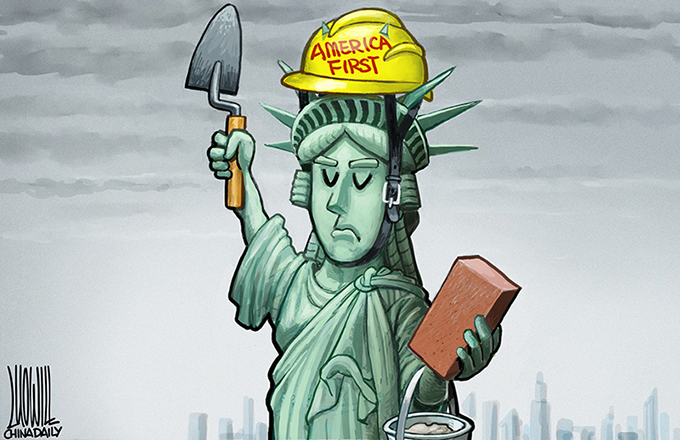
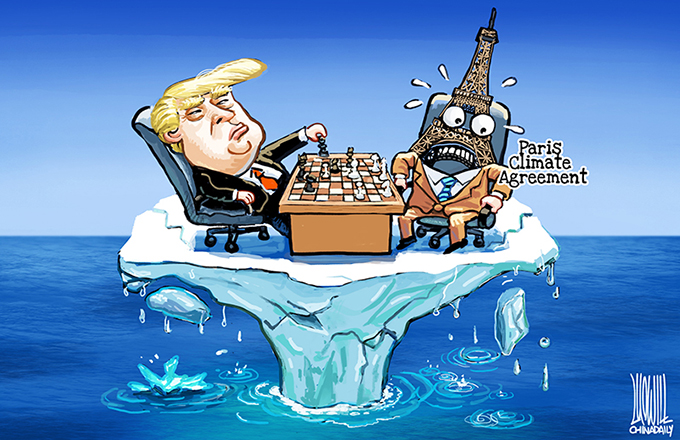
What remains to be seen is how China's relationship with the US fares. The US is suffering from non-inclusive growth patterns and related political and social upheavals. And it now seems to be departing from its historical post-war approach to international economic policy. But even if the US is isolating itself under President Donald Trump, it is still too big to simply ignore. If the Trump administration enacts aggressive policies directed at China, China will have no choice but to respond.
In the meantime, China can continue to pursue a rules-based multilateral approach, and it can expect broad support from other advanced and developing countries. The key is not to be distracted by the US' descent into nationalism. After all, it is anyone's guess how long that will last.
The author is a Nobel laureate in economics, professor of economics at New York University's Stern School of Business and senior fellow at the Hoover Institution.
Project Syndicate