Roots of change: Make migration work for rural development
 |
Indeed, migration has since our earliest days been essential to the human story — the source of multiple economic and cultural benefits.
But when migration is out of extreme need, distress and despair, it becomes another story.
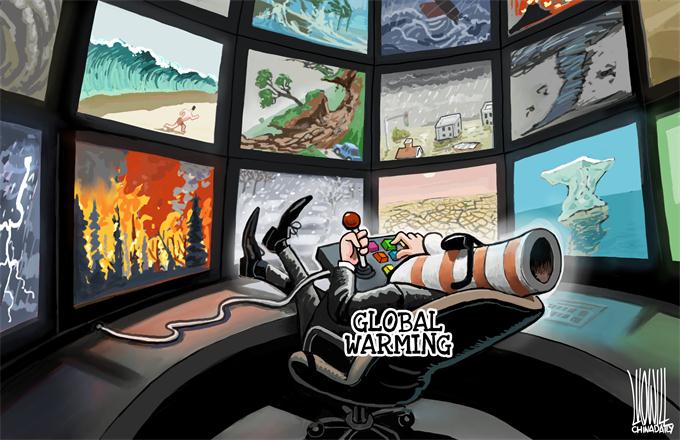
Forced migration is rooted in conflicts, political instability, extreme poverty, hunger, environmental degradation and the impacts of climate change.
In these situations, people have no choice other than to move.
This year's slogan for World Food Day (October 16), "Change the future of migration. Invest in food security and rural development", addresses the structural drivers of large movements of people in order to make migration safe, orderly and regular.
This is all the more pertinent today because the numbers of hungry people are on the rise again after decades of progress.
According to the 2017 State of Food Security and Nutrition report (SOFI), 815 million people suffered from hunger in 2016, an increase of 38 million people compared to 2015 (777 million). This was largely due to conflicts, droughts and floods around the world.
In fact, conflicts have driven northeast Nigeria, Somalia, South Sudan and Yemen to the brink of famine and triggered acute food insecurity also in Burundi, Iraq and elsewhere. Globally there are now around 64 million people forcibly displaced by conflict and persecution, the highest number since the World War II. Furthermore, drought, due to an unusually powerful El Ni?o, has sharply reduced access to food in much of Africa.
Rural households often bear the brunt of these drivers. Most of the world's poor live in rural areas, and many rural youth, especially in sub-Saharan Africa, migrate in the absence of productive opportunities.
But let's set the story straight: Despite widely held perceptions, most of those who migrate remain in their countries of origin. There are around 763 million internal migrants worldwide, one in every eight people on the planet with the majority moving from the countryside to cities. Of the 244 million international migrants recorded in 2015, one-third came from G20 countries and consisted of people who moved to pursue more productive opportunities. South-South migratory flows are now larger than those from developing to the developed nations.
Conflict, rural poverty, and climate change, all demand increasing attention as they drive up distress migration as a last resort, which generates a tangle of moral, political and economic problems for migrants, their eventual hosts and the transit points in between. We all have roots and few of us wish to sever them. In fact, even in the most extreme situations, people would rather remain at home.
Inclusive rural development can help on all fronts, curbing conflict, boosting sustainability and making migration a matter of choice rather than desperation.
Decent employment opportunities – which can be generated by productive agriculture and supporting activities ranging from seed research and credit provision to storage infrastructure and food processing businesses – are urgently needed to convince a fast-growing number of young people in rural areas that there are better fates than hazardous journeys to unknown destinations.
Migration itself is part of rural development, seasonal migration is closely linked to the agricultural calendars, and remittances are a huge force for improving both rural welfare and farm productivity. Migrants' contribution to development needs to be recognized and cherished, as they are the bridges between countries of origin, transit and destination.
Food and Agriculture Organization of the United Nations is working to address the root causes of migration. This means promoting policy options that favour vulnerable people. It includes youth job training and inclusive access to credit, crafting social protection programmes that offer cash or in-kind transfers, specific measures to support those returning to rural areas of origin, and offering assistance for the provision of seeds, fertilizers and animal-health services, fine-tuning early warning systems for weather risks and by working for sustainable natural resource and land use.
As co-chair in 2018 of the Global Migration Group, comprising 22 UN agencies and the World Bank, FAO will advocate for solutions that make migration an act of choice and not a desperate last resort. Agriculture and rural development have a key role to play in this.
The author is director-general of FAO.