The effective diplomacy of reassurance
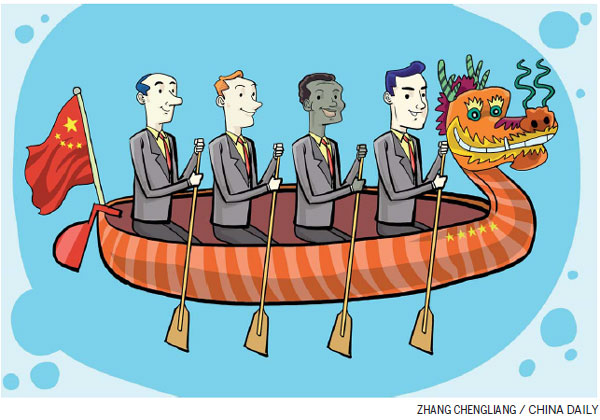
Napoleon Bonaparte once said: "China is a sleeping giant. Let her sleep, for when she wakes she will move the world." China has woken up and shaken the world but not the way Napoleon or many others feared. Instead, it has injected vital energy into the world economy, staunchly defended globalization, and helped improve infrastructure in cooperation with other countries.
During my travels in some countries in Central Asia, Southeast Asia and Africa, I have seen how new economic opportunities have been created for countries along the Silk Road Economic Belt and 21st Century Maritime Silk Road. China has woken up to defend free trade and stand by the Paris Climate Agreement and UNESCO. It has woken up also to give thousands of scholarships to students from developing countries while welcoming students from the West, as well.
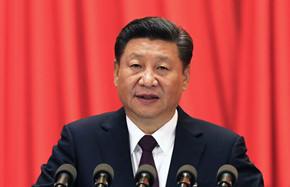
Through its actions and policies, at a time when the West is retreating from the global stage and cooperation, China is trying to reassure the world of its continued cooperation. And that is precisely what General Secretary Xi Jinping tried to do in his report to the 19th National Congress of the Communist Party of China on Oct 18.
Reassuring the world that China will always adhere to peace regardless of how powerful it becomes in the future, Xi has built on the foundations of friendship and sincerity, mutual respect for core interests and major concerns, dialogue and non-confrontation, and a win-win approach. I call this the principle of reassurance, which is at the core of China's new model of diplomacy for both big and small countries and in total contrast to the dominant theories of international relations used to frame US-China relations, that is, the Thucydides trap, hegemony and Cold War mentality of confrontation, proxy wars and containment.
Some examples will illustrate the principle of reassurance. First, on the issue of the Democratic People's Republic of Korea's nuclear program, Washington has been raising the rhetoric and firing salvos. On the other hand, Beijing strongly calls for de-escalation and reasonable sanctions without closing the door to dialogue while fully supporting the UN Security Council sanctions against Pyongyang.
Second, smaller countries, especially those in China's neighborhood, want to get an assurance from China that it will help maintain peace even as it becomes more powerful. The Philippines is a test case, for it shows how this principle plays out in practice. The Philippines and China had until recently serious maritime boundary disputes, but we see a non-confrontational bilateral relationship now that is marked by more dialogue and understanding of each other's interests. The zero-sum mentality over territorial disputes has given way to more mutually beneficial cooperation.
Third, the Association of Southeast Asian Nations wants an assurance from China that the Code of Conduct in the South China Sea will be honored in both letter and spirit even if it is not legally binding, which is also what China wants. The more China and ASEAN reassure each other, the more progress can be made in terms of the code's framework and operation. The same goes for the Code of Conduct for Unplanned Sea Encounters.
And fourth, ASEAN wants assurances from both China and the US that it will not be used for their proxy rivalry, because as an association it is vulnerable to such designs.
In conclusion, the inherent uncertainties, suspicions and competition between the US and China reinforce the need for credible reassurance. It is good that the US and China have institutionalized their strategic dialogues and that US President Donald Trump will visit China next month.
Given that China's rise is likely to raise suspicions, especially among smaller countries, in its neighborhood, Beijing is right to adopt the principle of reassurance. If successful, China's new model of diplomacy will belie Graham Allison's Thucydides trap as a figment of a Western scholars' imagination. It will also be regarded as one of the big contributions of Xi to the world.
The author is vice-dean of and associate professor at the Lee Kuan Yew School of Public Policy, National University of Singapore. The views expressed here are personal.
- 'Kung Fu Panda' diplomacy for the new era
- Progress Points: Diplomacy
- Official: Party's external exchange important part of diplomacy
- Fairer world order the goal of diplomacy
- Xi's diplomacy: Philosophy, wisdom and honors
- Remembering ping-pong diplomacy 45 years after Chinese team's US tour
- Quotable quotes on China's major-country diplomacy: Dialogue between cultures