Welcome to Japanese Wine Tasting: A Discussion

New Star Press held the Welcome to Japan Wine Tasting winter celebration and tasting event at the Beijing Art Museum on Nov 4. The event had the honor of hosting veteran wine taster, Li Peng, to share and enjoy Japanese sake with the audience and explain the unique culture behind sake brewing.
In the middle of the festivities, Li Peng gave us a detailed lesson on sake facts and different tasting methods. The aforementioned lesson covered: the common definition of sake, its history, and the basic raw materials for brewing it, as well as its many tasting methods were all explained clearly and simply for everyone to understand. For example, rice: Unlike the rice many of us consume on a daily basis, sake is brewed from specially chosen rice grains. The most precious and valuable of these different types of rice compose only 1% of the entirety of Japanese rice production. This utilization of the valuable, 1% of rice, echoes the sentiment that "good sake stems from good rice." The "rice refining step" is vital before making sake. The rice generally needs to be ground, and the "refined rice step" represents the amount of rice left after initially being ground. This, too, is an important factor to determine the type and flavor of sake.
"When you’re slightly closer to the mouth of the cup, you can begin to smell bananas, pears and other fruit fragrances. It is sweet and gentle, pleasing to the drinker because the fruit scent is not overly prominent, but its taste and flavor is dominant…" Why exactly did alcohol connoisseur Li Peng describe the tastes and scents of sake like one would do with wine? In fact, sake has a multitude of rich and varied flavors, much like wine. Li Peng also stated that sake flavors can expand to hints of fruits, leafy greens, flowers, herbs and spices; these new aromas have been leading the new wave of innovation surrounding Japanese sake. Li Peng mentioned that the three steps of drinking sake in Japan are "keeping an eye on the color, enjoying the aromas, and appreciating the tastes" respectively. During the sake tasting session arranged especially for the event, Li Peng led the audience to taste the four different types of Sake. He guided and instructed us on how to capture the wonderful "five flavors" of Japanese sake, and helped us experience the various characteristics of different types of sake.
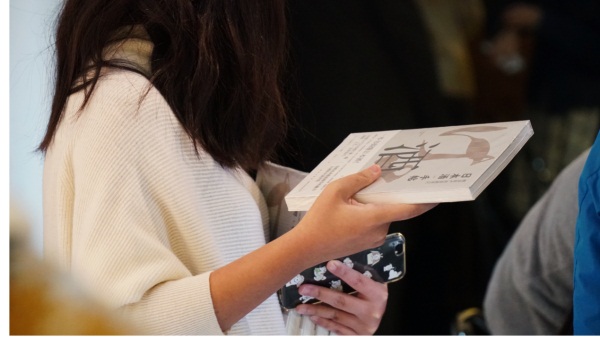
A superior sake is borne from a combination of factors, ranging from its initial raw materials to its brewing process. With small changes in each session, brewers can give rise to innumerable varieties of sake, leading to a diverse range of flavors to scintillate the taste buds. During the event, everyone was provided with a copy of Welcome to Japanese Wine Tasting. The book contains recommendation from sake brewers all over Japan, resulting in a carefully cultivated list of 130 Japanese wines. Starting from the standard type of sake, and continuing on to different varieties, it leads you on a journey of flavors, helping you understand the various types wine, sake, and the proper way to drink them .
Japanese wine is the epitome of beauty; it is pure romance in a cup. This book will not only help us usher in the winter season and allow readers to understand more about sake, but will also further open the door to the world of Japanese wines.