The world is now flat, at least, for consumers
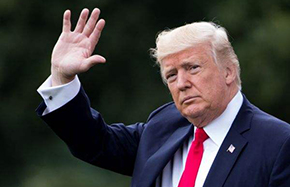
Seeing is believing. Should visiting US President Donald Trump have extended his stay in China a little longer, he would have been able to witness the unbelievable avalanche of online shopping orders that Chinese consumers will make during the Singles Day sales bonanza, which starts on Nov 11.
This online shopping festival, created and popularized by the country's e-giants in recent years, is seen by many as China's version of Black Friday.
Last year, Alibaba's Tmall alone notched up record sales of 120.7 billion yuan, about $18 billion on that magic day.
Such a shopping carnival epitomizes why China has rapidly risen to be the world's largest e-commerce market worth about 26.1 trillion yuan last year, up 19.8 percent year-on-year.
The reason why it is desirable for the US president and the 29 chief executives he has brought to Beijing, though mostly from energy and commodity firms, goes beyond the pure excitement any business person would feel while catching a glimpse of the huge potential of Chinese consumers.
More importantly, it would provide a prism for US policymakers and business leaders to comprehend the ongoing transition of the world's second-largest economy away from excessive dependence on investment growth toward more consumer spending.
For more than three decades since it began reform and opening-up, China has largely been deemed as a low-cost manufacturing powerhouse that had achieved double-digit growth by providing cheaper and various goods for consumers in developed countries, especially in the United States.
It is a matter of fact that the US' trade deficit with China had soared to hundreds of billion dollars in past years. But that does not make the case for US advocating trade barriers that would only temporarily benefit a few domestic industries at the cost of US consumers.
As the Chinese economy is steadily shifting toward consumer-led growth, US policymakers and business leaders should pay less attention to how many new billion-dollar deals they can sign for American industry during their trip to Beijing. Instead, they should focus their efforts on helping to promote and tap into the consumption boom that Chinese policymakers are trying hard to accelerate at home.
Admittedly, the continuously rising income level of Chinese people is the ultimate driver behind the country's mega-spending spree. Yet, the rapid popularization of internet and fast development of online retail have also contributed significantly to the country's consumption-led growth, making the world much flatter for Chinese consumers who can conveniently buy almost anything from anywhere around the world.
US companies and brands have already got a fair share of the bonus that China's annual shopping bonanza has brought about. Not only have Chinese e-giants competed with each other to introduce US supermarkets and retailers to domestic online shoppers but also some US tech companies such as Amazon have managed to attract Chinese consumers with their global supply chains.
US policymakers must be fully aware of the vital importance of boosting consumer sentiment and spending to sustain economic growth. That the US economy has grown for the past eight years is both a cause and result of the reality that US consumer spending remains healthy and its consumer sentiment rose in October to its highest level in nearly 17 years.
Although the American dream is not all about consumption, the satisfaction of US consumers has at least been part of it. Hence, Chinese consumers' strong aspirations for better life can also become a driving force for a promising future that will benefit and be shared by the whole world.
The author is a senior writer with China Daily.
zhuqiwen@chinadaily.com.cn