Disease expert lauds nation's HIV progress - Veteran epidemiology professor has trained Chinese health professionals for almost 40 years


File photo.
Editor's Note: The Communist Party of China will hold its 19th National Congress on Oct 18. In the runup to the meeting, China Daily asked two prominent experts to provide their views on developments in China and the country's global leadership.
For epidemiology expert Roger Detels, China has made "huge" progress in combating outbreaks of infectious disease over the past four decades.
 |
|
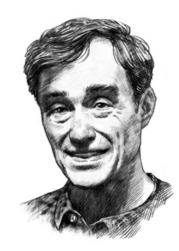
Roger Detels, professor of the UCLA School of Public Health's epidemiology department |
"I am amazed by the changes that took place over the years. When I first came to China, the authorities' priorities were economic concerns instead of public health and the environment," said Detels, who is professor of the UCLA School of Public Health's epidemiology department in the United States.
"Take HIV/AIDS prevention and control, for example. Now China has developed one of the largest HIV control and prevention programs in the world, and it has made itself a model for other countries in HIV prevention and control."
Although age 81, Detels still visits China once or twice a year to assist with the training of professionals and conduct research. Since 1988 he has headed a HIV/AIDS research and training program at UCLA that works with health professionals from a number of Asian countries, including China.
The aim is for graduates to return to their home countries with the necessary skills to develop their own research programs that will meet international standards.
"When I first arrived in China, according to my observations, the government was reluctant to confront the HIV epidemic," Detels said.
"But the 2004 SARS epidemic provided the authorities with an impetus to play a greater role in the control and prevention of HIV/AIDS."
Following the outbreak of severe acute respiratory syndrome, China improved its disease control and prevention systems at the national and local level, and developed a comprehensive reporting system for infectious diseases, such as HIV.
"This is the most impressive progress China has made, for me," said Detels, while also noting the nation's hygiene and infrastructure improvements, and the government's resolve to fight pollution.
"In many Chinese cities such as Beijing, Shanghai, Hangzhou and Kunming, the streets are spotless and there is no litter. They are cleaner than many cities in the US, and many cities have better infrastructure than in the US," he said.
"The efforts for environmental protection are also impressive. The majority of motor scooters are now electric so there's no pollution from emissions, and I have been told some cities are trying to switch to electric cars."
Despite losing track of the number of Chinese health professionals he has helped train over the years, Detels said there is nothing more rewarding than seeing one of his former students playing a vital disease prevention role in their home country.
"The most unforgettable thing for me is when my former students come back to China to make a difference in HIV control and prevention," he said.
"This is very rewarding for me, and the most exciting experiences are working with my Chinese colleagues."
He said China is now on the right track with its HIV/AIDS prevention and control programs, as it seeks to meet new challenges such as identifying those who do not know they are infected.
In 2011, Detels received an Outstanding Achievement in International Cooperation Programs on HIV/AIDS award from China's then ministry of health, which is now called the National Health and Family Planning Commission.
"I admire Dr Detels very much. He is a very diligent person and would start work at 6 am every day," said Wu Zunyou, one of Detels' former students and former head of the National Center for AIDS/STD Control and Prevention.
"He was among the first public health experts from the United States to come to China to help."
Wu studied under Detels at UCLA from 1991 to 1995, when he was awarded a PhD in epidemiology.
And though more than 20 years have passed, he is still grateful for his former teacher's help and guidance.
"My experience at UCLA changed my life and career forever. I not only learned about public health, it also changed my mentality and way of thinking," Wu said.
"The US was way ahead of us in research and education at that time and I felt my studies truly started there. Dr Detels was my mentor, and also like my father."