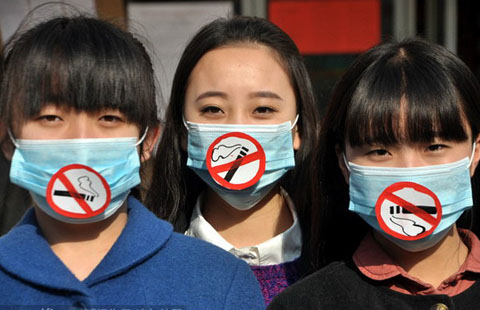
As an economic phenomenon, corruption can be termed a "silent killer". High corruption prevents investments from utilizing their full potential. It also prevents people from consuming various public goods to the full extent. Corruption drains public savings and reduces resources that could have been used for creating more public goods.
Major emerging markets have been struggling to control corruption. Systems, institutions and practices have contributed to the growth of corruption in these economies over the years. The large developing countries that are also major emerging market economies such as China, India, Brazil, Mexico, Russia and Indonesia all suffer from corruption to various degrees.
A common context of corruption in all these economies is the large presence of state actors and agencies in various economic activities. Their presence, in the absence of effective regulations and competitive practices, has contributed to widespread corruption, as producers, agents and intermediaries benefitting from the lack of transparent rules and pricing systems have been active in maintaining these practices over time.
Breaking the nexus between producers, agents and intermediaries and introducing transparent processes is a huge challenge for China and other emerging market economies. For China, this has been critical given its effort to introduce market-based practices in various sectors of the economy, but the difficulties are magnified given the size and complexities of the Chinese economy.
The establishment of anti-corruption regulations needs to be matched by strong action for curbing corrupt practices. Tackling corruption, therefore, is both a policy and administrative issue. The policies need to be implemented at various levels of the federal structure. Actions cannot be limited at the central level. They have to be taken at the provincial and local levels too.
China's new leadership has been trying hard to control corruption, but the going has not been easy. Corruption survives because of its patronization by the highest spheres of political and social influences. Curbing corruption means taking on powerful people, lobbies and interest groups. It is difficult to do so without strong political will and the commitment of the authorities.
Tackling corruption in China is both complex and unique given its political and institutional characteristics. The Communist Party of China is the most powerful political entity in China. The CPC has a 'bottom-up' pyramidal structure with representations from all provinces, municipalities and autonomous regions. It has organic relations with the military, government and State-owned enterprises. Functionaries of the CPC move back and forth between the Party, the government and businesses.
Getting rid of corruption at the highest levels in China implies carrying the anti-corruption drive to the Party. This was unthinkable in China given the authority of the CPC and its political and administrative control. But the Chinese leadership under Xi Jinping has not hesitated to act against senior CPC members. This is evident from the arrest of Zhou Yongkang - former chief of China's internal security and a former member of the Party's top leadership.
The remarkable aspect of China's anti-corruption drive has been its persistence. For almost two years now, corruption has been the topmost priority for the new leadership. The relentless pursuit of the corrupt shows the determination of the leadership. It also shows how serious, far-reaching and deep-rooted corruption had become in China. The new leadership seems convinced that China's progress towards greater economic prosperity and social stability cannot be achieved without eliminating corruption.
The anti-corruption drive has been accompanied by economic reforms aimed at integrating China deeper with global markets. This objective will remain unfulfilled unless China is able to restructure several of its institutions and economic practices. One of the biggest challenges for China in this regard is to make its State-owned enterprises competitive. This requires significant changes in their procurement policies along with revisions in their business strategies. The biggest obstacle to these changes is from lobbies that have been benefitting from non-transparent rules and policies. The beneficiaries, on several occasions, are from the Party as they are often running the major SOEs. Zhou, for example, held senior managerial positions at the China National Petroleum Corporation.
More heads are likely to roll as China persists with its anti-corruption drive. Apart from cleaning up the party and government, the anti-corruption measures offer larger lessons. They show the importance of minimizing corruption to make the markets work efficiently. They indicate how pervasive corruption can be when political parties and governments enjoy supreme authority without accountability. And finally, they show how vital some leaderships and leaders are in reforming countries economically and institutionally.
The author is Senior Research Fellow and Research Lead (Trade and Economics) at the Institute of South Asian Studies, the National University of Singapore.


Copyright 1995 - . All rights reserved. The content (including but not limited to text, photo, multimedia information, etc) published in this site belongs to China Daily Information Co (CDIC). Without written authorization from CDIC, such content shall not be republished or used in any form. Note: Browsers with 1024*768 or higher resolution are suggested for this site.
License for publishing multimedia online 0108263 Registration Number: 130349