CHINA> Top pic

|
CHINA> Top pic
|
|
First fuzzy photos of planets outside solar system
(Agencies)
Updated: 2008-11-14 07:55
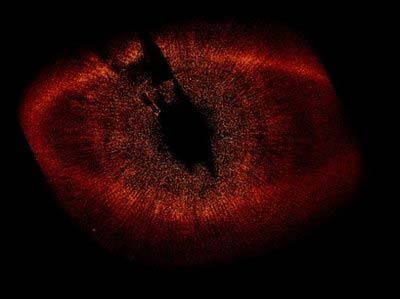
MIT planetary scientist Sara Seager, at the NASA press conference, said earlier planetary claims "are in a gray area." But these discoveries, "everybody would agree is a planet," said Seager, who was not part of either planet-finding team. The Hubble team this spring compared a 2006 photo to one of the same body taken by Hubble in 2004. The scientists used that to show that the object orbited a star and was part of a massive red dust ring which is usually associated with planets, making it less likely to be a dwarf star. Macintosh's team used ground-based telescopes to spot three other planets orbiting a different star. That makes it less likely they are a pack of brown dwarf stars. The planet discovered by Hubble is one of the smallest exoplanets found yet. It's somewhere between the size of Neptune and three times bigger than Jupiter. And it may have a Saturn-like ring. It circles the star Fomalhaut, pronounced FUM-al-HUT, which is Arabic for "mouth of the fish." It's in the constellation Piscis Austrinus and is relatively close by, a mere 148 trillion miles away, practically a next-door neighbor by galactic standards. The planet's temperature is around 260 degrees, but that's cool by comparison to other exoplanets. The planet is only about 200 million years old, a baby compared to the more than 4 billion-year-old planets in our solar system. That's important to astronomers because they can study what Earth and planets in our solar system may have been like in their infancy, said Paul Kalas at the University of California, Berkeley. Kalas led the team using Hubble to discover Fomalhaut's planet. One big reason the picture looks fuzzy is that the star Fomalhaut is 100 million times brighter than its planet. The team led by Macintosh at Lawrence Livermore found its planets a little earlier, spotting the first one in 2007, but taking extra time to confirm the trio of planets circling a star in the Pegasus constellation. They are about 767 trillion miles away, but are actually visible with binoculars. The star in this solar system is HR 8799, and the three planets are seven to 10 times larger than Jupiter, Macintosh said. "I've been doing this for eight years and after eight years we get three at once," he said. |
主站蜘蛛池模板: 鄂托克旗| 尼木县| 平乐县| 额济纳旗| 寿光市| 静乐县| 墨玉县| 丹东市| 徐闻县| 收藏| 穆棱市| 出国| 哈密市| 高要市| 淅川县| 大庆市| 商洛市| 渑池县| 秦皇岛市| 金阳县| 富裕县| 莱西市| 延川县| 道真| 建平县| 新河县| 冷水江市| 阿克| 浪卡子县| 冕宁县| 六盘水市| 合阳县| 余庆县| 义马市| 正蓝旗| 兴业县| 铁岭市| 开封县| 贵德县| 高青县| 钦州市| 华蓥市| 井陉县| 永昌县| 临清市| 龙游县| 泊头市| 兴国县| 大洼县| 临高县| 灵璧县| 依安县| 同德县| 乌拉特前旗| 平塘县| 全州县| 浪卡子县| 林周县| 沈阳市| 鄱阳县| 南澳县| 施秉县| 墨玉县| 中宁县| 腾冲县| 廉江市| 夏邑县| 二连浩特市| 沈阳市| 银川市| 西充县| 平乡县| 德兴市| 长沙市| 石渠县| 克东县| 中山市| 湾仔区| 枣庄市| 瑞昌市| 三门峡市| 出国|