China-Europe ties set to blossom in Sofia







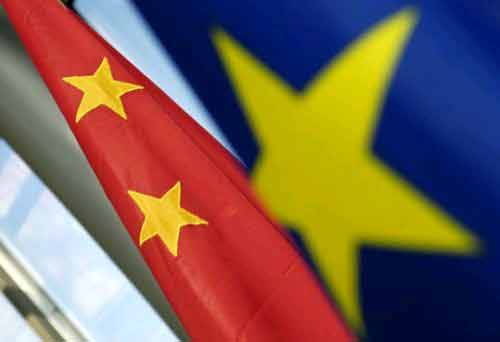
The seventh Leaders' Meeting between China and Central and Eastern European Countries is set to open on Saturday in Sofia, capital of Bulgaria, which is known as the land of roses. This will soon be followed by the 20th China-European Union Summit in Beijing. These summits are important barometers of relations between China and Europe, two major players in international relations.
Launched in 2012, "16+1 cooperation" (16 CEE countries plus China) has seen notable growth in two-way trade, investment and people-to-people exchanges. Thanks to strong economic complementarity, enthusiastic participation by the CEE countries, and particularly the solid momentum created by the Belt and Road Initiative, the 16+1 cooperation mechanism is now well on its way to becoming a platform for wider Europe to participate in and benefit from the Belt and Road Initiative.
Following the principles of equal consultation and shared benefits, China has signed Belt and Road cooperation agreements with all the 16 CEE countries. The two sides have initiated major connectivity projects such as Budapest-Belgrade Railways, China-Europe Land Sea Express Line and the Adriatic-Baltic-Black Sea Port Area cooperation, and established the China-CEEC Investment Cooperation Fund and 16+1 Inter-Bank Association.
Many in Europe understand the importance of developing the vast CEE region. German Chancellor Angela Merkel, for example, spoke positively about the role of 16+1 cooperation during a recent visit to Beijing.
Yet there are worries and complaints in Europe about 16+1 cooperation undercutting "EU competence" or even "splitting Europe". Such a perspective reflects either an outdated sphere-of-influence mentality or a zero-sum worry that resources for China-Europe cooperation are being diverted to CEE countries, both of which speak more of the anxiety and lack of confidence on the part of some in Europe.
The 16+1 trade volume is only about one-tenth of China-EU trade, so its potential to affect China-EU relations is at best limited. Conversely, as 16+1 cooperation becomes stronger, it will only contribute more to balanced development of Europe and to European integration.
China and the CEE countries are committed to business-led and market-based cooperation, which is open and transparent. All 16+1 high-level meetings have explicitly pledged support for "the road of integration chosen by EU members" and the two sides made sure to invite EU representatives to various activities and follow EU rules in project design and development. Besides, China has all along expressed interest in exploring third-party cooperation with developed economies in Central and Eastern Europe.
China's commitment to a united, stable and prosperous Europe has remained unchanged. As China sees it, the common interests between China and the EU have increased, so has the need for cooperation on both sides. China and the EU are both advocates of globalization and multi-polarity and supporters of the multilateral global trading system centered on the World Trade Organization, which is particularly important as both sides face mounting pressure from protectionist and unilateral actions.
The two sides can use their summit to send a powerful message of supporting the rules-based multilateral economic and trade order, and rejecting protectionism and unilateralism. They can make further progress in pursuing a bilateral investment agreement and developing greater synergy between the Belt and Road Initiative and the investment plan for Europe and the Eurasian connectivity blueprint. The implementation of a new round of opening-up measures announced by China on the occasion of the 40th anniversary of reform and opening-up will offer even greater business opportunities for all European countries.
Yet what often happens is that while European leaders underscore their commitment to closer ties with China, the EU has remained intent on taking a tough position on trade and investment. For instance, instead of resolving issues through consultations, the EU took China to the WTO dispute settlement body over technology transfer in early June. The EU even insisted on formulating new regulations on market distortions that are seen as discriminatory toward China.
The potential for China-Europe relations cannot be fully tapped if the two sides fail to deal with the perception issue and close the trust deficit. For China and the EU, mutual openness and inclusiveness is the best option. Mutually reinforcing progress of 16+1 cooperation and China-EU cooperation serves the interests of all involved. As 16+1 cooperation blossoms in Sofia like a beautiful rose, it will add color and fragrance to Brussels' ties with Beijing.
The author is a Beijing-based expert on international relations.