REGIONAL> Society

|
REGIONAL> Society
|
|
China getting serious on clearing up rural pollution
By HU YINAN (China Daily)
Updated: 2008-08-04 06:38
When the central government announced plans to conduct China's first rural pollution survey last December, some took it as a sign that the authorities were serious about tackling the serious issue.
And a first-ever State Council meeting on environmental protection in the countryside two weeks ago carried more significance.
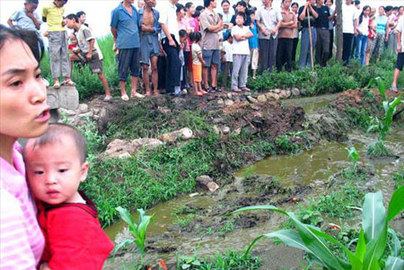 Within a mere 10 months, the world's most populous country, where more than half of its registered residents are from the countryside, has gone from drafting a point of reference for reducing rural pollution - the results of which will be published at the end of this year - to elevating environmental protection in rural areas to a strategic position at top levels. Pollution control in rural China hasn't been easy. Millions of rural Chinese still have no access to clean drinking water and pollution is the culprit for 90 million of them. Add that to the growing amount of sewage waste throughout the countryside even in face of a deteriorating labor force and diminishing population. According to Vice-Minister of Environment Protection Wu Xiaoqing, 280 million tons of household garbage, 9 billion tons of domestic sewage and 260 million tons of human excrement were generated - and mostly dispersed on site or at will - per year. Nonpoint source pollution is also a growing danger. As the world's biggest fertilizer and pesticide user, the country's 30 percent use of these manure and chemicals (as compared to 60 percent in developed countries) means that much is swept away by runoff, causing eutrophication of surface water (such as the algae choking Dianchi Lake, Taihu Lake and Chaohu Lake) or polluting underground water systems. Pollution from livestock breeding is also a huge problem. While 2.7 billion tons of livestock excrement was generated annually, only 20 percent of rural breeding farms had adequate (if any) pollution treatment facilities. In some regions, Wu noted that pollution from livestock breeding had become an important factor behind the deterioration of water sources. A complete picture of the status quo of China's rural environment is all that and more, including the soaring pollution caused by dispersed rural factories and mines and the exploitative development that has long jeopardized ecology. A document jointly issued by the former State Environmental Protection Administration (SEPA) and seven other government departments last December pledged to ensure the quality of all drinking water sources by 2010. In a harbinger to the State Council meeting earlier this month, the document also promised to increase the use of soil testing, boost the volume of waste materials by at least 10 percent, and provide access to sanitary toilets for 65 percent of rural residents. This document has facilitated the ever-expansive financial, technological and human assistance needed throughout each level of government in order to encourage reforestation, recycling and green farming. The effort takes on a distinctively local flavor around the country. China's southernmost island province of Hainan, for example, piloted in 1996 and officially introduced in 2001 a program aimed at transforming its rural areas. Among other qualifications, villages that have paved roads, a forestation rate of 60 percent or more, designated personnel for sewage treatment and use alternative energy are designated as "ecological civilization villages", and granted handsome subsidies for future project-specific environment protection efforts. More than a third of the island's villages now carry the honor. "The aim is to combine economic development with improvements to the environment. We are doing this by encouraging tropical agriculture and the courtyard economy," Hainan Governor Luo Baoming says. But the road ahead calls for more strenuous efforts. The central government has already boosted investment in the countryside. Last year's 420 billion yuan was a record-high increase of 80 billion yuan from 2006. And yet, experts have said still more money must go to the rural areas, if the country is to achieve its bold goal announced two weeks ago. To realize a 10 percent rise in the treatment of sewage and consumer waste, and a similar increase for the livestock and poultry waste utilization rate by 2010 will take much more than words. With barely 16 months away, the government should also introduce tax and credit incentives to encourage more private enterprises to get involved in the rural environmental protection market, Wang Shaojie, vice-chairman of the China Democratic National Construction Association, earlier said. Additionally, policymakers such as Lu Ming, deputy head of the countryside affairs committee of the National People's Congress, have argued that the major obstacle to rural water management - and rural environment protection as well - is that despite the fact that several ministries and the Department of Environment Protection each allocates funds to individual projects, no single body is directly responsible for the whole. "There should be one special department to coordinate the issue," Lu says. |
主站蜘蛛池模板: 霞浦县| 武强县| 周至县| 介休市| 永兴县| 永丰县| 阿拉善盟| 辉南县| 轮台县| 凤山县| 女性| 常熟市| 竹北市| 崇信县| 朔州市| 宁国市| 东乌| 娄烦县| 库车县| 金乡县| 年辖:市辖区| 萍乡市| 永嘉县| 当雄县| 若羌县| 通河县| 通化市| 峨眉山市| 龙井市| 额尔古纳市| 九龙县| 蓬安县| 新泰市| 高唐县| 夏津县| 波密县| 余庆县| 怀安县| 合山市| 刚察县| 神池县| 武宣县| 舟曲县| 高邮市| 将乐县| 会东县| 嘉义市| 浑源县| 西宁市| 乐亭县| 清水河县| 石楼县| 桂平市| 芜湖县| 和田市| 江都市| 分宜县| 察雅县| 安新县| 烟台市| 宝应县| 乐陵市| 嵊州市| 瓦房店市| 成安县| 曲水县| 稻城县| 宁陵县| 永清县| 囊谦县| 缙云县| 米脂县| 北京市| 九江市| 南开区| 合肥市| 郎溪县| 富源县| 浠水县| 肥城市| 汨罗市| 额济纳旗|
