Coastal city celebrates 25 years of growth


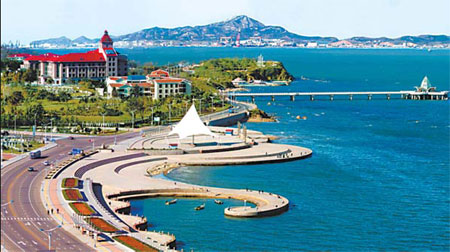
Yantai's rich coastal resources provide ideal conditions to develop its maritime industries.
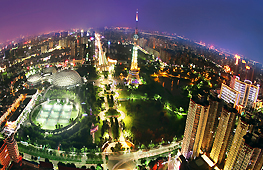
Set to the east of the Shandong Peninsula and bordered by Bohai Bay and the Yellow Sea, the city of Yantai enjoys distinct advantages both geographically and economically - not least from its pivotal role in linking the two peninsulas of Liaodong and Shandong.
This coastal city, the largest fishing seaport in China's eastern Shandong province, has long been targeted by shrewd investors, keen to capitalize on its status as one of the first Chinese cities to "open up" for business back in 1984, a quarter of a century ago.
Yantai's amicable environment and welcoming atmosphere have been widely recognized at home and abroad. The World Bank acknowledged it as one of China's Gold Medal Cities in terms of its investment environment back in 2006.
To date, more than 10,000 companies from some 80 countries and regions have established facilities in the city, with the accelerated investment capital in place registered at $19.75 billion by the end of 2008.
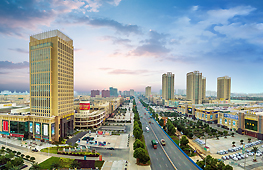
Yantai has always been at the forefront of China's coastal cities in terms of economic growth, with a gross domestic product of 343.4 billion yuan last year.
Rich resources
Yantai is set in an area rich with mineral resources. To date, more than 70 different kinds of minerals have been discovered in the area, with some 40 of them currently actively being mined and utilized by the city and its industrial base.
The area has particularly strong reserves of three valuable minerals, frequently used in industrial and commercial processes. These include - magnetite, a substance with a number of similar qualities to magnesium, molybdenum, a metal with a substantial resistance to high temperatures, and soapstone, a valuable source of both talc and magnesium. It is in the national top five locations as a source for all three of these substances.
Perhaps more impressively, it also has the top slot as China's premier source of gold. Its moderate climate has also seen Yantai emerge as a primary supplier of both marine and agricultural resources.
The bay around the city is home to more than 200 aquatic species and has been designated as one of the most important centers for fish farming in the country.
As a key vegetable and fruit export center, the city also generates around 4.4 million tons annually in fruit output and nearly 2.7 million tons of vegetable output. The city's apples, cherries and grapes have all become established brands and enjoy wide popularity at home and abroad.
As one of the world's top seven coastal grape planting areas and one of China's top three vineyard centers, Yantai is now home to more than 14 domestic and international winemakers, including the three leading Chinese brands - Changyu, Great Wall and Dynasty.
With nearly half of the nation's total wine output produced in the coastal city, the International Office of Vine and Wine (OIV) has acknowledged Yantai as a "fine vine planting center", making it the only Asian city to have been accorded this signal honor.
Amid other plaudits, the Yantai International Wine Festival, a biennial event, has now become a platform for worldwide winemakers to showcase their latest products and exchange views on the latest happening and innovations on the global wine scene. The event's third iteration will take place in the autumn of this year.
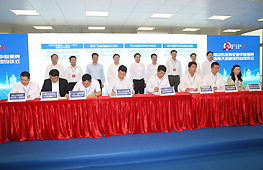
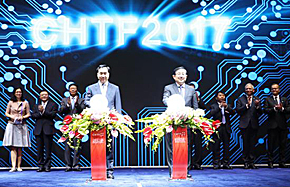
Other exhibitions and shows have also highlighted Yantai's growing overseas influence. Since 1977, the city has hosted a vast range of economic exchange events related to Asia-Pacific Economic Cooperation (APEC).
These have included an international trade expo, a technology fair targeting small and medium-sized enterprises, an international food, vegetable and fruit fair, an investment fair, an E-commerce fair and an Asian-European tourism cooperation symposium.
Charming city
Yantai's natural beauty and cultural heritage has long seen it as one of the country's leading tourism destinations. In recent years, its allure has been accentuated by the addition of an array of hot springs, forest parks, high-quality golf courts and holiday facilities.
In classical times, the city was steeped in myths and legends, many of which depicting it as an earthly paradise frequently visited by gods and goddesses. This heritage and the lingering tales of fantastic happening and the miracles once wrought here, together with its abiding Taoist traditions, add still further to the beguiling charm of this singularly fascinating city.
According to the region's legends, Qinshihuang, the first emperor of the Qin Dynasty (221-206 BC), whose accession to the throne marked a new era for the freshly unified nation, was a regular visitor to Yantai during his many sojourns to the east of his kingdom.
The city's significance continued long after. During the Tang Dynasty (Ad 618-907), Dengzhou, a suburb of Yantai was one of the nation's top four seaports and the starting point for China's ancient "maritime silk road". As late as 1861, the city was still a seat of considerable influence and was home to the consulates of 17 different countries.
In recent years, the city has won a series of honors for the quality of its environment. These have included the National Garden City award, a Popular Tourist City award and a UN Habitat Scroll.
The city government is committed to maintaining its excellent environment, despite a number of major infrastructure projects scheduled to take place in the city, including a substantial expansion to the urban transport network, involving its expressways, railways, and sea routes.
Currently, the city boasts 10 harbors with the Yantai Port established as one of the 10 key commercial harbors in China. At present it services direct routes to more than 100 ports in some 70 different countries and regions. Its sea-going connections are complemented by the city's international airport that currently has scheduled flights to 60 domestic and international destinations.