Reviving a unique Anhui merchant culture
Updated: 2011-11-02 08:14
By Zhao Shijun (China Daily)
|
|||||||||||


|
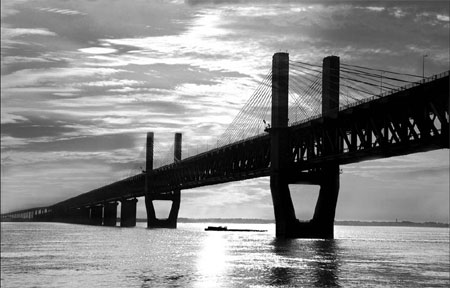
The Wuhu Yangtze River Bridge is a major transport link between the south and north of Anhui. |
|
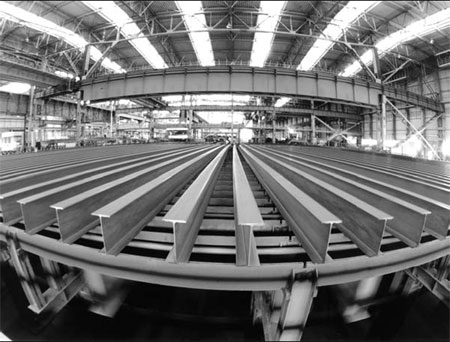
The Maanshan Steel and Iron Corp is one of China's leading steelmakers. |
Huishang life was known for its teamwork, integrity, honesty, and loyalty
Over a thousand-year period, the merchants of Anhui province, collectively known as the Huishang, became a legend for their hard work, enterprise, and honesty and made a unique contribution to China's development.
They began as vendors of small articles in the countryside and cities of this ancient land dominated by self-reliant agriculture, on China's east coast.
Gradually they turned to bigger operations with a sales network that covered the country. Their success was unparalleled, except by the merchants of Shanxi, who were also famous for their business acumen.
The name Huishang was first used during the Jin Dynasty (AD 265-420) and, for the next thousand years, Anhui's merchants flourished, with a long period of prosperity during the Ming (1368-1644) and Qing (1644-1911) dynasties.
Then, the sun began to set on the Huisheng lifestyle, during the late Qing Dynasty because of the intense competition from businesspeople in China and abroad who were skilled in modern commerce.
Nonetheless, that unique culture that grew out of the Anhui merchants - teamwork, moral integrity, honesty, sympathy for the poor, and loyalty to the country - is still remembered by the province's people and is even recognized in the rest of the country.
Huishang conference
Now, Anhui' leaders are looking to create some new legends by reviving those millennium-old traditions, again, for greater economic growth.
One way to do this is through the International Huishang Conference, which is held annually in Hefei, Anhui's capital.
This is the seventh year of the event, which is sponsored by the provincial government, and is being held at the Binhu International Convention and Exhibition Center in Hefei, November 8-11.
Its official name is the China Anhui Investment and Trade Expo and it has become the province's most important trade and investment fair.
The organizing committee reported that more than 3,000 representatives of Chinese and foreign businesses will participate in both the conference and the China Hefei High-tech Fair, previously an independent event but now a part of the conference, as of this year.
According to Yang Benqing, deputy chief of the organizing committee, 81 of the Fortune 500 companies will attend the event, compared with just 50 last year.
Local enterprises will be promoting key investment projects, worth a total of $1 billion, to attract foreign and domestic investors. In fact, major parts of this year's event will be the investment promotions and trade talks, in addition to the normal product exhibits.
The authorities also want to use the venue to describe the province's history and show its tourist attractions, economic growth history, and business opportunities.
Rebirth
Anhui's economy rose sharply after China's reforms and opening-up were instituted three decades ago, and its GDP has grown faster than the national average, thanks in part to its proximity to the Yangtze River Delta.
In 2008, Anhui, which lies inland on a 139,600-sq-km area and has a population of 68 million, began to grasp the opportunities that relocating coastal industries and those from abroad presented.
Last year, provincial GDP was 1.23 trillion yuan, compared to 1.02 trillion yuan in 2009, allowing it to enter the nation's "trillion-yuan club".
By the end of last year, there were 51 Fortune 500 companies operating in the province.
And it is now developing the Industrial Transfer Demonstration Zone, a part of the Anhui Yangtze River City Belt. This east-west zone offers a new area for companies in areas lying to the east or form overseas who want to relocate.
It also has tourist attractions that include Huangshan, a mountainous natural heritage site, the Jiuhua Mountains, home to Buddhist temples, and some ancient residential compounds scattered across southern Anhui, which are remnants of the prosperous merchant past.
(China Daily 11/02/2011 page4)








Hot Topics
Libya conflict, Gaddafi, Oil spill, Palace Museum scandal, Inflation, Japan's new PM, Trapped miners, Mooncake tax, Weekly photos, Hurricane Irene
Editor's Picks

|

|

|

|

|

|