WEF founder says talent, innovation vital amid challenges
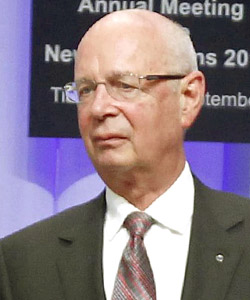
Editor's note: Klaus Schwab, founder and executive chairman of the World Economic Forum, talked with China Daily about the recent developments of the global economy at the forum's ongoing Annual Meeting of the New Champions 2012 held in Tianjin
Q: The theme of the Annual Meeting of the New Champions 2012 is Creating the Future Economy. After the bursting of the Internet bubble, the Wall Street myth and the EU debt crisis, will the world economy go back to focusing on the growth of the so-called real economy in the future? What are the next growth areas for the global economy?
 |
|
|
The global economy is experiencing deep systemic and structural changes fueled by unprecedented fiscal imbalances, exorbitant bonuses, widening income gaps, excessive debt, endemic corruption and growing resource constraints, to name but a few. Combined, all of these extremes undermine one of the most important factors of production in our economy: human talent.
As we move from an age of mass production to an age of networked innovation, competitive advantage will increasingly be determined by innovative ideas and social collaboration, and so the task of creating our future economy rests on our ability to nurture talent.
This means societies that foster an ecosystem of dialog, trust, engagement, transparency, and social and environmental safeguards will ultimately be the ones that provide the greatest opportunities for growth, addressing our present challenges while continuing to be strategic and forward looking.
Q: How will the emerging and "frontier" countries - for example China and India - change their economic growth models to remain competitive in the future? What new roles will these countries play in the future?
A: As the center of gravity continues to shift from West to East and from North to South, the concept of power itself is changing along with the actors. In the past, leadership was primarily based on hard power and then increasingly on soft power, whereas today's new model is based on collaborative or social power.
At the same time, there has been a corresponding global effort to understand and bridge the differences between cultures, expectations and development stages of "old" and "new" political and economic realities, which is essential for the future prosperity and stability of all.
Today, stakeholders from business, government and civil society are more empowered by personal freedoms, mutual trust, social provisions, flexible labor markets and access to capital. And, in this context, the capacity of emerging economies to remain competitive will increasingly depend on how leaders can provide individuals with an entrepreneurial environment and, at the same time, create inclusive economic development.
In the short term, emerging countries are still the primary growth engine of the world economy, having leveraged the benefits of demographic dividends, innovation, investments and exports. But these drivers are no longer sufficient to sustain long-term growth. A transformation is needed so that ill-adapted infrastructure, fiscal deficits, income and transparency gaps can be addressed to boost business, productivity, flexible labor and consumer confidence.
In the long term, sustainable change will only be realized if all stakeholders of global society are integrated into the transformation process so that new models, bold ideas, and personal passion and courage serve as the energizing forces ensuring that emerging economies - individually and collectively - play their part in improving the state of the world.
Q: EU policymakers and financial markets are expected to make key moves in the next two months, which may determine the final results of more than two years of debt crisis. What are the best- and worst-case scenarios? Will the world enter another financial crisis caused by a banking system collapse in the EU?
A: Among the advanced economies, Europe is clearly in the eye of the storm as it struggles to recover amid fears of further recession. There is a great deal of uncertainty about when and how the region will move to establish long-term quality growth. I can understand that this is troubling for the global economy and poses a major concern for the New Champions and for emerging countries like China.
What is needed is a holistic set of measures to restore confidence and strengthen the economic fundamentals of these economies. For this to happen, we must first see a resolution toward addressing the weaknesses of the banking system and an improvement in access to credit for businesses. Second, we need the fiscal discipline and structural reforms to reduce public spending. And finally, we need to boost productivity and competitiveness through labor market reforms, nurturing competition and increased investments in education, technology and innovation.
Some of these measures can have a short-term impact, while others will require more time to provide results. However, all of them must be adopted sooner rather than later. We should not forget that the European Union is composed of 27 countries and, therefore, progress can only be achieved through collaborative and democratic decision-making. I am confident that Europe will emerge from this crisis much stronger based on creating a true banking, monetary and, ultimately, political union, which is a logical step in the European unification process.
Q: China has begun transforming its pattern of economic growth and deliberately slowing its growth rate in order to achieve economic reform. What does the slowing pace of China's growth mean for the world?
A: As our Global Competitiveness Report 2012-2013 shows, China is clearly the most competitive of the large emerging markets. There has been a mild deceleration, but China is still a key driving force in the world economy and will naturally continue to assume new responsibilities.
At the domestic level, sustainable growth will depend in large part on a rebalancing among investment, exports and consumption - the last of which will be primarily made possible if the social safety nets driving consumer spending are fully institutionalized. Nurturing competition will greatly improve market efficiency while transparency, judicial independence, technological readiness, business ethics and corporate accountability will ensure that capital, talent and financial resources are optimally allocated to maximize productivity.
At the international level, issues of resource scarcity, global imbalances and environmental degradation must be addressed through a more intensive global dialog. As ever, adapting to the speed, complexity and interconnectivity of the changes occurring globally continues to pose one of the biggest challenges.