Comments
  Print
Print  Mail
Mail  Large Medium Small
|
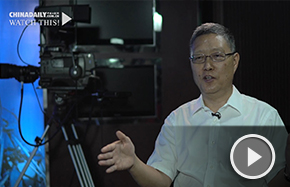
Joseph Jimenez, CEO of Novartis. Provided to China Daily |
Q+A | Joseph Jimenez
Editor's note: On the sidelines of the ongoing Fortune Global Forum, Joseph Jimenez, CEO of Novartis talked with Zhuan Ti from China Daily about the healthcare sector in emerging markets as well as the company's recent development in China.
I have noticed that you are joining a panel discussion on emerging markets. What is your message for the panel?
Emerging markets interest me because we're seeing great opportunities for our business. Across emerging markets, rapid growth has expanded the ranks of the middle class. This growth is paired with changes in consumer consumption patterns and lifestyle choices.
For example, in China, increasing uptake of luxury brands is enabling a new standard of living for many. In addition, we're seeing lifestyle changes that increase the incidence of chronic diseases. This action is driving a significant increase in the need for healthcare. At the same time, we are witnessing an increase in life expectancy driven by a better quality of life. As a result, we expect the pharmaceutical industry to generate an estimated 30 percent of its total sales in emerging markets by 2015.
My message for the panel is that Novartis is shifting its center of gravity toward these fast growing markets, particularly China, in order to drive growth, gain access to broad distribution networks, tap into local market expertise and move a higher volume of medicines to those in need.
Why does the company have one of its four operation centers in Chengdu?
As healthcare needs are greatly diverse across China, we've worked to establish our business to cover different regions. Chengdu is our business center for the western region, where healthcare needs are rapidly increasing. With our offices here, we can better serve the population in this area and to the west.
We see continued potential in Chengdu and western China. Chengdu has an effective administrative system, rich talent pool and convenient transportation networks, which are all great resources for business. In addition to Chengdu, we've established offices in Chongqing, Xi'an, Zhengzhou, Kunming and Urumqi. We will continue to grow our presence in these areas.
How important are the BRICS countries for Novartis' future expansion?
Emerging markets, including the BRICS nations- Brazil, Russia, India, China and South Africa - are a major part of Novartis' growth strategy. As the aging population and the incidence of chronic disease continue to increase, the need for healthcare will grow in tandem. According to IMS Health, spending on health will nearly double over the next several years in emerging markets from $194 billion in 2011 to at least $345 billion in 2016.
How does China fit into Novartis' growth strategy?
Our growth strategy is to win in this industry by being the best at science-based innovation. This means building a strong pipeline of innovative healthcare therapies to address patient needs. It also means continuously rejuvenating our diverse portfolio. We are focusing on excellent execution of our launch products and on building our presence in emerging markets.
China is a key part of this strategy as this market is expected to grow an estimated 15 to 18 percent annually. In 2012 alone, we increased our sales 24 percent in China and we expect this strong growth trajectory to continue.
China is set to soon become the second-largest medical market after only the US. What is your goal in the Chinese market in the coming years?
As the Chinese government prioritizes increasing access to healthcare, we've seen many opportunities to collaborate to improve patient outcomes. In particular, part of the 12th Five Year Plan (2011-15) seeks to provide equal healthcare access to urban and rural residents. The need in these areas is great. There is a serious shortage of healthcare workers in China's rural areas, with only an estimated 1.3 healthcare workers for every 1,000 people living in rural China.
We're working to tackle this issue, for example, in Xinjiang through our Health Express program. Our activities include training physicians in prevention and treatment of infectious diseases, as well as a healthcare education programs for local children and adults. To date, we have reached over 500,000 students and 10,000 adults through trained health educators.
Additionally, in early June I helped kick off a new project that will improve the healthcare system's capacity to deliver better hypertension care and improve cardiovascular outcomes for patients in Xinjiang Uygur autonomous region, where one-third of adults have high blood pressure and less than 10 percent of patients receive proper treatment. This could potentially help people live longer, healthier lives and also reduce costs at the same time.
What are the next major steps you may take in China? How about in talent training?
Innovation is a top priority for us in the Chinese market. It's what's going to help us meet the needs of patients across the country. We're investing heavily in the Novartis Institute of BioMedical Research - or CNIBR - in Shanghai, the country's largest R&D center. Research at CNIBR focuses on gastric cancer and hepatoma, which are indigenous to the Chinese population, and lung cancer, which is the deadliest form of cancer prevalent in China.
CNIBR is also a global center of excellence in epigenetics. Epigenetics allows us to better understand disease mechanisms and to develop new therapies for diseases that lack effective treatments. Epigenetic changes of the genome have been associated with cancers, infectious diseases, neurological disorders, and autoimmune diseases, all of which are very common in Chinese patients. We have advanced 10 novel targets into the discovery pipeline thanks to our epigenetics platform.
In addition to investing in innovation, we're highly focused on fostering local talent in China. At Novartis, almost two-thirds of our talent at CNIBR comes from top Chinese universities or other institutions. We invest a lot of resources into further developing this talent through programs like our Novartis China University that looks to address skills and develop leaders in China. Additionally, I personally champion our LEAD program, which helps senior managers in emerging markets, including China, build new skills and grow their careers at Novartis.
Contact the writer at zhuanti@chinadaily.com.cn
(China Daily 06/08/2013 page18)
 Hello, new semester!
 Students prepare for new school semesters
 Yellow River roars
 China's first cross-sea rail-road bridge takes shape
 Harbin-Mudanjiang high-speed rail one step closer
 China's new-generation bullet train starts operating
 Little Wolf Warriors brave harsh training
 'World's Largest Paint Party' comes to Shanghai
 Mountains can't stop boy's dream of going to school
 Machine lifts burden on elderly residents and their carers
 WWII bomb deactivated in Frankfurt after mass evacuation
 L.A. declares local emergency amid huge wildfire
 Colors accentuate Panjin Red Beach marathon
 Sharapova wins Slam return while Peng leads Chinese charge at US Open


Copyright 1995 - . All rights reserved. The content (including but not limited to text, photo, multimedia information, etc) published in this site belongs to China Daily Information Co (CDIC). Without written authorization from CDIC, such content shall not be republished or used in any form. Note: Browsers with 1024*768 or higher resolution are suggested for this site.
License for publishing multimedia online 0108263 Registration Number: 20100000002731