|
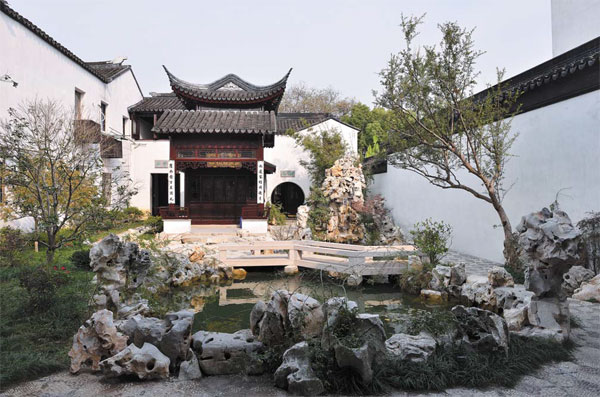
Blossom Hill Suzhou, a hotel in the Pan residency, stands out as a combination of classical garden architecture, culture and modern beauty. |
Former homes of the city's rich and famous are renovated and protected, Fu Chao reports.
A history of more than 2,500 years has left Suzhou with a lot of heritage, both tangible and intangible. During past millenniums, a number of affluent businessmen and political and cultural celebrities settled down and built private mansions in the bustling and beautiful city.
As one of several cities in Jiangsu province renowned for their traditional culture and scenic beauty, Suzhou has 138 protected cultural relics and 248 cultural relics pending approval as official protection sites.
Classical-style buildings typical of ancient southern China have made the city a unique and valuable cultural capital.
In recent years, residents living in these old buildings have moved to new urban areas in the city. Migrant workers and lower-income families moved in and unauthorized construction and safety issues became a concern.
To protect the ancient buildings and improve Suzhou's image, the city government started a large protection and renovation project in 2011.
The Suzhou Culture and Tourism Development Group, the main project partner, took up 52 building protection and renovation cases and came up with a bold and innovative approach to protect relics and also boost the city's development.
Wang Jinxing, chairman of the group, said the city has rich cultural and historical resources that need to be integrated with the city's tourism industry for better protection and development. He noted that the tourism industry needs more professionals for such integration.
He said the group has set its eyes firmly on cultural tourism, with unique experiences through which people can learn from and interact with local cultural and historic legacies.
According to the group, the objective of the protection and renovation project is to present the traditional culture and lifestyle of Suzhou, as well as to make the city an example of how an old community can maintain its original charm while modernizing.
Keeping the old alive
Before carrying out the renovation, the group asked the Tourism Development Research Center at Soochow University to research and compile proposals for the project. The group also recruited experts in old building renovation as consultants.
It also started to seek investments prior to the renovations and paid attention to commercial concerns during the project.
According to the group, it is not only the buildings that need to be renewed but the project is more about the culture and history of the buildings that need to be kept alive.
To better preserve and present specific pieces of history, the group also renovated the areas surrounding the buildings.
Tourism resources in the areas will be integrated to highlight the culture of each locale and the group plans to aid cooperation between scenic spots, hotels and transport businesses.
Suzhou traditional cultural items, including Suzhou embroidery and the local Kunqu Opera, are some of the city's selling points used in tourism promotions.
The group encourages scenic spots and hotels to work with individual artists and institutions for folk arts to help bring such arts to market.
The group plans to further improve public facilities for tourists, including sightseeing boats and buses.
Successful cases
The Ding and Pan residencies have garnered the most public attention among the group's finished and current renovation projects.
Ding Chunzhi, a businessman in the Ming Dynasty (1368-1644), established the Ding building.
The building's surrounding area changed significantly so the group relocated it to a new area. To maintain the building's original look as much as possible, the group moved almost all the structural components to the new location.
The Ding building is now home to an art center created by Chinese artist Wang Xiaohui, who now lives in Germany. The center is open to tourists for free.
The Blossom Hill Suzhou, a hotel in the Pan residency, stands out as a combination of classical garden architecture ,culture and modern beauty.
The original owner of the building, Pan Zuyin, was an important official during the Qing Dynasty (1644-1911). He had a sharp eye for art and was an amateur collector. The building had an elegant beauty in very subtle details, which can still be seen today.
The 3,150-square-meter hotel makes full use of each part of the classic building. It offers eight suites with authentic Suzhou-style furniture.
The garden surrounding the building, which is still intact after so many years, is a pleasant outdoor space for relaxing. Wandering around the private garden, people often have the illusion of being in one of the famed Suzhou Gardens.


Copyright 1995 - . All rights reserved. The content (including but not limited to text, photo, multimedia information, etc) published in this site belongs to China Daily Information Co (CDIC). Without written authorization from CDIC, such content shall not be republished or used in any form. Note: Browsers with 1024*768 or higher resolution are suggested for this site.
License for publishing multimedia online 0108263 Registration Number: 130349