Internet Plus becoming a reality
( China Daily Africa )
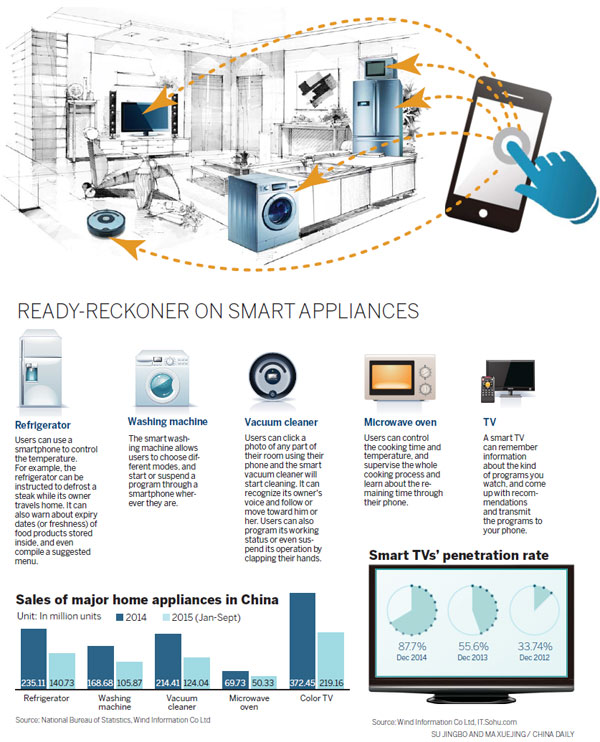
TCL, Changhong and Konka transform their operations by plugging into new technologies
Home appliance makers are making China's Internet Plus strategy a reality by pressing ahead with integrating Internet technologies with their various operations.
The strategy is aimed at allowing consumers on the move to control their televisions, refrigerators or air conditioners at home through their smartphone.
In other words, Internet technologies, which until now were used largely in low-end manufacturing, are making medium and high-end manufacturing intelligent, marking Chinese industry's emphasis on technological innovation and upgrading.
TCL Corp is leading the drive. Its 2014 strategy for transformation of its operations, Double Plus, is now taking the form of Intelligence Plus Internet and Products Plus Services, with focus on a new business model and user involvement.
"We've switched focus from product management to user management. We provide intelligent products and services using the Internet, big data and cloud computing," says Liang Qichun, assistant president of TCL.
The company, based in Guangdong province, has established an open, interactive system to guide and motivate prospective users of its appliances to participate in the whole process of product design, development, testing and evaluation.
"We conduct big-data analysis of user needs, behaviors and habits through the establishment of a user database to make personalized smart products," Liang says. Thus, TCL now makes a range of smart products like TVs, set-top boxes, cellphones, wearable devices and Imax home theaters.
Its smart home system is a solution to "manage multiterminals by using just one machine", he says. Management and remote control of a number of smart appliances is unified through an app.
The company has established a smart TV platform, Guangzhou Huan Network Technology Co Ltd, which connects 32 million smart terminals. Through tie-ups with Tencent Holdings Ltd and video-streaming website iQiyi, it has built a TV ecosystem that offers videos, games and life services.
And that's not all. Through another tie-up with the China Research Institute of Film Science and Technology, it promotes GoLive TV, which moves a cinema into the living room: Users can watch a movie playing at a cinema in real time. GoLive has more than 4 million users.
In December 2014, TCL agreed with LeTV Holdings Co Ltd to jointly develop innovative products and services to leverage their combined user base and supply chain resources. This emphasis on modern technology seems to be having a positive impact on sales. In the first three quarters of 2015, TCL's revenue reached 74.11 billion yuan ($11.2 billion; 10.2 billion euros), up 7.08 percent year-on-year. The net profit came in at 2.07 billion yuan.
"We will continue to strengthen cross-border cooperation and provide users with rich and differentiated content experience," Liang says.
TCL is also giving its modern manufacturing methods a touch of "green". It aims to protect the environment by reducing emissions.
In 2009, it set up TCL-AOBO Environmental Protection and Development Co Ltd in Tianjin, with an investment of 150 million yuan. The company mainly deals with the recycling, dismantling and processing of electronic waste like used home appliances, ironware and plastics.
"Through the introduction of a top-class production line and the use of advanced technology, we've established a recycling industrial chain to safely process electronic waste to reduce pollution and ensure comprehensive utilization of resources," Liang says.
About 4 million home appliances and electronic products were processed and recycled in 2014.
TCL teamed up with search engine company Baidu Inc to give its recycling drive an online dimension. Users need to merely upload photographs of their electronic waste. TCL will then use its network of sales, service, logistics and specialized recycling to provide a door-to-door recovery service.
Shi Wanwen, TCL's senior vice-president, says the company aims to build an effective waste appliance recycling and processing platform.
Toward that end, TCL upgraded its overseas factories, including the production lines in Poland and Mexico, to improve its capacity of sustainable production and build up green factories.
"The Internet era gives us a good opportunity to beat competitors from Japan and South Korea," Liang says. "Our use of the Internet (in manufacturing and recycling) is just next to that of the US. We (manufacturers) should all combine the traditional manufacturing industry, which has strengths in technology, channels and global expansion, with the Internet to build an innovative industrial ecosystem."
Home appliance makers such as Sichuan Changhong Electric Co Ltd and Konka Group Co Ltd are emulating TCL in intelligent manufacturing by making use of the Internet's potential.
Changhong started its technological transformation in 2013 by launching a "smart strategy". In March 2014, the company launched CHiQ products, including TVs, refrigerators and air conditioners, and set up a cloud service platform and a big-data center.
CHiQ TV can be controlled via smartphone, while the refrigerator can remind users about the expiry dates of food through image recognition technology, which it accesses via cloud computing. Similarly, the air conditioner can detect the temperature of human body and automatically adjust the ambient temperature.
For its part, Konka wants to transform into a platform for content, apps and net-friendly hardware. Through tie-ups with partners, Konka is seeking to make its smart TVs capable of playing varied content like games, shopping, health and educational videos.
Wu Siyuan, chairman of Konka, said in 2014, "We're making efforts to build Konka into a hardware company that knows the most about Internet."
Zhang Yanbin, assistant director of All View Cloud, a Beijing consultancy specializing in home appliances, said the transformation of manufacturing "is an inevitable trend, otherwise Chinese home appliance enterprises will be phased out".
Owing to the rising cost of human resources, falling profits and fierce competition, Japanese electronics companies such as Sony, Panasonic, Toshiba and Sharp have gradually exited the Chinese home appliance market and turned to business-to-business activities, construction, nuclear power, housing and automobiles.
"Compared with their Japanese counterparts, Chinese enterprises still have some advantages, including the comparatively low manpower cost, the adoption of Internet in production, and regularly updated technologies," Zhang says.
He adds that the home appliances industry is still promising, as demand still exists and the speed at which products are updated is faster than before.
"We should improve the quality of products by means of intelligent manufacturing to rebuild the image of brands and enhance the international influence of brands," Zhang says.
Liang Zhenpeng, an independent analyst, described the Internet as "just a tool and an external factor to push the transformation". He says Chinese manufacturers should focus on transformation of their operational models spanning research and development and every stage of the production process.
fanfeifei@chinadaily.com.cn
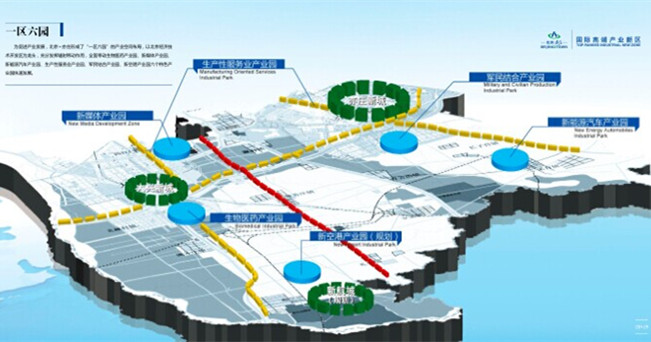 The Area with Six Parks
 Global Top 500