China harnessing new logistics technology
( China Daily Africa )
China's cross-border e-commerce sector has developed rapidly. In 2017, the transaction scale exceeded 8 trillion yuan ($1.15 trillion; 1 trillion euros; £891 billion), of which the cross-border retail market accounted for about 15 percent.
Although the cross-border e-commerce import sector market only accounted for 111.3 billion yuan in 2017, its year-on-year growth of 49.6 percent is rather alarming. With China's import e-commerce sector becoming increasingly important, the market's expectation for increasing delivery speed through bonded warehouses is rather alarming. Customers are demanding increasing authentication and traceability, due to a need to secure the timing and trustworthiness of products delivered to them. That is producing more pressure for logistics companies to improve their efficiency and traceability, and also introduce more intelligence into their system.
Consumption upgrade has also brought increased requirements for product and shopping experiences, such as the freshness of food and the safety of high-value products, which raised the standards for logistics to ensure the quality of goods.
Major players are planning to build overseas warehouses to achieve logistics intensification with a shortened delivery cycle, reduced logistics costs, and overseas omnichannel delivery.
Also, with the development of overseas warehouses, major platforms' demand for business analysis has increased greatly in order to achieve a more economical and efficient overseas stocking. What's more, since the trend of brand internationalization is more significant, and the proportion and unit value of cross-border e-commerce are both growing, the demand for high-quality logistics increases.
Interestingly, as cross-border logistics becomes an increasingly fierce competitive battlefield, a market has emerged for smart logistics technology providers.
As the name suggests, smart logistics technology is a sector that provides e-commerce and logistics clients with data as well as intelligence derived from this data. It can help e-commerce and logistics clients to derive solutions on where to build their warehouses, how to focus investment on last-mile delivery, and how to build systems on internet-of-things technology, big data technology and artificial intelligence technology.
The development of smart logistics technology will help cross-border e-commerce logistics to meet customer needs and sustain high-speed growth: Many e-commerce and logistics companies are already deploying smart logistics technology. For example, NetEase Kaola has deployed guided-vehicle robots in its bonded warehouses to realize the "goods-to-worker" intelligent storage mode, which has increased the number of hourly processed orders to more than three times that of manual methods. In this way, not only are labor costs greatly reduced, but processing efficiency is significantly improved.
Meanwhile, JD has realized full-link tracking of imported goods, which uses an internet of things platform and blockchain technology to gather information on production, shipping and selling, and ensures the authentication of goods.
JD also uses big data technology to realize data analysis and mining, accurately predict demand and intelligently plan optimal routes. Till now, JD, relying on its global distribution network and powerful information system, has achieved an average delivery time of 3.9 days by direct mail.
JD is also using its self-developed Smart Brain WMS5.0 system in its overseas warehouses to manage storage, inventory, delivery and material information. The unified language, operation and algorithm will connect the information chain of global overseas warehouses and conveniently manage the storage, sorting and distribution of global goods, which greatly improves the management efficiency of the international supply chain and reduces management costs.
As competition in the e-commerce logistics sector becomes increasingly fierce, it seems that logistics and e-commerce players are increasingly using technology to come up with smart solutions for delivery. More smart technology will emerge from the e-commerce logistics sector in China, to potentially transform the trajectory of logistics sector development globally and provide increasing convenience to consumers at lower costs.
The author is vice-president and chief strategy officer of G7, a Chinese e-commerce technology company. The views do not necessarily reflect those of China Daily.
( China Daily Africa Weekly 11/16/2018 page8)
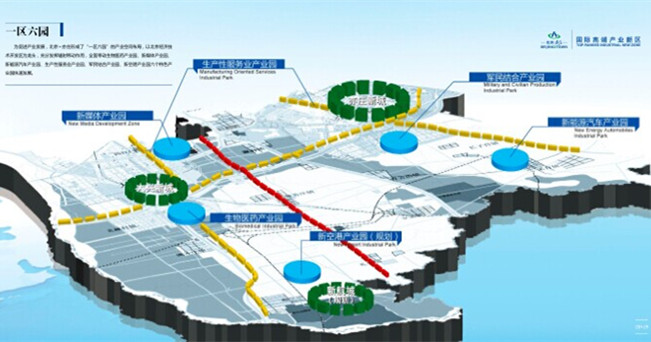 The Area with Six Parks
 Global Top 500