..
China faces challenges in urbanization
Updated: 2014-08-05
By Esther Teo, China Daily


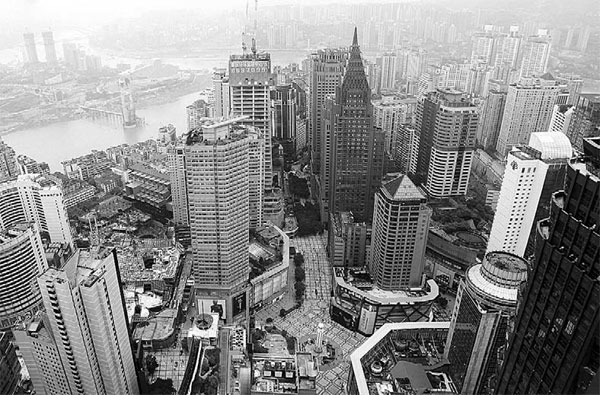
Once a backwater in China's often overlooked west, the city of Chongqing in the last two decades has been transformed into a sprawling metropolis where skyscrapers stretch endlessly along the Yangtze River.
Carved out of Sichuan province as a municipality in 1997, creating an area the size of Scotland, it now has a population of about 30 million, two-thirds of whom are farmers.
As of 2011, about a fifth of the urban center's population of 7 million are migrants from outside of the city.
|
Chongqing, a sprawling metropolis in Southwest China, is struggling to cope with a rising population. Zhao Junchao / For China Daily |
Chongqing native Wang Shiqun, 59, recalled having to wait four days before she was admitted to a hospital when running a high fever three years ago.
"We never had to worry about this in the past, but the city's infrastructure hasn't kept up with its population," she said.
"Traffic has worsened, the trains are crowded, and the competition for good high schools is very intense."
Chinese policymakers, who want to raise the urban population from the current 54 percent to 60 percent by 2020, seem to agree that big cities are struggling to accommodate their ever-growing populations.
In March, they unveiled a new urbanization plan aimed at curbing population growth in megacities like Beijing and Chongqing by diverting millions of migrant workers to smaller, inland cities.
This runs counter to the global trend of creating megacities, and has drawn mixed reviews from experts and ordinary Chinese alike.
"Having small cities rather than mega ones might make sense from a management perspective, but China cannot create too many because then they will be ineffective and inefficient," said urbanization expert Karen Seto of Yale University in the United States.
For Liu Houming, 27, a Xi'an native who works at a State-owned firm in Beijing, there is little appeal in moving to a small city: "It's more important to find a good job, and these are in big cities."
A new plan
According to the new blueprint for managing urbanization, population growth for cities with more than 5 million people will be "strictly controlled".
The population of medium-sized cities of 3 million to 5 million will be "reasonably set", while controls will be eased in small cities of fewer than 3 million people.
Some experts, however, say this new emphasis on smaller cities is counter productive as it does not capitalize on the synergies of big cities.
For one thing, most new jobs in the private sector are likely to be in big cities where economies of scale mean lower business costs.
"I'm not optimistic about the plan's success as migrants will continue flocking to large cities for jobs. The policy is counter-productive," said Professor Chan Kam Wing, an urbanization expert with the University of Washington in the US.
Similarly, Professor Hu Xingdou, a specialist in migrant issues at the Beijing Institute of Technology, said farmers will be unwilling to give up their land for life in a small city because they see it as a negative trade-off.
"How is it a people-centered approach if you're still trying to push people to places they don't want to go? It should be medium and large cities that China should develop instead because these can sustain growth," he added.
Provinces like Shandong and Henan, for instance, have populations of about 100 million - just under Japan's - but lack a thriving city like Tokyo, he noted.
Not everyone is pessimistic about the new policy. Some experts say small cities can be a viable strategy for managing urbanization if there is adequate socio-economic planning and good execution by local officials.
Paul Procee, the lead urban specialist at the World Bank, said the critical issue is how small cities are linked with the larger economy and the quality of services such as education.
"It's important not to focus on growth of small towns, but to create more attractive ones instead," he added. "People will move only if the basic quality of life is comparable to large cities."
The Straits Times
Asia News Network

Video
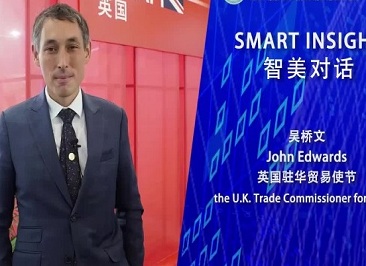
UK trade commissioner for China praised Chongqing as a burgeoning center in intelligent manufacturing.