Shenzhen residents benefit from Universiade
Updated: 2011-08-11 16:44
(Xinhua)
SHENZHEN - For 26-year-old Jiang Huali, a typical morning used to involve waking up at 6 am and spending more than two hours riding buses to her office in downtown Shenzhen.
These days, Jiang makes it to work in just an hour, courtesy of one of several new subway lines that have been built in the south China city as it prepares for the upcoming 2011 Universiade.
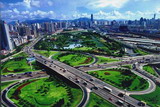
Jiang is just one of more than 10 million Shenzhen residents who have already benefited from the renovations and developments that the city has undertaken in preparation for the 12-day sports event, which will open on August 12.
Shenzhen won the right to host the 26th Universiade in 2007. The city immediately began working to improve its infrastructure, upgrading and remodeling 280 main roads and spending 75 billion yuan ($11.7 billion) to build five subway lines with a total length of 156 km. All five of the subway lines opened to the public in June this year.
"Large events create pressure to spur city leaders to speed up infrastructure construction and to modify and perfect their cities," said Wang Yukai, a professor at the Chinese Academy of Governance.
Wang said that hosing international events can have a long-lasting influence on a host city's future development.
Chinese cities are taking advantage of opportunities to host such events, seeking to boost their influence, upgrade infrastructure and improve their residents' quality of life.
Beijing made significant changes to its infrastructure before hosting the 2008 Olympic Games. It was ranked the following year as a "world capital of the future" by Forbes, an American publishing and media company. Shanghai's hosting of the 2010 World Expo allowed the city to make similar developmental strides.
Guangzhou, a large city in South China's Guangdong province, virtually remade itself in preparation for hosting last year's Asian Games. The city rolled out 910 urban improvement projects, including renovating buildings, cleaning up rivers and expanding its subway system.
Shenzhen is just the latest Chinese city to join the fray. The city has given facelifts to many of its older buildings, fortified community-based security facilities and renovated 1,600 of its shabby "urban villages," which are home to many lower-income city dwellers.
"This area has changed. The houses have been repainted and decorated, streets have been repaved. More and more people are shopping here," said Wang Yanli, a tea vendor living in the city's Xiashiwei urban community.
Measures have been taken to ensure that the Universiade will be environmentally friendly, Xu Qin, vice-president and secretary-general of the event's organizing committee, said at a press conference in July.
Xu, who is also the mayor of Shenzhen, said 65 percent of the event's venues have been remodeled or based on existing facilities in order to save costs and reduce the event's environmental impact.
The newly built Universiade Village and Universiade Center were constructed using energy-saving technologies and materials, Xu said.
This environmentally friendly approach will be utilized not only within the Universiade, but also in the city of Shenzhen itself.
Xu said the municipal government will put 2,011 alternative-energy vehicles on the city's streets during the event to promote the use of environmentally friendly vehicles.
The Shenzhen government is also taking the opportunity to narrow the gap between the city's ballooning population and its shortage of social, cultural and sports facilities.
Twenty-two new venues have been built for the event, mostly in the city's urban communities and universities. These facilities will be retained for use by local residents after the games are over.
The Universiade Village, home to more than 12,000 athletes and team officials, will be integrated into the Shenzhen Institute of Information Technology's campus after the event.
Many of the new venues are located in Longgang district, located in the outskirts of the city. According to local resident Chen Minying, the out-of-the-way district has transformed from being an "urban village" to being just another part of downtown Shenzhen - despite the fact that it is not even remotely close to the city's downtown area.
The region would not have developed nearly as quickly without the influence of the Universiade, Chen said.
Yang Haixian, a deputy of the National People's Congress of Shenzhen, said that the city government should continue to make efforts to develop the city and improve the lives of its citizens.
"The Universiade lasts just for 12 days, but the development of Shenzhen should be a long-term task," Yang said.
Related Stories
Symbol of reform, Shenzhen still appeals to youths 2011-08-10 18:10
World university beach concert held in Shenzhen 2011-08-11 09:11
Shenzhen Universiade ready for unique opening ceremony 2011-08-11 14:10
Greedy to be green, says Shenzhen official 2011-08-09 16:01
Shenzhen embraces 'Green Commuting' campaign 2011-08-08 14:56
Shenzhen ready to hold a unique Universiade 2011-08-08 10:42
Video

Working as a Universiade volunteer

Party starts as Universiade ends

Sumptuous seafood in Shenzhen

Athletes test doping knowledge
About Shenzhen