Going back to the roots
Updated: 2013-08-04 07:20
By Han Tianyang(China Daily)
|
|||||||


|
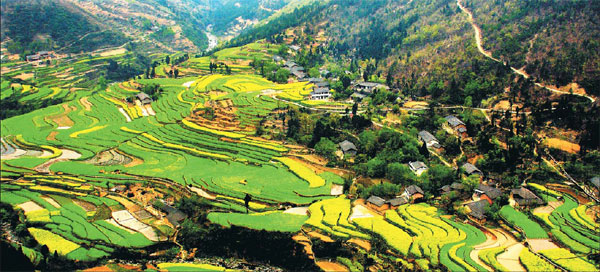
Hanzhong in Shaanxi province, where the Hanwang Medicine is located, is rich in herbal resources. After Hanwang rebounds, Hanzhong is also playing an increasingly important role in the domestic herbal market. Photos provided to China Daily |
|
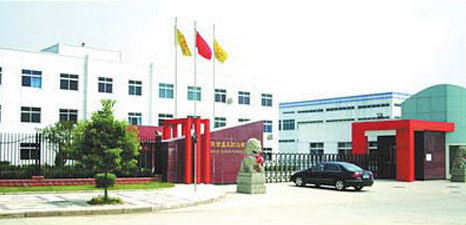
The pharmaceuticals company's headquarters in Hanzhong. |
|
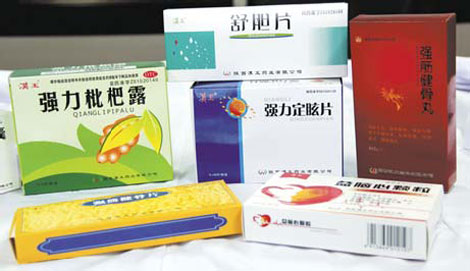
Hanwang's medicine series made from herbals, with proprietary intellectual property. |
Shaanxi native helps transform TCM field, Han Tianyang reports
Rich in traditional herbs, the fertile land of Hanzhong in the southwest of Shaanxi province, is the birthplace of a Chinese pharmacy Guangtaihe in the 1930s.
In the following decades, the small drug store grew to be a well-known pharmaceutical company in the province. It has six exclusive products with self-developed intellectual property rights and five products that are granted patents.
But in the beginning of the 20th century, the Shaanxi Hanwang Medicine Co Ltd started to operate at a loss and in 2008 it was 50 million yuan ($8.14 million) in debt.
When people think the company would surely go to bankruptcy, Feng Zhenbin took over the helm of the floundering ship.
In five years, the company was brought back to life. It is profitable now, all debts paid off, and total assets have reached nearly 300 million yuan.
The only thing
A Shaanxi native, Feng often says that the only thing he wants to do in his lifetime is Chinese medicine.
And he dedicated himself to the subject in the past three decades.
He studied at the Shaanxi College of Traditional Chinese Medicine from 1984 to 1988. After graduation, he worked in different positions at a local pharmaceutical factory, ranging from a technician, quality supervisor to a workshop director.
Due to family reasons, he then shifted to another pharmaceutical factory in Weinan, a city more than 300 kilometers from Hanzhong. He was promoted to be assistant to the managing director there in 1995 and thus switched his focus from technological research to marketing and sales.
Later, Feng recalled it as a "turning point" in his career.
Practicing sales for two years, Feng quit the State-owned company and founded his own business to sell traditional Chinese medicine. With a reliable reputation, Feng gradually established his own distribution network and expanded his business.
In 2008, when he was informed that Hanwang, a State-owned company that had been operating in red for years, will be restructured to a joint stock company, he decided to invest all his money to take the majority stake in the company.
At that time, his family and friends mostly were against the decision which seemed to be too risky. But Feng later said that "they exaggerated the difficulties and neglected many advantages that Hanwang has."
He said that the city of Hanzhong has rich herb resources, which is the biggest advantage for a pharmaceutical company.
Also, Hanwang has five patents, a long history and strong loyalty from its staff, he said, noting that these are the biggest reasons that he made the decision.
Four months after Feng joined Hanwang, the company was profitable. The rebound continued for the next few years and in 2012, the company saw its accumulated profit and tax both exceed 100 million yuan.
As the business prospered, someone suggested Feng invest in property market to gain some easy, fast money but he rejected. "All I am familiar with is Chinese medicine. It will be good enough to do one thing right in one's lifetime," he said.
Sales reform
One of the biggest reforms Feng implemented after he took over Hanwang is to establish the company's own sales channels.
Previously sales of Hanwang's main products were outsourced to other companies. Without its own distribution network, the company became increasingly passive in the market and the profit was squeezed.
Feng gradually withdrew the sales right from other companies and established its own sales team. By 2012, the company has built a healthy sales network and gained a foothold in the most competitive markets like Beijing and Shanghai.
Feng said he is proud of Hanwang's expansion in the past few years and he feels the market potential is huge.
He told the example that the company's Qiangli Dingxuan pills - a medicine for hypertension and hyperlipidemia - has been ranked among the top five in Beijing in terms of sales in three consecutive years. The pills' annual sales revenue has surpassed 100 million yuan.
Feng attributed the company's success to the wisdom and efforts of all its staff, but no one shall deny his personal contribution. He also admitted that "a managing director is the one that undertook the most arduous work in a company."
"The reform and development of a company is a systematic project and it requires hard, careful work in every aspect," he said, indicating that one of the most important aspects is quality.
During his tenure in Hanwang, the company's procurement department never accepted invitation from suppliers to dinner. Feng said that raw material purchase is the fundamental basis of product quality and "no false is permissible."
The achievement of Feng and Hanwang is also recognized by the local government.
The State-owned stake has surpassed 50 million yuan, far more than 6 million yuan when Feng took office in 2008. Local government officials praised the case of Hanwang as a successful model of transforming a State-owned company into a stock corporation and said the model is worth learning across the city.
Herbal market
In the past five years when Hanwang's business rose to a new level, the city of Hanzhong also played an increasingly important role in the domestic herbal markets.
The leading pharmaceutical company poured 60 million yuan in purchase of herbs as raw production materials in 2012. The purchase is expected to hit 80 million yuan this year. In comparison, the amount was merely 2 million yuan in 2008.
Feng said that 70 percent of his company's medical materials are purchased from Hanzhong.
Last year, the company drove the income of local herbal farmers to increase by more than 40 million yuan, he said, adding that the growth will continue.
In May of this year, Hanwang made another milestone in its development. Its proposal to resume the Guangtaihe trademark of its predecessor was approved by China Food and Drug Administration.
Hanwang plans to use the old, well-known trademark for its branch that produces prepared medicinal herbs. The prepared medicinal herbs are intermediate products between the raw materials and the finished medicine.
Hanwang plans to invest 15 million yuan in building a production line with annual capacity of 2,500 tons of prepared medicinal herbs. The move is expected to expand Hanwang's product range and also provide added value to Hanzhong's locally grown herbs.
Feng has more plans to boost the local herbal industry. For example, Hanwang is preparing a new industrial park with total investment of 500 million yuan, including a 300 million yuan herb logistic center.
Covering an area of more than 6.67 hectares, the center is planned to begin operation in 2015, after its construction starts next year. The facility is designed to become a distribution hub of Chinese medical materials and help Hanzhong revitalize its glory as an important herbal market in history.
Contact the writer at hantianyang@chinadaily.com.cn

(China Daily 08/04/2013 page16)