Nokia looks past handsets
Updated: 2013-09-15 07:31
By Mark Scott and Brian X. Chen(The New York Times)
|
|||||||


Nokia, which began making rubber boots for Finnish workmen 150 years ago and was an innovative leader of the cellphone industry in the 1990s, is once again evolving.
While Microsoft is acquiring Nokia's handset business, the Finnish company is holding on to its profitable networking and mapping businesses.
"There's a lot of emotion involved in this move," Timo Ihamuotila, Nokia's chief financial officer, said, adding, "It's hard, but Finland will have two strong technology companies that result from this deal."
Nokia focused on cellphones in the 1990s after facing financial difficulties. By the end of the 1990s, it was the world's largest cellphone maker. It attained a market value of $250 billion. Yet a failure to develop a smartphone to rival Apple's iPhone and Android-based devices from Samsung Electronics collapsed Nokia's market share from 30 percent in 2009 to less than 4 percent last year, according to the research firm Gartner. In 2013, Samsung became the largest phone maker.
The new Nokia is flush with Microsoft money and could be well positioned to compete. Nokia's networking business, which includes equipment it sells to telecom operators to run their wireless networks, brings in most of the company's annual revenue.

Nokia's maps technology has a valuable global database of geographical information. Called Here, it can be licensed to companies that want to build products and services around maps.
"It's a very odd mix at this point," said Jan Dawson, a telecom analyst. "There's no other company that combines heavy network infrastructure with what's basically a pure data and software asset, and there's very little synergy between the two."
Nokia's mobile infrastructure business, which began as a joint venture with Siemens, generates around 85 percent of the company's annual $18.4 billion in revenues. Nokia acquired the 50 percent stake in Nokia Siemens Networks earlier this year for $2.2 billion.
It is expected to compete against telecom suppliers like Ericsson of Sweden and Huawei and ZTE of China to win contracts from the world's largest cellphone operators.
It may have some success in the United States and Europe, where the governments are wary of Huawei and ZTE because of security concerns about Chinese government-sponsored spying. But it will have to invest heavily to challenge Ericsson, said Tero Kuittinen, an analyst.
Nokia plans to sell GPS and entertainment services, and it has retained its research and development facilities and patent portfolio, with plans to develop new products. Its mapping component generates around $1.3 billion in annual revenue.
The loss of Nokia's phone business creates a void for Finland, said Mr. Kuittinen. Finnish universities offered courses in mathematics and software engineering with Nokia in mind as a future employer.
"The industry just vanished," Mr. Kuittinen said, "and this is not something that happens very often."
The New York Times
|
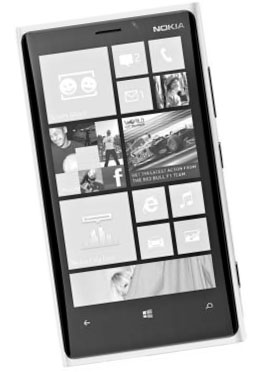
Once a leader, Nokia saw its cellphone sales collapse. Nokia, Via European Pressphoto Agency |
(China Daily 09/15/2013 page10)