Sustainable development
 |
|
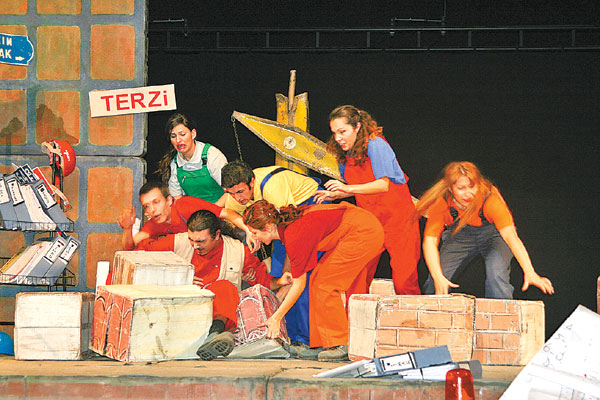
The theater performance Moving World is part of a project of public education about earthquakes in Kocaeli, Turkey. Photos Provided to China Daily |
 |
|
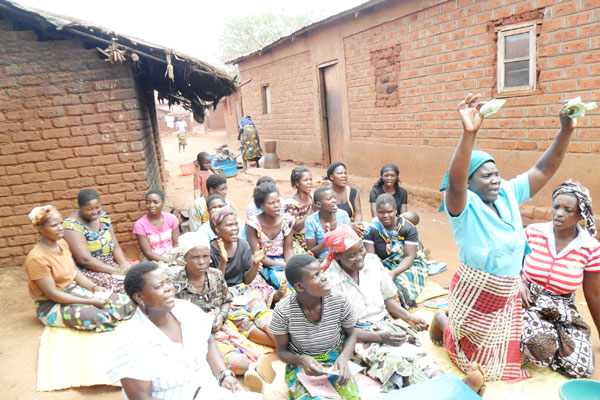
People in Malawi participate in the Lilongwe-Johannesburg cities mentorship program, which won The Guangzhou International Award for Urban Innovation. |
China is at the forefront in trying to tackle problems of urbanization, say experts who attended the inaugural Guangzhou International Award for Urban Innovation recently. Xu Jingxi reports in Guangzhou.
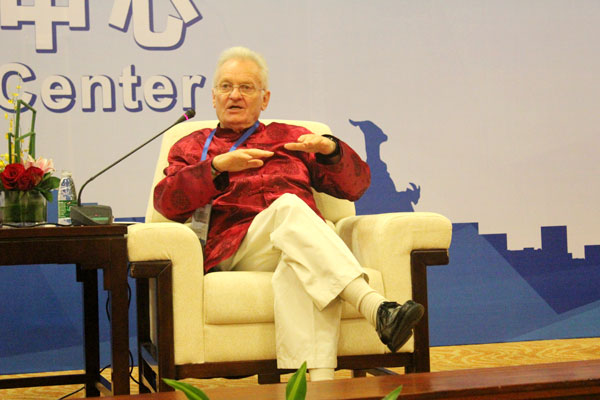
China is trying to build green cities, provide good, cost-effective public transport and set a good example for other Asian countries, according to Peter Woods, emissary of Asia Pacific Regional Section of United Cities and Local Governments.
Related: Preparing to feed baby better
He says the world's second largest economy is also showcasing its determination to tackle the uneven distribution of wealth and overcrowded big cities.
Woods, the retired secretary-general of the agency, was in Guangzhou recently to attend a series of events under The Guangzhou International Award for Urban Innovation, an award established this year and co-organized by the Guangzhou government, World Association of Major Metropolises and UCLG.
In Woods' opinion, Asian economies are still growing strongly, while Europe, the US and many other economies are in a very difficult situation. But he pointed out that even as Asian countries get stronger economically, there won't be an equitable distribution of wealth unless they are very careful.
"In some Asian countries, the rich are getting richer while the poor are facing difficulties with inflation and not keeping up with the standard of living that is expected with an improved economy," says Woods.
He describes this phenomenon as common in places like India, Indonesia, Vietnam and other economies in Asia. China is concerned with a similar problem but the government of China and the Party have made it "clear and public" that they want to work strongly to overcome the difficulties, he says.
"The national CPC meeting in Beijing very recently shows that the government of China has recognized that this is an issue that must be addressed and that there must be mechanisms to ensure the wealth is distributed more evenly," adds Woods, who emphasizes the importance of a tax system that redistributes the wealth from the rich to the poor.
Altogether 153 cities from 56 countries and regions entered a total of 255 projects to compete in the Guangzhou award this year. Many of these projects offer new approaches to building green cities.
The five winners this year are the public education project about earthquake in Kocaeli, Turkey; the Lilongwe-Johannesburg cities mentorship program in Lilongwe, Malawi; the project tackling youth Internet addiction in Seoul, South Korea; the project of building the greenest city by 2020 in Vancouver, Canada; and the project about producing and using renewable energies in Vienna, Austria.
Alain Le Saux, secretary general of the Metropolis, believes that sharing innovative projects and experiences is an effective way for worldwide cities to learn from each other and help solve similar problems.
"Innovation is a key for a modern city to sustain development," he says.
Woods says the biggest mistake he has seen in many countries is when everyone from the countryside pours into a few big cities, causing problems such as unemployment, inadequate infrastructure and environmental degradation.
"It is better to have a spread of cities, big and small, throughout the country, with well-developed railway systems to ensure these cities won't be isolated from one to another," Woods says.
According to Liu Yong, a senior researcher from the development research center of the State Council, many cities including London, Paris, Johannesburg and New York face concentration of too many functions - economic, traffic, cultural and political - in big cities.
"The solution is to develop satellite towns," says Liu at the award event, where mayors of Guangzhou, Cornella, Vilnius and Johannesburg exchanged ideas of handling common problems in urban development including immigration and pollution.
Citing Beijing as an example, he says the capital has developed three modes of satellite towns. The first are residential areas, like the Wangjing community. The second are career hubs, like the Yizhuang economic development zone.
"And the latest mode is an independent satellite town with its own industrial system, which makes the town more attractive for migrants. This is the way to go for China, to solve the problems of urban development in the future," says Liu.
In Woods' opinion, the Chinese government has realized that the continuous growth of big cities is not sustainable.
"The government has spent billions of yuan building efficient fast-rail connections, so people don't need to live in big cities like Beijing, Shanghai and Guangzhou when there are good cities throughout the country with industries and job opportunities."
Metropolises in Asia are choked up by not only crowds but also motor vehicles, Woods adds.
"When I first came to China, everyone was on a bicycle. There were very few cars. But now you can see what happens in the country's big cities is like what happened in the US they depend on motor vehicles rather than public transport," says Woods.
"It's interesting that because of environmental and health concerns, many advanced countries are going back to bicycles. They realize that this is far better for citizens. And they are improving on public transport."
Woods is happy to see that the Chinese government is encouraging the development of good public transport, with innovative fast-rail network and bus rapid transit systems that are "far superior to many Western countries".
For example, Guangzhou BRT was recently named by the United Nations Climate Change secretariat as one of the nine "lighthouse activities" this year in developing countries, which either help to curb greenhouse gas emissions or help people adapt to climate change, while at the same time benefit the urban poor.
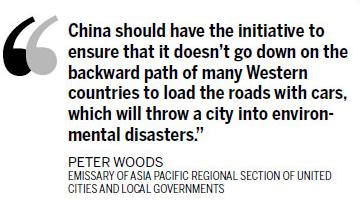
"China should have the initiative to ensure that it doesn't go down on the backward path of many Western countries to load the roads with cars, which will throw a city into environmental disasters," says Woods.
Contact the writer at xujingxi@chinadaily.com.cn.
Chen Xin also contributed to the story.