Behaving better beyond borders
 |
|
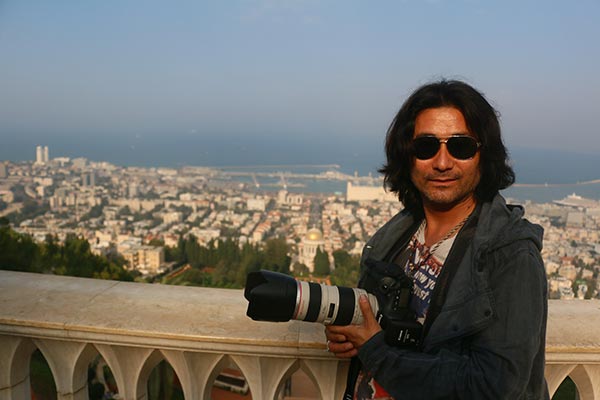
Xu Tieren, who has traveled to more than 50 countries, urges Chinese travelers to behave well. [Photo provided to China Daily] |
Every time the Beijing resident uses the washroom on a plane, he cleans it if the previous user leaves a mess.
"I'm afraid people after me would think it's my doing," he says.
Xu's sensitivity towards uncivil travel behavior had developed after his own encounters with those who behave badly.
He was once at the receiving end of abusive words from jaywalking Chinese tourists when he politely suggested that they follow traffic rules in downtown Tokyo in 2007.
But an insignificant civilized move produced unexpected results. When he stuffed his cigarette butt into his portable ashtray at a Taipei restaurant, a surprised guest asked him if he came from Japan.
When Xu said he came from Beijing, the guest replied that Beijing must be a very civilized city.
World traveler
The actor trained at the Central Academy of Drama hosts a TV travel program and has visited over 50 countries.
His Sina Weibo micro blog features his travel accounts and his sense of each destination. It has received 80 million visits.
His 2012 book Traveling Around the Earth revealed details of local people's lives in various countries, such as a Canadian cleaner's happy life and a European wedding ritual.
Xu wanted the book to show his readers the world as it is.
"The meaning of travel is to feel other people's lives at close quarters, and hold dearer one's own life after coming back," Xu says.
As a veteran traveler, Xu has had his fair share of bad behavior by tourists. Some of that, he says, results from cultural differences and ignorance about subtle details.
In a supermarket in France's Nice in 2008, Xu saw four Chinese college students give a checkout clerk the cold shoulder after the worker greeted them warmly.
"I really wanted to call this to their attention, but ultimately failed to open my mouth since we didn't know each other," Xu says.
But after experiencing many bad incidents, he mustered the courage to speak out.
"At first I thought I need only to behave myself, but then I realized it's necessary to advocate for civilized travel. Travelers' conduct could affect the country's image, so I began to do it in my blog and my coffeehouse in Xidan and to people around me," he says.
 |
|
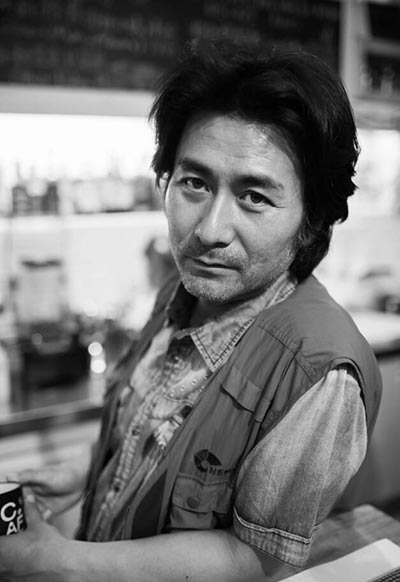
Xu Tieren, who has traveled to more than 50 countries, urges Chinese travelers to behave well. [Photo provided to China Daily] |
Xu confronted Chinese students, who spoke loudly on the phone at the Metropolitan Museum of Art in New York. Another time, he urged Chinese tourists to avoid jumping the line at buffets.
His efforts have recently earned him the honor of being named a travel ambassador by the National Tourism Administration. Xu was one of 1,000 chosen to encourage more tourists to conduct themselves courteously during their travels.
Chinese tourists made 120 million trips abroad in 2015, the NTA reports. And bad behavior by some Chinese travelers has frequently made news headlines.
The civil-ambassador campaign seeks to ensure that every tourist speaks and acts in ways that reflect the country's image and civilization.
"I felt sad every time I saw news reports about Chinese tourists' behavior," Xu says.
Leaving no trace
He has initiated a "traceless" campaign after recently seeing his Chinese compatriots obliviously video-chatting in a train carriage in Japan.
"Their bursts of laughter attracted disapproving sidelong glances from the Japanese," Xu says.
To put it simply, traceless travel means you tour a place but leave it like you've never been there, Xu explains. Good tourists leave no traces-no litter, no graffiti and no irritated locals.
The first level involves following traffic rules and not spitting, littering or leaving graffiti-expectations Xu says most Chinese respect.
The second level is not making loud noises and not smoking in public indoor spaces, including museums, trains and restaurants.
The third level, he admits, is more demanding: Cleaning a public washroom after use; sorting out garbage at a hotel; leaving a buffet table neat; staying out of the way in narrow spaces; not photographing strangers; and not disturbing an art performance by eating food or applauding at inappropriate times. Tourists should carry trash bags with them and smokers should have a portable ashtray.
"I hope more Chinese can live up to traceless travel, no matter domestically or abroad, and all the bad behavior by tourists can eventually be history," Xu says.
Xu has held sharing sessions at his coffeehouse, where people can exchange travel experiences.
The initial purpose was helping guests understand the culture of countries that they were planning to visit, but now he kicks off the sessions with a few dos and don'ts.
"I found some guests would actually clean my washroom after the session," he says with pride.
One of his pen pals told Xu that he stopped piling food on his plate at buffets ever since he read on Xu's blog that food should be taken gracefully.
One time, he heard a young girl reminding her mother to keep a certain distance when the old lady followed closely behind Xu in a customs line.
"I turned back and we both smiled at each other," Xu says.
He has strong faith that one day Chinese tourists will catch up and behave themselves.
"Japanese tourists were criticized for their uncivilized conduct by the European media 30 years ago, but now they have become some of the most civilized travelers," he says.
"I believe Chinese tourists will eventually be recognized in the same measure after our unremitting efforts."
Related: