London bomb plotters get life in prison
(AP)Updated: 2007-07-11 20:39
LONDON - A judge on Wednesday sentenced four men to life in prison for attempting to bomb London's transit system in July 2005, just two weeks after suicide bombers killed 52 commuters in the city.
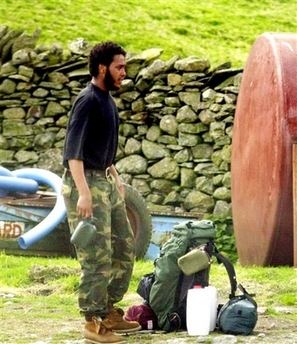 This is a Metropolitan Police handout still from a video of Ramzi Mohammed at an alleged training camp in Cumbria northern England in this May 2004 image. Three men were found guilty Monday of plotting to bomb London's public transport system on July 21, 2005, two weeks after a coordinated suicide bombing attack on the network killed 52 commuters. Ramzi Mohammed, 25, Muktar Said Ibrahim, 29; and Yassin Omar, 26; were convicted of conspiracy to murder. The jury was still deliberating on three co-defendants.[AP] |
Judge Adrian Fulford said the men must spend at least 40 years in jail before becoming eligible for parole. A jury on Monday found Muktar Said Ibrahim, 29; Yassin Omar, 26; Ramzi Mohammed, 25; and Hussain Osman, 28, guilty of conspiracy to murder in an al-Qaida-inspired plot to detonate explosives-filled knapsacks on three subway trains and a bus.
Two other suspects, Manfo Kwaku Asiedu, 34, and Adel Yahya, 24, will be retried after the jury failed to reach a verdict.
Prosecutors said the July 21 attacks were a deliberate mirror image of the July 7 transit bombings, though the planning started long before. Fulford said he had considered the possible links between the two groups of bombers - which police suspect but could not prove - when he was deciding on the sentences.
Also Wednesday, prosecution lawyer Nigel Sweeney told a London court that Asiedu and Yahya must be retried after a jury at their first trial failed to reach a verdict.
Fulford had dismissed the jury on Tuesday after they said they could not agree on a verdict for Asiedu and Yahya.
All six defendants denied the charges, saying the devices were duds and their actions a protest against the Iraq war. But police and prosecutors said scientific tests proved the bombs were all viable. They do not know why they did not work.
Deputy Assistant Commissioner Peter Clarke, the Metropolitan Police anti-terrorism chief, said the four convicted plotters "set out to replicate the horrors that had been inflicted on Londoners on July 7, 2005."
"The convictions show that the jury rejected the blatant, indeed ridiculous, lies told by these defendants in a futile attempt to escape justice," he said.
During the six-month trial, prosecutors said Asiedu lost his nerve and abandoned his device in a London park. The device was shown to the jury as evidence during the trial.
Yahya left Britain for Ethiopia several weeks before the attacks.
During the trial, Asiedu turned on the others and claimed Ibrahim, the gang's self-proclaimed leader, had wanted the attacks "to be bigger and better" than the July 7 bombs.
The four convicted men attempted to detonate explosives-laden backpacks on three subway trains and a bus, as in the July 7, 2005, attacks. The devices - made from a volatile mix of hydrogen peroxide and flour - failed to explode, and no one was injured.
Unlike three of the four July 7 bombers, who were British-born, those in the July 21 plot had come to Britain as youths from places like Eritrea, Ethiopia and Somalia. Some had become British citizens, while others had refugee status.
Police believe the planning for the attack started after Ibrahim returned to Britain from a trip to Pakistan in March 2005. He was in that country at the same time as two of the July 7 bombers - Shezhad Tanweer and Mohammed Sidique Khan - but officials do not know if they ever met.
The judge said he would consider the potential links between the two sets of bombers while he was deciding on the sentences.
They believe the transit system was not the group's original target, but was chosen following the successful attacks two weeks earlier. The original target is unknown.
The failed attack sparked a huge police manhunt for the would-be suicide bombers. Much of the prosecution's case was based on eyewitness testimony and closed-circuit television footage from the targeted subway cars and bus.
Following the men's arrests, police acknowledged they had video evidence of several of the suspects at a training camp in the northern English countryside taken a year before the attacks but had failed to identify them.
Ibrahim also had been arrested and charged over a disturbance while he was distributing extremist Islamic pamphlets, but was nonetheless allowed to travel to Pakistan months before the failed attacks.
|
|
|
||
|
||
|
|