AIDS cases worldwide drop, but bad data to blame
Updated: 2007-11-20 11:04
LONDON -- The number of AIDS cases worldwide fell by more than 6 million cases this year to 33.2 million, global health officials said Tuesday. But the decline is mostly on paper.
|
|
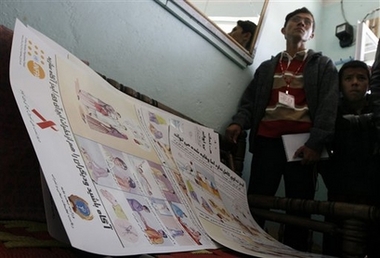
Previous estimates were largely inflated, and the new numbers are the result of a new methodology. They show AIDS cases in 2007 were down from almost 39.5 million last year, according to the World Health Organization and the United Nations AIDS agency.
Although the decline is largely due to revised numbers, UN officials said it still showed the AIDS pandemic was losing momentum.
"For the first time, we are seeing a decline in global AIDS deaths," said Dr. Kevin De Cock, director of WHO's AIDS department.
The two agencies will issue their annual AIDS report Wednesday after convening an expert meeting last week in Geneva to examine their data collection methods.
Much of the drop is due to revised numbers from India -- which earlier this year slashed its numbers in half, from about 6 million cases to about 3 million -- and to new data from several countries in sub-Saharan Africa.
Previous AIDS numbers were largely based on the numbers of infected pregnant women at clinics, as well as projecting the AIDS rates of certain high-risk groups like drug users to the entire population at risk. Officials said those numbers were flawed, and are now incorporating more data like national household surveys.
UN officials could not rule out future downward corrections. WHO and UNAIDS experts reported 2.5 million newly infected people in 2007. Just a few years ago, that figure was about 5 million.
While the global AIDS numbers are falling, there are huge regional differences. Sub-Sarahan Africa remains the epicenter of the epidemic. AIDS is still the leading cause of death in there, where it affects men, women and children. Elsewhere in the world, AIDS outbreaks are mostly concentrated in gay men, intravenous drug users, and sex workers.
But the UN said progress was being made, and that the global epidemic peaked in the late 1990s.
"There are some encouraging elements in the data," said De Cock. He said the dropping numbers were proof that some of the UN's strategies to fight AIDS were working.
Not everyone agrees. Some critics have accused the UN of inflating its AIDS numbers, and say the revised figures are long overdue.
"They've finally got caught with their pants down," said Dr. Jim Chin, a clinical professor of epidemiology at the University of California at Berkeley. Chin is a former WHO staffer and the author of "The AIDS Pandemic: The Collision of Epidemiology with Political Correctness."
He said that it was difficult to tell whether the lowered numbers were evidence that AIDS treatment and prevention strategies were working, or whether the decrease was just due to a natural correction of previous overestimates.
Even with the revised figures, "the numbers are probably still on the high side," said Daniel Halperin, an AIDS epidemiologist at the Harvard School of Public Health. Halperin attended the WHO/UNAIDS meeting last week that reviewed the figures, and said that the estimates were getting closer.
Chin and Halperin said AIDS officials may be reluctant to admit that fewer people are infected because it may translate into less funding for efforts to fight the disease.
"On the one hand, it would be a mistake to radically decrease funding for HIV," Halperin said. "But on the other hand, why not put more money into family planning or climate change?"
Other experts said that even with the decreased figures, much more is needed to stop the AIDS pandemic.
"We are still failing to respond to the crisis," said Dr. Paul Zeitz, executive director of the Global AIDS Alliance. "The overall prevalence of AIDS may have stabilized, but we are still seeing millions of new infections and it is not time yet to step back from this battle."
|
|
|
||
|
||
|
|
|
|