Stem cell breakthrough uses no embryos
Updated: 2007-11-21 07:47
|
|
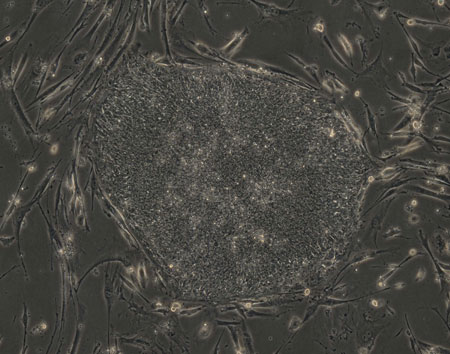
The Wisconsin Alumni Research Foundation, which holds three patents for Thomson's work, is applying for patents involving his new research, a spokeswoman said. Two of the four genes he used were different from Yamanaka's recipe.
Scientists prize embryonic stem cells because they can turn into virtually any kind of cell in the body. The cloning approach -- which has worked so far only in mice and monkeys -- should be able to produce stem cells that genetically match the person who donates body cells for cloning.
That means tissue made from the cells should be transplantable into that person without fear of rejection. Scientists emphasize that any such payoff would be well in the future, and that the more immediate medical benefits would come from basic research in the lab.
In fact, many scientists say the cloning technique has proven too expensive and cumbersome in its current form to produce stem cells routinely for transplants.
The new work shows that the direct reprogramming technique can also produce versatile cells that are genetically matched to a person. But it avoids several problems that have bedeviled the cloning approach.
For one thing, it doesn't require a supply of unfertilized human eggs, which are hard to obtain for research and subjects the women donating them to a surgical procedure. Using eggs also raises the ethical questions of whether women should be paid for them.
In cloning, those eggs are used to make embryos from which stem cells are harvested. But that destroys the embryos, which has led to political opposition from President Bush, the Roman Catholic church and others.
Those were "show-stopping ethical problems," said Laurie Zoloth, director of Northwestern University's Center for Bioethics, Science and Society.
The new work, she said, "redefines the ethical terrain."
Richard Doerflinger, deputy director of pro-life activities for the US Conference of Catholic Bishops, called the new work "a very significant breakthrough in finding morally unproblematic alternatives to cloning. ... I think this is something that would be readily acceptable to Catholics."
Another advantage of direct reprogramming is that it would qualify for federal research funding, unlike projects that seek to extract stem cells from human embryos, noted Doug Melton, co-director of the Harvard Stem Cell Institute.
Still, scientific questions remain about the cells produced by direct reprogramming, called "iPS" cells. One is how the cells compare to embryonic stem cells in their behavior and potential. Yamanaka said his work detected differences in gene activity.
If they're different, iPS cells might prove better for some scientific uses and cloned stem cells preferable for other uses. Scientists want to study the roots of genetic disease and screen potential drug treatments in their laboratories, for example.
Scottish researcher Ian Wilmut, famous for his role in cloning Dolly the sheep a decade ago, told London's Daily Telegraph that he is giving up the cloning approach to produce stem cells and plans to pursue direct reprogramming instead.
Other scientists said it's too early for the field to follow Wilmut's lead. Cloning embryos to produce stem cells remains too valuable as a research tool, Jaenisch said.
Dr. George Daley of the Harvard institute, who said his own lab has also achieved direct reprogramming of human cells, said it's not clear how long it will take to get around the cancer risk problem. Nor is it clear just how direct reprogramming works, or whether that approach mimics what happens in cloning, he noted.
So the cloning approach still has much to offer, he said.
Daley, who's president of the International Society for Stem Cell Research, said his lab is pursuing both strategies.
"We'll see, ultimately, which one works and which one is more practical."


|
|
|
||
|
||
|
|
|
|