WORLD> America

|
WORLD> America
|
|
Motor City's woes extend beyond auto industry
(Agencies)
Updated: 2008-12-21 10:30 DETROIT – One measure of how tough times are in the Motor City: Some of the offenders in jail don't want to be released; some who do get out promptly re-offend to head back where there's heat, health care and three meals a day. "For the first time, I'm seeing guys make a conscious decision they'll be better off in prison than in the community, homeless and hungry," said Joseph Williams of New Creations Community Outreach, which assists ex-offenders. "In prison they've got three hots and a cot, so they commit a crime to go back in and come out when times are better."
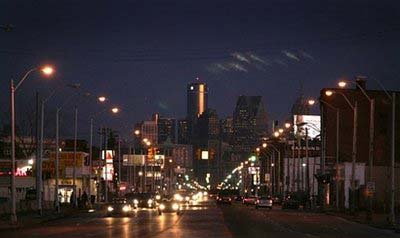
For now, better times seem distant. Even with no hurricane or other natural disaster to blame, Detroit has — by many measures — replaced New Orleans as America's most beleaguered city. The jobless rate has climbed past 21 percent, the embattled school district just fired its superintendent, tens of thousands of homes and stores are derelict and abandoned, the ex-mayor is in jail for a text-messaging sex scandal. Even the pro football team is a pathetic joke — the Lions are within two losses of an unprecedented 0-16 season. And overarching these and many other woes is the near-collapse of the US auto industry, Detroit's vital source of jobs and status for more than a century. "We're the Motor City," said Scott Alan Davis, who oversees community development projects in one of the worst-hit neighborhoods. "When the basis for that name collapses, that's started to scare people." Among the worried is 81-year-old Warlena McDuell, a retired surgical technician who shares a home with her cancer-stricken daughter. On a recent weekday, she was among hundreds of Detroiters, most of them elderly, filling orange-plastic grocery carts at a food bank run by Focus:HOPE, a local nonprofit. "It's a depression — not a recession," McDuell said, with the authority of someone who has lived through both. "It will get worse before it gets better." Behind her in line, stocking up on canned apple juice and fruit cocktail, was Benjamin Smith, 77, who once held jobs with Uniroyal and Chrysler. Maneuvering his cart slowly, one hand gripping a cane, he was unable to muster much cheer when someone extended holiday good wishes. "How are we going to do well?" he replied. "Everything's busted up." Focus:HOPE's food program serves 41,000 people a month; manager Frank Kubik estimates that's only half the number of Detroiters in need of the assistance. "It's not going to be a nice Christmas for a lot of folks," he said. DeWayne Wells, president of Gleaners Community Food Bank of Southeastern Michigan, said demand is up by 25 percent from a year ago in the region's food banks as auto-industry layoffs multiply. "Many people are first-timers — they have no idea how to navigate the system, how to qualify for food stamps," Wells said. "Last year, some were donors — now they're clients." The roots of Detroit's current plight go back decades. Court-ordered school busing and the 12th Street riots of 1967 accelerated an exodus of whites to the suburbs, and many middle-class blacks followed, shrinking the city's population from a peak of 1.8 million in the 1950s to half that now. About 83 percent of the current population is African-American; of cities with more than 100,000 people, only Gary, Ind., had a higher percentage in the latest census. Detroit's crime, poverty, unemployment and school dropout rates are among the worst of any major US city. The bus system is widely panned; car and home insurance rates are high. Chain grocery stores are absent, forcing many Detroiters to rely on high-priced corner stores. "There's always been a real can-do spirit among our people," said the Rev. Edgar Vann, pastor of Second Ebenezer Church. "That's being beaten down right now. ... These times, unlike others, have sapped a lot of that spirit from them." Vann, in addition to overseeing a 5,000-member megachurch, founded the Vanguard Community Development Corp., which under Scott Alan Davis's leadership is building scores of new homes and offering education programs in the blighted North End. One apartment complex, for the elderly, is rising barely a block from two grade schools recently abandoned by the city, and now sitting empty and ransacked. "It's death to the neighborhood," said Vann, some anger in his voice, as he gestured to homes that had been abandoned and vandalized since the schools closed. He worries that despair and frustration may take a toll as Detroiters see more manufacturing jobs vanish and get no short-term answer when they ask, "What next?" "Somebody needs to hear us before we begin to see a rise of social upheaval," Vann said. "I hate to say that. It's a God-forbid reality." |