WORLD> Global General

|
WORLD> Global General
|
|
Related
At Davos forum, leaders urge continued free trade
(Agencies)
Updated: 2009-02-01 11:25 DAVOS, Switzerland – Global leaders had a simple message for the world on Saturday: Keep trading. If nations instead choose to barricade their economies behind new commercial barriers, they risk making the global economic crisis even worse, leaders said.
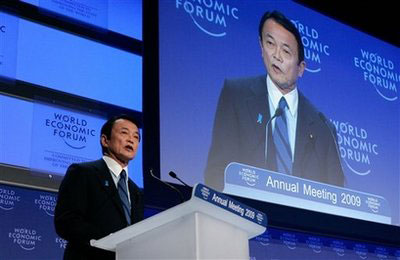
Their talks, however, offered no renewed hopes for a long-awaited deal in the Doha round of trade talks that many see as a necessary bulwark against the threat of economic protectionism, which devastated the world during the Great Depression. The meeting did not produce a timeframe for action in the Doha talks, now in their eighth year with no completion in sight. Hundreds of protesters in Geneva violently rebutted the free trade argument, lobbing bottles at riot police, who responded with tear gas and water cannons. The Geneva protest -- about five hours by train from the gathering of 2,500 business and political leaders in Davos -- had been peaceful until police blocked a crowd from entering the city center. At a smaller protest in Davos, police said 120 people marched through the town, and a few lobbed snowballs. Those events went unnoticed in the forum's last full day. Instead, CEOs, company chairmen and politicians turned their attention to the future of free trade, which many said was under threat as countries deal with rising unemployment, financial instability and recessions, real or anticipated. British Prime Minister Gordon Brown said these pressures were no reason to recoil from free trade, and called cooperation the only path forward. "This is not like the 1930s. The world can come together," he said. "This is a global banking crisis, and you've got to deal with it for what it is, a global banking crisis." Japanese Prime Minister Taro Aso said his country would do its part: "We will resolutely fight protectionism." But even as the "P" word was repeated countless times, discussions were thin on specifics beyond some restrained criticism of the $800 billion stimulus package passed by the US House of Representatives. The bill includes "buy American" clauses that appear to unfairly favor US steel producers. "I hope the senators will be wise enough ... to make sure the US complies with its international obligations," said Pascal Lamy, the head of the World Trade Organization. On the same panel, Brazilian Foreign Minister said subsidies are the "most scandalous way of damaging developing countries." The fear of policy-makers and businessmen in the US and abroad is that Washington may revert to the strategy it employed at the beginning of the Great Depression, when it hiked tariffs on thousands of foreign goods to protect American business. In the end, the US Smoot-Hawley Act of 1930 led to worldwide retaliation and the devastation of international commerce. World powers after World War II tried to guard against a repeat of the experience by setting up the Bretton Woods global financial institutions. US President Barack Obama now faces a dilemma as the world enters its most significant economic crisis since then: backing the "buy American" provisions could set off a trade war, while opposing them could trigger a backlash from his supporters. Lamy said the trade chiefs he met were saying they were under intense domestic pressure to protect home industries against foreign competition. "They hear that trade should go to the toilet," Lamy said. "But trade openings were not a cause of this crisis." France's finance minister — whose country faced massive strikes and protests Thursday by workers angry over the government's handling of the crisis, stressed the challenges of helping atrophying industries without damaging free trade. "We're facing two major risks: The first is social unrest. The second is protectionist risks," Christine Lagarde said. |
||||||