Asia-Pacific
BP: Mile-long tube sucking oil away from Gulf well
(Agencies)
Updated: 2010-05-17 06:40
 |
Large Medium Small |
HAMMOND, La. – In a significant step toward containing a massive Gulf of Mexico oil leak, BP said a mile-long tube was funneling crude Sunday from a blown well to a tanker ship after three days of wrestling to get the stopgap measure into place on the seafloor.
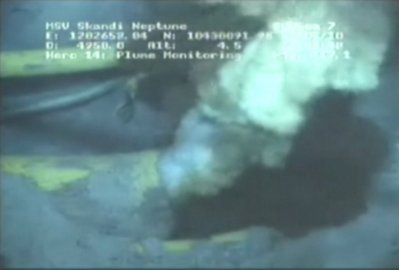 This image from a video released by BP PLC shows oil and gas spewing from a yellowish, broken pipe 5,000 feet below the surface. The video released Wednesday May 12, 2010 gives a not-yet-seen glimpse of the leaking well a mile underwater. [Agencies]? |
Yet even as the company reported the success after weeks of fruitless efforts, scientists warned oil that has already spewed into the Gulf could have dire consequences for the environment. Computer models show the black ooze may have already entered a major current flowing toward the Florida Keys, a researcher?said Sunday.


Kent Wells, BP's senior vice president for exploration and production, said during a news conference that the amount being drawn was gradually increasing, and it would take several days to measure it. Company spokesman Mark Proegler at the joint spill command center in Louisiana had initially said the tube was containing most of the oil coming from the pipe, which is contributing an estimated 85 percent of the crude in the spill.
Previous attempts to use emergency valves and a 100-ton container had failed to stop the leak that has spilled millions of gallons of oil into the Gulf, threatening sea life, commercial fishing and the coastal tourism industry from Louisiana to Florida. BP PLC has also been burning small amounts of floating oil and spraying chemical dispersants above and below the surface.
The tube's success gave crews partial control of the leak for the first time in more than three weeks. Still, Wells offered a tempered response to the news.
"It's a positive move, but let's keep in context," he said Sunday. "We're about shutting down the flow of oil from this well."
Oil has been spewing since the rig Deepwater Horizon exploded April 20, killing 11 people and sinking two days later. The government shortly afterward estimated the spill at 210,000 gallons — or 5,000 barrels — a day, a figure that has since been questioned by some scientists who fear it could be far more. BP executives have stood by the estimate while acknowledging there's no way to know for sure.
Crews will slowly ramp up how much oil the tube collects over the next couple of days. They need to move slowly because they don't want too much frigid seawater entering the pipe, which could combine with gases to form ice-like crystals that would clog it.
The first chance to choke off the flow for good should come in about a week. Engineers plan to shoot heavy mud into the crippled blowout preventer on top of the well, then permanently entomb the leak in concrete. If that doesn't work, crews also can shoot golf balls and knotted rope into the nooks and crannies of the device to plug it, Wells said.
The final choice to end the leak is a relief well, but it is more than two months from completion.
Meanwhile, scientists warned of the effects of oil that has already leaked into the Gulf.
Computer models show the black ooze may have already entered the loop current — which is the largest in the Gulf — said William Hogarth, dean of the University of South Florida's College of Marine Science. A research vessel is being sent to the Gulf on Tuesday to collect samples and learn more.
One computer model shows that the oil has already entered the current, while a second model shows the oil is 3 miles from it — still dangerously close, Hogarth said. The models are based on weather, ocean current and spill data from the US Navy and the National Oceanic and Atmospheric Administration, among other sources.
The current flows in a looping pattern in the Gulf, through the area where the blown-out well is, east to the Florida Keys National Marine Sanctuary and beyond.
Other scientists warned that miles-long underwater plumes of oil discovered in recent days could poison and suffocate sea life across the food chain, with damage that could endure for a decade or more.
Researchers have found more underwater plumes of oil than they can count from the blown-out well, said Samantha Joye, a professor of marine sciences at the University of Georgia. She said careful measurements taken of one plume showed it stretching for 10 miles, with a 3-mile width.
The hazardous effects of the plume are twofold. Joye said the oil itself can prove toxic to fish swimming in the sea, while vast amount of oxygen are also being sucked from the water by microbes that eat oil. Dispersants used to fight the oil are also food for the microbes, speeding up the oxygen depletion.
"So, first you have oily water that may be toxic to certain organisms and also the oxygen issue, so there are two problems here," said Joye, who's working with a group of scientists who discovered the underwater plumes in a recent boat expedition to the Gulf. "This can interrupt the food chain at the lowest level, and will trickle up and certainly impact organisms higher. Whales, dolphins and tuna all depend on lower depths to survive."
BP has been casting about for ways to contain the leak since it was discovered several days after the blast. First robot submarines were unable to get valves to work on machinery at the well head called the blowout preventer. Then the company failed to capture the oil with a 100-ton box after icelike crystals formed in it.