Asia-Pacific
Controlling Japan nuclear plant could take months
(Agencies)
Updated: 2011-04-03 15:21
 |
Large Medium Small |
 |
|
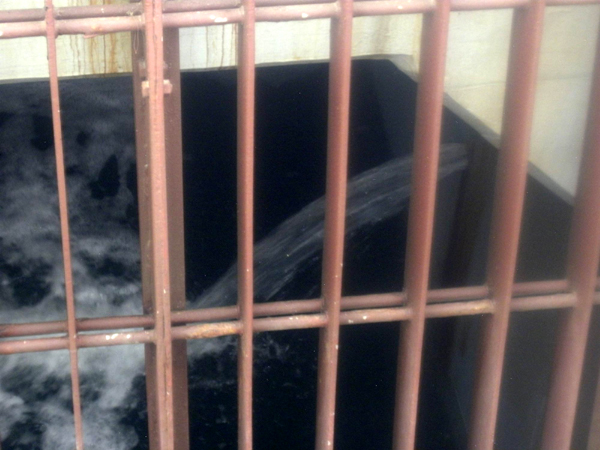
Radioactive contaminated water from the crippled Fukushima Daiichi Nuclear Power Plant No 2 reactor leaks through a crack in a concrete pit and drains into the ocean in Fukushima prefecture, northern Japan April 2, 2011 in this handout from Tokyo Electric Power. [Photo/Agencies] |
TOKYO – It could take several more months to bring Japan's tsunami-ravaged nuclear plant under control, a safety agency spokesman said Sunday as engineers tried to find a way to stop highly radioactive water from pouring into the Pacific.


The Fukushima Dai-ichi nuclear complex has been spewing radioactivity since the March 11 tsunami carved a path of destruction along Japan's northeastern coast, killing as many as 25,000 people. The final death toll is not known because many are still missing.
Nuclear safety agency spokesman Hidehiko Nishiyama on Sunday offered the first sense of how long it might take to bring an end to the nuclear crisis, which has forced people within 12 miles (20 kilometers) of the plant to abandon their homes due to radiation concerns.
"It would take a few months until we finally get things under control and have a better idea about the future," Nishiyama said. "We'll face a crucial turning point within the next few months, but that is not the end."
Bringing the reactors at the plant under control will require permanently restoring cooling systems knocked out by the tsunami that prevent reactors from dangerously overheating. That task has been complicated by dangerous conditions at the plant that have often forced workers to stop what they are doing.
Some new problem crops up at the complex nearly every day. Workers discovered an 8-inch (20 centimeter) crack in a maintenance pit Saturday and said they believe water from it may be the source of some of the high levels of radioactive iodine that have been found in the ocean for more than a week.
They have had trouble telling where the water is coming from, and this is the first time they have found it leaking directly into the sea. A picture released by plant operator Tokyo Electric Power Co. shows water shooting some distance away from a wall and splashing into the ocean, though the amount is not clear.
The contaminated water dissipates quickly in the ocean but could pose a danger to workers at the plant.
Engineers tried to seal the crack with concrete on Saturday, but that didn't work. So on Sunday they injected a mix of sawdust, shredded newspaper and a polymer that can expand to 50 times its normal size when combined with water. The polymer mix had not yet stopped the leak Sunday night but engineers have not given up hope and should know by Monday morning whether it will work.
TEPCO on Sunday confirmed the first tsunami deaths at the plant itself, saying a 21-year-old and a 24-year-old were conducting regular checks when the 9.0-magnitude earthquake that preceded the tsunami hit.
They apparently ran to a basement turbine room, which is where they were when the massive wave swept over the plant.
"It pains us to have lost these two young workers who were trying to protect the power plant amid the earthquake and tsunami," TEPCO Chairman Tsunehisa Katsumata said in a statement.
The high levels of radioactivity at the plant made searching for the men dangerous. Their bodies were not discovered until Wednesday and had to be decontaminated. The announcement was delayed while authorities notified their families, TEPCO spokesman Kazufumi Suzuki said.
The nuclear crisis has compounded the suffering of people in the northeast and, at times, overshadowed their plight. Tens of thousands have lost their homes and are living in shelters, 200,000 households do not have water, and 170,000 do not have electricity.
Running water was just restored in the port city of Kesennuma on Saturday, and residents lined up Sunday to see a dentist who had flown in from the country's far north to offer his services. Many were elderly and complaining of problems with their dentures.
Overhead and throughout the coastal region, meanwhile, helicopters and planes roared by as U.S. and Japanese forces finished their all-out search for bodies.
The effort, which ends Sunday, is probably the final hope for retrieving the dead, though limited operations may continue. It has turned up nearly 50 bodies in the past two days.
In all, more than 12,000 deaths have been confirmed, and another 15,500 people are missing.
| 分享按鈕 |