Newsmaker
Doctor: Japan nuke workers are at their limit
(Agencies)
Updated: 2011-04-21 12:48
 |
Large Medium Small |
|
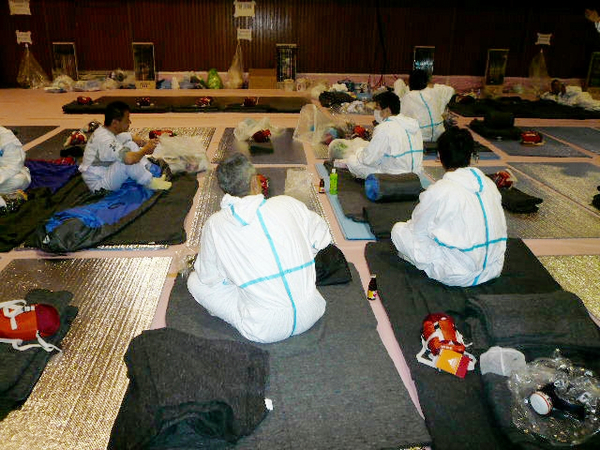 Workers wearing protective suits, operating to stabilize the crippled Fukushima Daiichi Nuclear Power plant, take a rest on the floor of a gymnasium inside the grounds of the Fukushima Daini Nuclear Power Plant, about 10km away from the crippled Daiichi plant, in this photo released by industrial medical doctor Takeshi Tanigawa via Kyodo, taken April 16, 2011.[Photo/Agencies] |
FUKUSHIMA, Japan -- Workers battling the crisis at Japan's stricken nuclear plant suffer from insomnia, show signs of dehydration and high blood pressure and are at risk of developing depression or heart trouble, a doctor who met with them said Wednesday.
The crews have been fighting to get the radiation-spewing Fukushima Dai-ichi plant under control since it was crippled by the March 11 earthquake and tsunami that devastated northeastern Japan.
"The (working) conditions at the plant remain harsh," epidemiologist Takeshi Tanigawa told The Associated Press. "I am afraid that if this continues we will see a growing risk of health problems."
His findings relate to the health risks workers face due to fatigue, rather than from any exposure to radiation.
Tanigawa, the Public Health Department chairman at Ehime University's medical school, said he met and spoke with 80 of the workers over four days when he was allowed into another nearby nuclear plant where many of them take their breaks. He said he was not able to carry out full physical exams on the workers before leaving Tuesday because of time constraints.
Tokyo Electric Power Co, the plant operator, said 245 workers from the company and affiliated companies were stationed at the Fukushima Dai-ichi plant Wednesday. Soldiers, firefighters and police officers also were at the site.
The nuclear workers have been toiling around the clock to stabilize the plant. Tanigawa said they get little rest, no baths or fresh food and are under the constant threat of exposure to radiation, which remains so high in many places that robots are being used to take measurements.
In a telephone interview, Tanigawa said the work conditions don't meet the basic rights guaranteed workers by Japan's constitution. During their breaks at the Fukushima Daini plant, they often sleep on the floor of a gymnasium, "wrapped only in blankets and with no privacy," he said.
Photographs of the gymnasium show workers in white radiation protection suits sitting on gold metallic mats laid in tight rows on the floor. Boxes of supplies are stacked nearby.
"Because they sleep so close to each other, snoring is a big problem," he said. "Normally, that might sound funny, but in this case it is denying people sleep and that can lead to bad performance on the job."
The workers, most of them middle-aged men, suffer insomnia and show signs of dehydration and high blood pressure, he said. One had gout. Tanigawa said he is concerned they may develop depression or heart problems.
"Making sure they have a shower or a bath or a proper place to sleep is not just to make them comfortable, but to ensure good performance," he said.
Tanigawa said the mental stress of the job is deepened by the fear of radiation exposure, the concerns of their loved ones _ many don't want the men to stay on at the plant _ and the fact that many of the workers themselves lost homes or family in the tsunami.
TEPCO said the situation has become difficult as the crisis has become protracted.
"We think that we have worked to improve food, sleep hours and off days so that working conditions are improving," it said in a statement. "We would like to work on further improvements, taking Dr. Tanigawa's views into account."
Tanigawa said that although emergency conditions may have justified harsh working hours in the early days of the crisis, the situation has now "become chronic."
"They have struggled for a month. But they haven't gotten any rest," he said.
"TEPCO and the government don't think about them. The workers must do a good job, but they do not have any support," he said.
With the heat of summer approaching, the health risks could multiply.
The workers now have three meals a day, but no fresh meat or vegetables. "They get microwave food," he said.
They put in four days, then have two off, but many feel they can't leave, he said.
"They feel a deep sense of responsibility to be there," he said. "I asked many if they wanted to stop, but they responded, 'Who would do this if I didn't?"'
An anonymous worker identified as having recently worked at the plant's Unit 2 turbine building said in an interview on TV Asahi late Wednesday that the site "is just like a battlefield."
The man, whose face was shown out of focus so he could not be identified, said the turbine building was normally not radioactive, but a dosimeter beeped soon after he and his fellow workers entered the area to prepare to transfer radiation-contaminated water out of the building.
"We were shocked by the high level of radiation," he said, adding that they were so afraid of radiation it was hard to concentrate.
"I work at the plant just because I want to save my hometown," the worker said. "We are the ones who have worked at the nuclear plant all this time. Who else would take the job now if we don't?
| 分享按鈕 |