EU trudges ahead with multiple reforms
Updated: 2011-12-26 15:51
(Xinhua)
|
|||||||||||


BRUSSELS - Two years into a debilitating debt crisis, the European Union (EU) has undertaken a slew of reforms to weather the hard times and spur growth. But to cure the crisis once and for all, it will take years.
EU is on the right track. But the road ahead will be anything but smooth.
Austerity drive
Generous welfare has been a defining feature of modern Europe. While playing a positive role in creating social equality and harmony and easing social tension, the welfare system also resulted in over-consumption, low saving and low efficiency.
Most importantly, it has sucked up too much of Europe's wealth, a problem the debt-ridden European countries now can no longer afford to neglect after it to some extent sparked the sovereign debt crisis.
Austerity is generally believed to be the way out. To cut public spending and reduce deficit, countries such as Greece, Spain, Ireland and Britain all resorted to austerity measures including cuts in public-sector wages and jobs, pension freeze and retirement age increase. Even Italy, where retirement age used to be below 60, decided to raise the threshold to 67 by 2026.
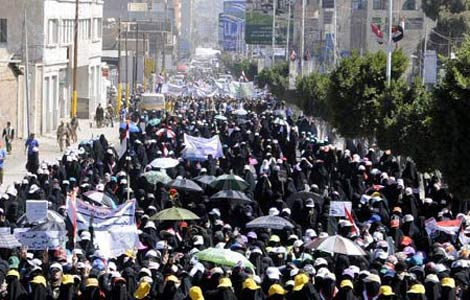
But the reforms were met with strong resistance and sparked outrage across Europe. Workers in many countries held demonstrations and strikes to preserve the welfare state and protest austerity.
Experts noted that to reform the long-standing welfare system is by no means easy. Governments should strike a balance between the urgency to cut deficits and people's opposition to austerity "sacrifice," between a desperate need to cut spending and a strong desire to avoid recession.
But while battling the debt crisis, the EU has attached great importance to growth, without which the crisis would become more insurmountable. The regional bloc has more than once stressed in innovation and education should be spared from spending cuts.
Financial & fiscal reforms
Since the advent of the debt crisis, the EU has been pressing ahead with financial and fiscal reforms aiming to install a firewall to stop the crisis contagion in the short and medium terms and to push forward fiscal reforms to root out the crisis once for all.
In May 2010, eurozone member states launched its temporary bailout fund the European Financial Stability Facility (EFSF) which is backed by guarantee commitments from eurozone countries for a total of 750 billion euros ($990 billion) and has a lending capacity of 440 billion euros.
Last month, eurozone finance ministers agreed to boost the firepower of the EFSF by making the fund as an insurance vehicle providing partial risk protection of 20 to 30 percent to bond holders and by creating an investment fund to allow foreign investors to buy government bonds.
EU is also trying to launch its permanent bailout fund without delay. Earlier this month, EU leaders agreed to bring forward the launch of the European Stability Mechanism (ESM), with a lending power of up to 500 billion euros, one year earlier than originally planned to July 2012.
In addition to these efforts intended to prevent the debt crisis from spreading, EU has also resorted to correct one of the deep-rooted institutional defects of the EU, namely, the mismatch between a highly integrated monetary system and a fragmented fiscal system.
All EU countries except Britain have decided to establish a new "fiscal compact" through intergovernmental treaties to enforce tougher fiscal disciplines, a key step towards future establishment of a "fiscal union."
However, the step is far from enough to convince Germany to agree to the issuance of Eurobonds and persuade the European Central Bank (ECB) to serve as "lender of last resort" for European banks and possibly the governments.
Political changes
The debt crisis has also rattled the European political landscape. Political forces are adjusting their policy principles to the ongoing debt crisis to secure more votes.
Within less than two years, the continent saw a string of governments collapse, including those in Ireland, Portugal, Greece, Spain and Italy. Both Greece and Italy looked to technocratic leaders to pull them back from the brink of chaos.
In countries spared from the change of power, ruling parties are faced with mounting pressure, such as in France and Germany. The Conservative government which came into power in Britain last year has become even more conservative.
In some cases, the political changes have in turn contributed to the solving of the crisis as they brought about necessary reforms.
In the past two years, center-right parties supporting market mechanism have got the upper hand in elections of many countries, while strategies proposed by center-left parties during election campaigns have become increasingly similar to those of their center-right counterparts in order to overcome the crisis and win supporters.
Setbacks expected
With all the reforms and changes, EU is on the right track. However, there is high possibility that the measures already taken would suffer setbacks and an escalating banking crisis is set to make the debt crisis even more difficult to tackle.
"The path is long, longer than we expected," said EU President Herman Van Rompuy late Tuesday in a video message published on the European Commission's website.
"But let there be no doubt -- there is a fundamental political will to move forward as a union respecting fully each other's situation," Van Rompuy added.








Hot Topics
HIV/AIDS, Egypt protest, Thanksgiving, climate change, global economic recovery, home prices, high-speed railways, school bus safety, Libya situation, Weekly photos
Editor's Picks

|
|
|

|

|

|