Comments
  Print
Print  Mail
Mail  Large Medium Small
 |
|
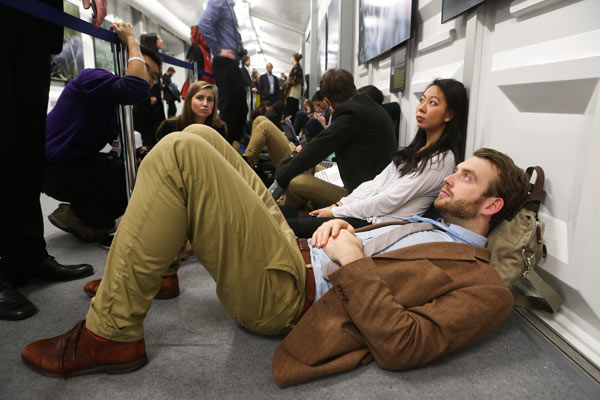
Representatives at the United Nations climate talks wait for a meeting to begin in Warsaw, Poland, on Friday. ZHANG FAN / XINHUA |
Joining negotiators from more than 190 countries, many journalists spent last Friday in Warsaw's magnificent National Stadium waiting for the outcome of two weeks of climate change negotiations.
Some slept on empty chairs in the media center, some sat on the floor in corridors and leaned against walls, and some just waited patiently outside negotiation rooms for announcements. We all thought the final night of talks would yield results.
But it took longer than expected. After midnight, when I learned there was no immediate progress, I moved to a quiet meeting room in the China pavilion. I got some rest by lying on three chairs I set up in a row and updated my observations on social media.
Finally, the talks ended early Saturday night.
Did the talks bring substantial progress? This is the question many are asking.
Having carefully read dozens of documents, which are filled with cliches, technical terms and ambiguous expressions, I found that no major breakthroughs were achieved, despite all the extra effort at this annual UN event.
The head of China's climate change delegation, Xie Zhenhua, interpreted the outcome this way: “All are unsatisfied with the outcomes but all have accepted them.” And I checked the statements of major players at the talks. Nearly everybody had expressed the same sentiment.
Many negotiators saw the Warsaw conference as a transition for further talks, which have already lasted more than two decades. The talks resulted in the famous Kyoto Protocol in 1997, which requires industrial countries to obey binding commitments to reduce greenhouse gas emissions while offering technical and financial support to poor countries.
So far, the commitments that developed countries have made through 2020 have been modest, given that the catastrophic climate threat is caused mainly by the emission of greenhouse gases of developed and industrialized nations.
One person who follows me on my micro blog and on WeChat asked me to use plain language to express the main theme of the talks. I thought awhile and put it this way: The heated disagreement is between creditors, which are developing countries, and debtors, which are industrial countries. China has played a role in helping the developing countries have more say in the game.
To limit the global temperature increase to within 2 degrees this century, the rich countries are obligated to support the poor countries by implementing low-carbon development. The figures are telling: About 70 percent of greenhouse gases are from those rich countries in the past 200 years.
Interestingly enough, one academic study from Sweden has already found that in recent years, 70 percent of carbon reduction efforts have been from developing countries, not rich ones.
The public and the NGOs have expressed their mounting disappointment over the rich countries' slow progress in offering funding and their breaking of their carbon reduction promises.
Currently, the international community has an overall plan of carbon control by 2020, with the rich countries pledging to mobilize $100 billion annually from 2014 to 2020 to support the poor countries in climate mitigation and adaptation. No concrete steps on the target have been achieved, even though 2013 is nearly over.
The negotiators are already looking beyond 2020 because they have a pressing timetable to achieve a global deal on cutting carbon emissions between 2020 and 2030, a deal that will have to be struck when they meet in Paris in 2015.
Returning back to their home countries with those targets and timetables, the negotiators urgently need to summon up political consensuses at home before they head to future technical sessions and talks, including the Lima conference in Peru next year and the final stop, Paris, in 2015.
The political and economic geography has changed greatly since the 2008-09 financial crisis, with emerging economies developing more economic clout. Many multilateral mechanisms have suffered from deadlock due to a lack of global leadership and political stubbornness.
But putting the ongoing climate change into this context, the fact that the marathon negotiations haven't ended but are continuing is a good sign. We have to sit down to debate, to quarrel, and finally, to compromise.
In this spirit, the road to Paris should be satisfying, though we are not satisfied in Warsaw.
Contact the writer at fujing@chinadaily.com.cn
 Iran nuclear talks over, diplomat says; no word on results
 In Photos: JFK's assasination 50 years ago
 Fast, furious and off-beat
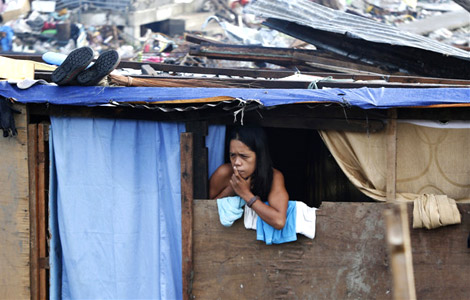 5.2m Filipinos jobless after typhoon, quake
 Christmas wax figure of Merkel in Berlin
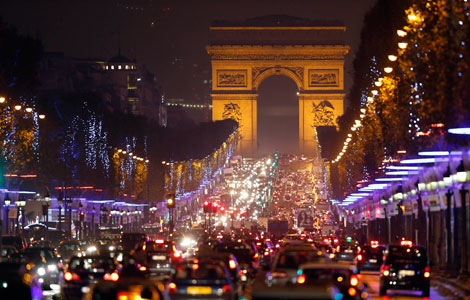 Christmas lights sparkle in Paris
 Good couples get better
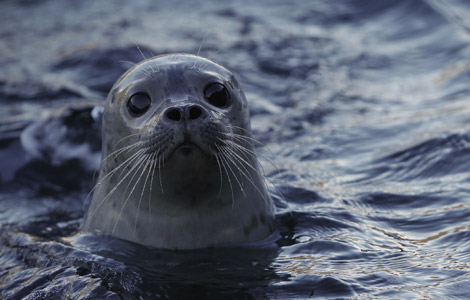 Vancouver Aquarium sets free 7 harbour seals
Copyright 1995 - . All rights reserved. The content (including but not limited to text, photo, multimedia information, etc) published in this site belongs to China Daily Information Co (CDIC). Without written authorization from CDIC, such content shall not be republished or used in any form. Note: Browsers with 1024*768 or higher resolution are suggested for this site.
License for publishing multimedia online 0108263 Registration Number: 20100000002731