Confronting poverty, with cash


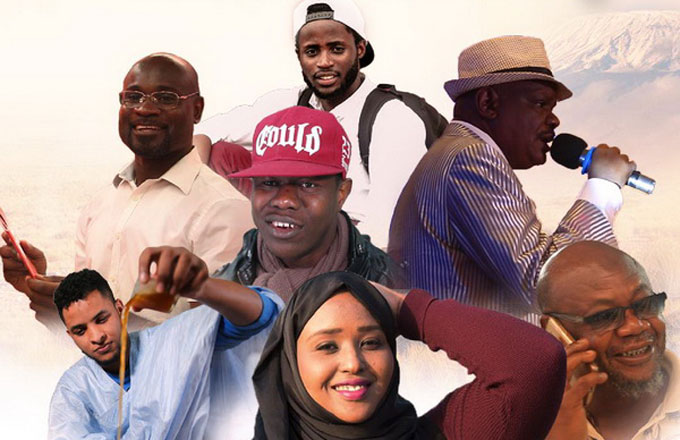
A curious phenomenon has been recorded in some parts of Africa: people are becoming happier. The recent surge in happiness has even caught the attention of African leaders. At an April "expert consultation" in Cape Town hosted by the South African government, the African Union and UNICEF, presentations were given which included an uplifting set of findings. In Zambia, there's been a 45% increase in the amount of people who say they're better off than 12 months ago; Ghana saw a 16% increase in the proportion of people answering "yes" to the question, "Are you happy with your life?" Malawi has seen a 20% increase in people who say they are "very happy" with their life, and in Kenya, there's been a 6% increase on the Quality of Life index.
According to the impact evaluation work led by UNICEF and partners, presented to around 40 African Union member states, people in some African countries are also eating better (Malawi and Zambia, for example, saw a 30% increase in food consumption while Ghana recorded a 10% decrease in the number of children missing a meal); are going to school more; are healthier (Liberia experienced a 20% increase in curative care seeking, Ghana had a 20% increase in health insurance coverage); are better nourished; and are transitioning to adulthood with greater success (Kenya saw reductions in early pregnancy and sexual debut, while South Africa saw a 63% decrease in teenage girls having sex with older men, and drug and alcohol consumption was less likely.)
The reason behind all this happiness, health and (delayed) sex, says UNICEF, is simple: Thousands of people living in impoverished communities in these countries suddenly have more cash in their pockets. Some 20 countries across the continent have embraced what are known as a ‘social protection floors'. In essence, a growing number of national governments are deciding to support cash transfers to the poorest and most marginalized with no strings attached. The idea is that even a small amount of cash can tip the balance back in favour of a family, which might be struggling to survive. In countries where wages are often less than US$1 a day, cash transfers of as little as $12 a month, can have a profound impact. While traditional aid programmes continue to play a crucial role, it's increasingly clear that it's also very cost-effective to help governments disperse money.
Giving money to the poor in the developing world isn't new. In the 1990s, Brazil began making "conditional" cash transfers to poor households where school-aged children were enrolled in school. However today, it is African governments who are leading the way in developing "home-grown" social protection programs designed to respond to their specific contexts and characteristics. That is, unconditional cash transfers which build on existing strong community structures and hence address economic as well as social inequality. Amid it all, rigorous evaluations have found that households receiving the cash do better. They eat better quality food, they can afford to buy livestock and their children go to school. These benefits defy notions that social protection is a hand-out. Conversely, rather than create dependency, or become a burden on budgets, cash transfers invest in the poor's human capital, allowing people to generate even more income.
The list of African countries now using cash transfer policies is impressive. In Lesotho, the Child Grant programme is expected to cover 25,000 poor and vulnerable households, reaching 60,000 children, by 2014, more than doubling in two years. Zambia's expansion of its Social Cash Transfer Programme is expected to reach 190,000 households, or 1,000,000 people, by the end of 2014. In Kenya, the government is planning to double the number of beneficiaries in its cash transfer programme. Senegal is doubling the number of beneficiary households in its programme with plans to reach 250,000 by 2017. In Ghana, the programme has expanded its reach from 1,650 households in 2008 to 71,000 in 2013. Plans for expansion are also underway in Mauritania, Mali, Malawi, Niger, and Zimbabwe, among others.
UNICEF continues to advocate for social protection in Africa, supporting governments as they develop and strengthen social protection systems, and leading an innovative research initiative examining the impact of government-sponsored social cash transfer programs in sub-Saharan African countries: The Transfer Project.
Meanwhile, this Friday, on May 30, African social development ministers will meet at the African Union's Addis Ababa headquarters to discuss how social protection programs can continue to benefit the continent's children. The timing has never been more critical: Africa is going through a population boom and by 2050 one in three of the planet's children will be African. During discussions we will argue that even low-income countries can afford to give money to the poor; indeed that they can't afford not to. Social protection policies reduce inequity, help children, the communities they live in are transformed, and economies grow.
However, despite the growing popularity of the programmes, questions remain about how and in what contexts cash transfers are most appropriate and effective. UNICEF hopes that lessons learned from the five-year Transfer Project will support national policy makers, who might otherwise be working in isolation, so that the benefits of giving money to the poor may continue to make African smile.
Natalia Winder Rossi is UNICEF's Senior Social Policy Specialist for Eastern & Southern Africa.