Expert calls for deeper ties and more trust in Sino-African economic development
An expert in international studies says China and Africa must develop deeper economic, political and cultural ties and learn to "trust each other more" if they are to continue with what he describes as the "tremendous achievements" the two have made in recent years.
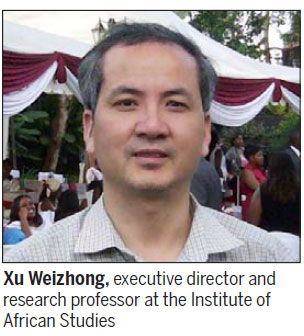
Xu Weizhong, executive director and research professor at the Institute of African Studies, part of the China Institutes of Contemporary International Relations, says that since 2000, the relationship between them has advanced "in leaps and bounds".
But Xu, who has been studying the relationship between China and Africa since 1983, adds that it now faces "new challenges, and has experienced several transformations" in the recent times.
He insists that China and Africa "need to trust each other more and seek more common ground to develop a more in-depth cooperation mode to cater for these changes".
Xu highlights three key transformations, in particular, which are now reshaping the nature of the partnership: increased communication between people; more importance being attached to economic cooperation; and that the relationship is becoming increasingly important, and in some cases complex, on the international stage.
On the first, of communication between the two sides, he says: "Before, this mainly took place among the elite, such as government officials and scholars, but now there is a lot more interaction happening among the general public."
Despite this shift, he says, communication at a cultural level is still far from enough.
"I have visited more than 20 African country and found that misunderstandings still exist between the two sides.
"For instance, a noticeable number of Chinese still think that Africa is just one nation, as the two move closer together politically and economically, the level of cultural exchange should be boosted.
"The Chinese need to realize the extent to which there is still a cultural barrier between the two sides, and that must be enhanced."
In this drive for better cultural communication, Xu says, non-government organizations especially should play an increased role.
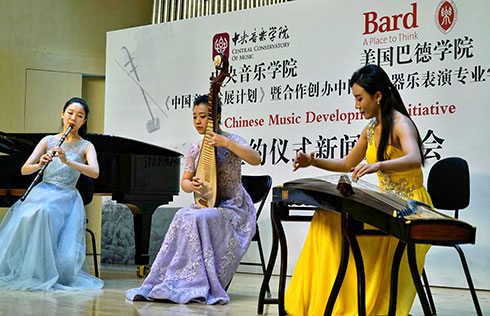
"Some NGOs, such as those representing the arts, could act as important envoys for both sides, to help enhance relations."
On the second key transformation, of a surge in economic cooperation, Xu says that the most recent data shows exactly how levels have grown, from essentially a standing start at the turn of the century.
According to figures released by the department of African Affairs in China's Ministry of Foreign Affairs, economic ties have surged since 2000.
Total China-Africa trade was worth $200 billion in 2012, while Chinese investment in Africa was $17 billion.
"For sure, China needs the political support of African countries, and both face similar challenges internationally," Xu says.
"As both have placed importance on sustainable economic development, political cooperation and bilateral relations have also gained considerable strength in recent years."
Although he is encouraged by the figure, a great deal of work still needs to be done to ensure that the pace of sustainable economic progress continues.
"Although trade between China and Africa has improved, China's economy has developed much more quickly than Africa's, and the gap between the two has expanded, which poses a real challenge."
He says both sides have managed to adjust their industrial mix accordingly, and huge potential still exists for further development.
"Take the manufacturing sector, for instance. As more Chinese manufacturers export their skills to the outside world, Africa's huge market and lower labor costs will continue to appeal to Chinese entrepreneurs."
But as the bilateral business and economic relationship between the sides continues, it is inevitably becoming more influential and in some cases complex on the international stage, Xu says.
"As it gains significance, it's no exaggeration to say that it has become a multi-lateral relationship as more parties become involved in the activities between the two."
One of the main obstacles, however, remains the perception in the West that China is exploiting Africa for its resources, which is "totally wrong", he says.
He accepts that natural resources from Africa are very important for China. For instance, a third of all oil imported to China comes from Africa last year.
"However, total trade in natural resources between China and Africa is still small compared with similar trade with other countries who deal with Africa.
"China places huge emphasis on helping Africa develop in a more sustainable way, such as in technology transfer and training workers in African countries.
"It is focused on creating win-win relationships with Africa, emphasizing the importance of shared benefits," he adds. "China's growth has boosted African development."
huhaiyan@chinadaily.com.cn
(China Daily Africa Weekly?06/13/2014 page38)

Copyright 1995 - . All rights reserved. The content (including but not limited to text, photo, multimedia information, etc) published in this site belongs to China Daily Information Co (CDIC). Without written authorization from CDIC, such content shall not be republished or used in any form. Note: Browsers with 1024*768 or higher resolution are suggested for this site.
License for publishing multimedia online 0108263 Registration Number: 130349