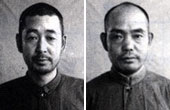
Editor's note: Earlier this month, China's State Archives Administration released a number of files on 45 Japanese war criminals who were tried and convicted in China after World War II. The criminals received sentences of eight-to-20 years' imprisonment from the special military tribunal of the Supreme People's Court, China's top court. China Daily is publishing abstracts of the criminals' confessions:
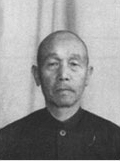
Tsutomu Nagashima
He was born in 1888 in Saitama prefecture, Japan. He came to China in December 1938 and served as a special agent in the Central China Expeditionary Army. He became commander of the 54th Brigade of the 59th Division of the Japanese Army in April 1942. From June 1943 to April 1945, he was concurrently defense commander of Jinan, Shandong province. He was arrested by the Soviet army on Aug 22, 1945 in Hamhung, on the Korean Peninsula. His major offenses include:
From May to June 1942: He ordered his forces to kill 40 anti-Japanese soldiers and 20 civilians, to burn down and damage more than 100 civilian houses in what are known as the "Tai'an-Laiwu-Mengyin Battles" in Shandong province.
From June to July 1944: He commanded armed forces in the "Summer 1944 Shandong Battles", killing 270 anti-Japanese soldiers and 160 civilians, and plundering 5,700 tons of wheat.
More: Unspeakable cruelty of wartime Japan |
From January to March 1945: He commanded armed forces in the "Spring 1945 Shandong Battles", killing 410 Chinese soldiers and 230 civilians, and damaging and burning down more than 300 civilian houses.
From April 1942 to July 1945: He conducted a total of 15 battles of all scales, killing 1,660 anti-Japanese soldiers and 970 civilians, burning down 2,220 civilian houses, arresting 970 Chinese soldiers and 250 civilians, plundering 6,000 tons of grain and forcing laborers to work for 120,000 work days. Besides shooting, cruel killing methods such as bayoneting, hacking, beheading, exploding, burning, hanging and lethal gas were also used during the battles. Captives were often killed.
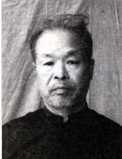
Kenjiro Funaki
He was born in Toyama prefecture, Japan in 1897. He went to Northeast China in December 1937 and served as a major and battalion commander of the 4th Frontier-Guard Infantry. He returned to Japan in August 1943 and later went to the Korean Peninsula. He was captured by the Soviet army on Aug 15, 1945. His major offenses include:
In August 1941: His forces burned a village in a brigade battle southwest of Wanping county, in suburban Beijing. There were 15 households in the village.
In April 1943: His forces burned several villages in an area about 60 km southwest of Dongzhaitang in a brigade battle south of Wanping county.
From December 1937 to August 1943: He enslaved local residents to build six battlefield positions capable of holding seven to 20 guards each, for which 1,500 man-hours were needed. He also enslaved people for 1,000 man-hours to consolidate existing battlefield positions in about three places around Dongzhaitang. About 1,000 to 2,000 laborers were enslaved for one month to build an "interception trench" for the purpose of an economic blockade.

Copyright 1995 - . All rights reserved. The content (including but not limited to text, photo, multimedia information, etc) published in this site belongs to China Daily Information Co (CDIC). Without written authorization from CDIC, such content shall not be republished or used in any form. Note: Browsers with 1024*768 or higher resolution are suggested for this site.
License for publishing multimedia online 0108263 Registration Number: 130349