Russia's growing China connection
Comments Print Mail Large Medium Small
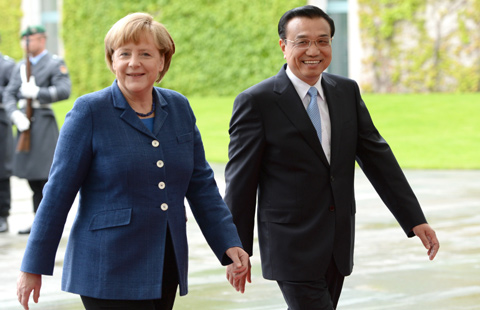
China's premier Li Keqiang is traveling to Russia for a regular meeting of the two countries' heads of government. Since the visit was first announced in April, Russia's geopolitical and geo-economic situation has changed profoundly, making its relationship with Beijing even more important. While the presidents of the two countries deal with broader strategic issues, it has been up to Li and the Russian Prime Minister Dmitry Medvedev to fill the relationship with substantive economic content.
In response to the Western sanctions imposed on Russia as a result of the Ukraine crisis, quite a few commentators have raised the idea of Russia pivoting away from Europe and the West toward Asia, particularly China. The spectacular gas deal signed during Russian President Vladimir Putin's trip to Shanghai in May 2014 was compared in its geopolitical significance with the Soviet-West Germany 1970 "gas for pipes" agreement which introduced Russian gas to Western Europe.
The short-lived refusal by Visa and MasterCard to service credit cards issued by a couple of sanctioned Russian banks has led the Russian government to decide on creating a national electronic payments system, similar to China's Union Pay. The near-impossibility for Russian companies to raise money in the West has evoked hopes that Hong Kong can replace London as the main financial center serving Russian needs. Present-day China is viewed in Moscow as a potential source of investment and even some advanced technologies.
China is a major economy refusing to follow the US' lead and impose sanctions against Russia. China is a market for Russian energy exports. Chinese investments in Russia can certainly grow from the current very low level, and China can provide Russia with some oil drilling equipment and infrastructure development, such as highways and high-speed rail connections. The two governments have agreed to raise the two-way trade volume from about $90 billion last year to $100 billion in 2015 and $200 billion by 2020. There are truly excellent prospects for Sino-Russian economic cooperation.
Yet, none of that will be easy, or happen automatically. The Chinese economy is slowing, which has also brought down the price of oil, a factor of central importance to Russia. Major Chinese banks, with their close links to the US financial market, are not willing to lend to those Russians who find themselves under Western sanctions. In any event, borrowing costs in China are significantly higher than in Europe. To implement the ambitious agenda for expanding economic ties, Chinese and Russian business leaders need to get to know the partner country so much better.
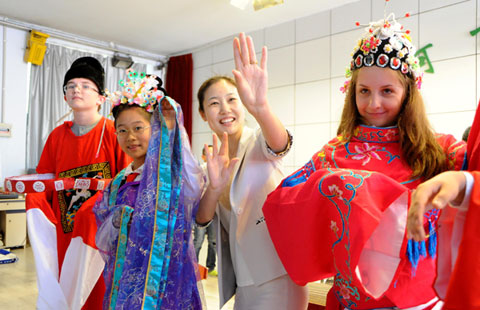
Russians need to do a thorough research of the opportunities that exist in the Chinese market. They need to better understand the Chinese culture, and not only that of business operations. They need to raise a cohort of modern China experts, well-versed in the language and the ways of the land. This will probably require many years of a sustained and purposeful effort, which will not pay off immediately. High-level meetings are vital to create momentum and sustain it, but the going itself will have to be the work of the two peoples.
The China connection will not turn Russia into an Asian country. It will remain what it has always been: an Eastern European civilization, spanning northern Eurasia from the Baltic to the Pacific. The present crisis in Russia's relations with the West will eventually be resolved, and a new equilibrium in relations will be created, depending on the outcome of the current rivalry. In any event, Russia will doubtless maintain close economic, but also cultural ties with the European Union. Even though China, since 2009, has been Russia's leading trading partner, the combined trade between Russia and the EU is several times bigger than the Sino-Russian exchanges.
Rather than "replacing" Europe with China in its foreign policy universe, Russia would be wise to develop its relations with China closer to the level of the very thick ties which link it to its European neighbors. If the Western sanctions help Russians to take a closer look at China, and to see opportunities in the east, it will be one good thing that they will have accomplished.
The author is director of the Carnegie Moscow Center.
(China Daily 10/13/2014 page9)
Background