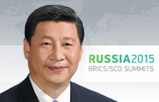
In all of the hubbub of news this week about President Xi Jinping's visit, the pope and the UN, some good news for elephants came and went without half the fanfare it deserved.
In a fact sheet issued by the White House press room about issues, Xi and President Barack Obama agreed to "expand and deepen cooperation" on, it was listed as item number four (behind Afghanistan, Peacekeeping and Nuclear Security), under "Wildlife Trafficking."
"The US and China, recognizing the importance and urgency of combating wildlife trafficking commit to enact nearly complete bans on ivory import and export, including significant and timely restrictions on the import of ivory as hunting trophies and to halt the domestic commercial trade of ivory."
Conservation groups like WildAid are calling the accord "historic", and the first public commitment by Xi to put an end to ivory sales in China, which is the world's largest market, with the US second, according to estimates.
WildAid CEO Peter Knights called the accord "the greatest single step that could be taken to reduce poaching for elephants. We thank both presidents for their personal support for elephant conservation and consigning the ivory trade to the trash can of history."
The African Wildlife Foundation (AWF) called the announcement "extremely encouraging".
"As many as 35,000 African elephants are poached every year for their ivory, which illegally ends up displayed in shop windows and on store shelves," AWF spokesperson Kathleen Garrigan told China Daily. "The commitment by the US and China to shut down the ivory trade in their countries will have a measureable and lasting impact on the survival of elephants in Africa."
"Their leadership on this issue will also serve as a model for other countries," she added.
"Mr Xi has today delivered a tremendous victory in the battle to save elephants," said Azzedine Downes, CEO of the International Fund for Animal Welfare. "China has slammed the door in the face of all those who are profiting from the slaughter of elephants. As the world's largest market for legal and illegal ivory, this ban will save the lives of tens of thousands of elephants."
There are also signs that the demand end of the market may be taking a turn as well, possibly thanks in no small part to advocacy campaigns led by celebrities like NBA star Yao Ming and movie actress Li Bingbing and piano virtuoso Lang Lang, with hundreds of millions of dollars worth of media space donated by Chinese media.
Through his Wechat account in China, Lang Lang told China Daily on Tuesday, "I'm very excited to hear about the agreement between President Xi and President Obama. It's such great news. I hope we can all work together toward to a complete, entire ban of ivory. The ivory trade must be banned because it is too cruel."
A recent a survey conducted by WildAid, AWF and Save the Elephants in Beijing, Shanghai and Guangzhou found that 95 percent of respondents thought the government should impose a ban on ivory sales and that awareness of ivory poaching had increased 50 percent since 2012.
Just last month the National Geographic published a survey of the ivory market in the US and Asia that offered puzzling results. It found that most of the people who buy ivory said they would support a ban on its sale.
The survey also found that 36 percent of those questioned in China wanted to buy ivory and could afford it, with another 20 percent saying they wanted to buy it but couldn't afford it.
In the United States, by contrast, the survey found 13 percent said they wanted to buy ivory and could afford it, and 22 percent they'd buy but couldn't afford it.
In an article in the current issue of The New Yorker magazine entitled Is China Moving Fast Enough to Save the African Elephant? writer Peter Canby notes that in February China announced a one-year ban on the import of legal ivory, three months later reduced the number of factories licensed to work ivory from 37 to 34 and the number of licensed retail outlets from 145 to 130.
"The question now is whether this bilateral agreement, and the moves that paved the way for it, will prove strong enough, quickly enough, to save the African elephant," Canby writes.
Zoologist and author Ronald Orenstein told China Daily in an interview that he too was glad to see the steps China and the US have taken, "but if it is really going to be effective, the government has got to turn that into immediate, strong and decisive action as soon as possible."
Action like stopping the sale of any further ivory from the government's stockpile, preferably destroying it, withdrawal of all licenses from carving and retail centers, coupled with a very strong campaign by the government to its own people that "ivory is not to be purchased".
"If they do that and they do that soon, it could make a real difference," Orenstein said. "If they don't, it'll be too little too late."
Contact the writer at chrisdavis@chinadailyusa.com.
Copyright 1995 - . All rights reserved. The content (including but not limited to text, photo, multimedia information, etc) published in this site belongs to China Daily Information Co (CDIC). Without written authorization from CDIC, such content shall not be republished or used in any form. Note: Browsers with 1024*768 or higher resolution are suggested for this site.
License for publishing multimedia online 0108263 Registration Number: 130349