 |
|
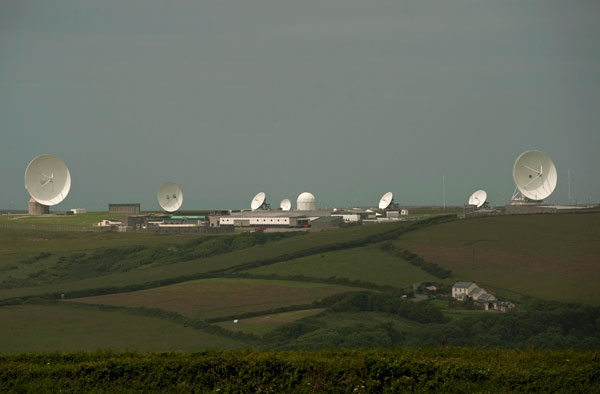
Satellite dishes are seen at GCHQ's outpost at Bude, close to where trans-Atlantic fibre-optic cables come ashore in Cornwall, southwest England June 23, 2013.[Photo/Agencies] |
LONDON - Britain unveiled plans for sweeping new surveillance powers on Wednesday, including the ability to find out which websites people visit, measures ministers say are vital to keep the country safe but which critics say are an assault on privacy.
Across the western world, debate about how to protect civil rights while helping agencies operate in the digital age has raged since former US intelligence contractor Edward Snowden leaked details of mass surveillance by British and U.S spies in 2013.
The draft British bill, watered down from an earlier version dubbed a "snoopers' charter" by critics who prevented it reaching parliament, was unprecedented in detailing what spies could do and how they would be monitored, said Home Secretary (interior minister) Theresa May.
"It will provide the strongest safeguards and world-leading oversight arrangements," May told parliament.
"And it will give the men and women of our security and intelligence agencies and our law enforcement agencies... the powers they need to protect our country."
May said many of the new bill's measures merely updated existing powers or spelled them out. However, the new proposals planned would require communication service providers (CSPs) to retain customers' data including their internet use for a year.
Police and spies access to this would be limited to "internet connection records" -- which websites people had visited but not the particular pages -- and not their full web browsing histories, she said.
"An internet connection record is a record of the communications service that a person has used - not a record of every web page they have accessed," May said. "It is simply the modern equivalent of an itemised phone bill."
She also said there would be no ban on encryption and in a concession to privacy groups, there would be a two-tier oversight system with a judge getting the power to veto warrants to intercept suspects' personal data, a move which could help ensure any new law is not struck down by the European courts.
"REALLY WORRYING"
But many were sceptical.
"The thing that's really worrying about these new data- retention powers is that ... it doesn't matter whether you're guilty or innocent -- the data is kept and that breaks a fundamental principle around surveillance that you do surveillance when you have suspicion," Jim Killock, executive director of Open Rights Group, told BBC radio.
He said it opened up the possibility of a more expansive use of the data than was suggested.
Ministers and officials have argued that current British laws governing surveillance powers are outdated, drafted in the days before anyone anticipated the widespread use of social media, leaving the police and security agencies unable to keep up with technology used by terrorists and serious criminals.
In April last year, the European Court of Justice (ECJ) struck down an EU directive requiring telecoms companies to store communications data for up to two years because it interfered with people's right to privacy.
Britain rushed through emergency legislation as a result, but these measures were later ruled unlawful by London's High Court, meaning the government must produce a replacement by the end of next year.
After Snowden's disclosures, three major reviews cleared British spies of acting illegally but all agreed the laws needed an overhaul.
David Anderson, Britain's independent reviewer of anti-terrorism laws, said in June the current framework was fragmented, undemocratic and "in the long run intolerable".
In unprecedented display of openness, spy chiefs have broken cover in the British media and invited journalists into their headquarters to argue for new powers and to try to reassure sceptics that they were not interested in mass state surveillance of people's private lives.
"The idea that there are spaces where terrorists can communicate safely and increasingly out of sight of the intelligence agencies -- 'going dark', as it is known, is not something that anyone either intended or voted for," Andrew Parker, head of the MI5 domestic spy agency said last month.
"We need the tools to access terrorists' communications online just as much as we intercepted written communications and telephone calls in years gone by."
They have also pointed out that private companies such as Google or Facebook hold a mass of data about individuals, with some insisting on obtaining personal information far in excess of what the authorities would want and without any oversight.
Copyright 1995 - . All rights reserved. The content (including but not limited to text, photo, multimedia information, etc) published in this site belongs to China Daily Information Co (CDIC). Without written authorization from CDIC, such content shall not be republished or used in any form. Note: Browsers with 1024*768 or higher resolution are suggested for this site.
License for publishing multimedia online 0108263 Registration Number: 130349