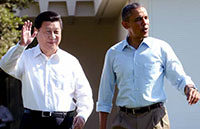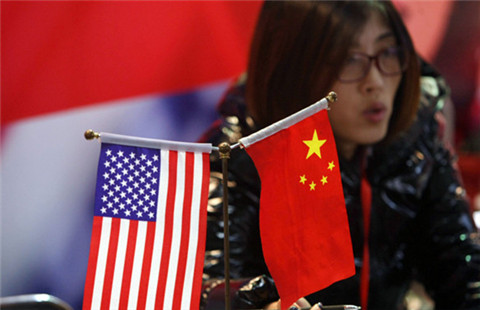
Before President Xi Jinping's state visit to the US, the Barack Obama administration hinted at imposing sanctions on China over the alleged hacking of American companies' computers on Sept 16. US media outlets ruled out the possibility at such a crucial time, though.
Rumors about possible US sanctions against Chinese companies over cybersecurity issues have been making headlines in the US media since late July. According to some of the reports, the Obama administration is discussing the possibility of imposing sanctions on Chinese companies that they believe have "stolen information" from the US Office of Personnel Management.
But if the US imposes sanctions on China or its companies, it would be overreacting to an imagined enemy's actions and, in the process, would damage Sino-US ties.
The international community, China and the US included, has been trying to take action against hackers but it faces two major problems, as the US case shows. Effectively tracking a hacker is the first. How to track an intruder? If the victim claims to have tracked one, would other parties believe it? And can a government be held responsible for all attacks launched from within its territory?
The second problem is that international law on wars allows a state to respond suitably to a military attack but there is no such regulation on cyberspace. When Sony's computers were hacked at the end of 2014, the Democratic People's Republic of Korea, a suspected attacker, had to suffer the consequences of a US counterattack: loss of Internet connection. Such a move is against international law because it is beyond military necessity.
For years, US politicians have been playing up the "China cyber threat theory".Now and then, even US cyber authorities accuse China of "cyber hacking".
The fact is China views the current technological revolution as a golden opportunity to accelerate the transformation of its economic development and facilitate social reform. China also pays great attention to cybersecurity and is trying to improve regulations in this new field.
However, some American politicians allege China is widening its cyber capabilities to challenge US hegemony. Thus, whenever an economic dispute arises, the US mistakes it for Chinese government's actions and vows to take revenge. It is this suspicion that has ruined one cooperation opportunity after another between the two countries. For example, at the prompting of Washington in 2013, the two sides formed a co-working group on cybersecurity for official dialogues, but the US soon leveled criminal charges against five Chinese military officers for cyberattacks, which made any dialogue impossible.
The two countries have reached a stalemate on cybersecurity issues, which shows the extent of harm the US' suspicion can cause to cooperation.
Sino-US relations are the most important as well as the most complicated bilateral relationship in this world. The differences and conflicts of interests between the two sides are increasing. As Fu Ying, a former senior diplomat, has said, the two countries need to "avoid blaming or offending each other".
That suggestion especially applies to cyberspace. Because of the fast development of information technology industries and merger of real and virtual space, China and the US enjoy shared interests as well as face conflicts over cybersecurity. And shared interests will far outnumber the conflicts only if the two sides resolve their existing differences through negotiations, not so-called deterrent actions.
If China and the US can build mutual trust on cyberspace issues, their subsequent cooperation measures will enhance their mutual strategic understanding and promote the healthy development of their relationship. US politicians and scholars need to think rationally, not jump to conclusions. Hopefully, Xi's visit to the US will help the two sides establish mutual trust in this important field.
The author is a senior researcher on information technology and social development at the China Institute of Contemporary International Relations.
Copyright 1995 - . All rights reserved. The content (including but not limited to text, photo, multimedia information, etc) published in this site belongs to China Daily Information Co (CDIC). Without written authorization from CDIC, such content shall not be republished or used in any form. Note: Browsers with 1024*768 or higher resolution are suggested for this site.
License for publishing multimedia online 0108263 Registration Number: 130349