As the United Nations commemorates its 70th anniversary this year, the international organization will celebrate two other milestones: the UN Development Program, the institution's biggest development agency turns 50, and Xu Haoliang, assistant secretary-general and regional director for the program's Asia-Pacific bureau, will celebrate his 20th year at the UN.
Xu began at the UN in 1995, and did long-term stints in Iran, Kazakhstan, Pakistan, and Timor-Leste, holding various leadership positions and overseeing implementation of UN development goals.
UN Secretary-General Ban Kimoon appointed Xu two years ago to his post where he oversees the agency's developmental programs in the Asia-Pacific region. As regional director in Asia, Xu works with the Chinese government on issues of governance, environmental sustainability and building a resilient country.
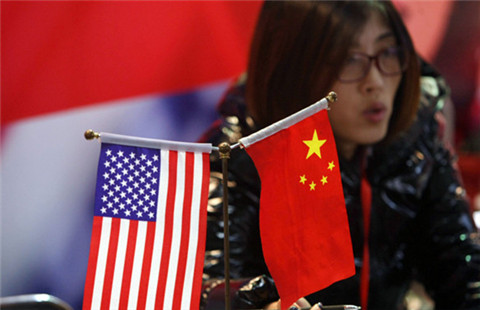
In his two decades at the UN, Xu said he has seen tremendous changes in China and the way it interacts with the world, providing help to developing countries in the region and becoming the second-largest economy in the world.
"The biggest change I would say is China itself. When China started undergoing reform in 1978, the Chinese share of the world economy was about 5 percent. Today it’s 16 percent. China’s place in the world has changed. That, I think, is the right thing to say," he told China Daily.
The UN development agency began working with China in 1979 after the country adopted reform policies in the prior year, and since then the Xu said agency has worked with China on establishing sustainable development, building capacity and mobilizing resources for the country.
"When China started to open up, we focused a lot on technical projects. As China's reform deepened and as the UN Development Program (UNDP) strongly advocated for human development and sustainable development, we worked a lot with the government on development policies, frameworks. That was recognized by the Chinese leadership as one important contribution — the concept of balanced and sustainable development," said the 54-year-old Shanghai native.
In close to four decades, the UNDP has mobilized more than $900 million in resources and overseen 800 projects for the country. China's economic power today means it no longer leans as heavily on the agency for funding, so the UNDP's goal is to work with China in a different way, Xu said.
"Because of China's status of development and because of our allocation formula — which is based on population and GDP per capita — we cannot allocate meaningful resources to China. So in a way, the situation has changed, the world has changed. The landscape of development cooperation has changed. The developing countries have emerged as much stronger countries than they were 50 years ago or 30 years ago. The earlier type of technical assistance and funding assistance are no longer as critical as they used to be. This is certainly the case in China today. That's why our relationship with China has also transformed over the recent years," he said.
Going forward, the UNDP will focus on collaborating with China on remaining developmental challenges, of which Xu said there are still many, and working with the country to strength its work in South-South Cooperation, which refers to the exchange of resources between developing countries. China currently contributes $4 billion of aid through South-South Cooperation and it can make sure that the money goes toward implementing post-2015 development goals, he said.
Despite no longer being a major provider of funding to China, Xu said the UNDP still has "comparative advantages" that can benefit the country's future development.
"We do have a network of offices and developed experiences elsewhere, some of which may be very relevant for China's development. We can be a platform that puts different experiences together — whether they're successes or failures — that can inform China's policy making. We do have the convening power as a neutral and impartial convener to get different stakeholders together, whether domestically or internationally," he said.
One major area that the UNDP can assist on is the One Belt One Road. President Xi Jinping announced the initiative in 2013, saying that China would focus on connecting the countries and economic regions along old economic and maritime roads to build better infrastructure and establish mutually beneficial economies. Xi said trade between the countries along the roads could reach $2.5 trillion in the next decade.
China launched a $50 billion One Belt One Road fund to support the project and various government-backed enterprises will be involved in investment and support. Bank of China, for example, raised over $3 billion for the initiative in June.
"Many say that this initiative is in China's interest, but the reality is that it is mutually beneficial, not only to China but to countries along this Silk Road economic belt. What this initiative seeks to do is open up transportation corridors and to promote investment projects that encourages trade and investment and movement of people," Xu said. "Done properly, this can be China's contribution to sustainable development elsewhere."
amyhe@chinadailyusa.com
Copyright 1995 - . All rights reserved. The content (including but not limited to text, photo, multimedia information, etc) published in this site belongs to China Daily Information Co (CDIC). Without written authorization from CDIC, such content shall not be republished or used in any form. Note: Browsers with 1024*768 or higher resolution are suggested for this site.
License for publishing multimedia online 0108263 Registration Number: 130349