 |
|
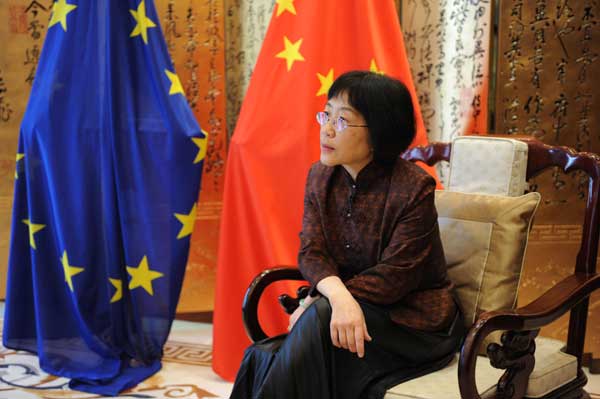
Ambassador Yang Yanyi, Head of the Chinese Mission to the EU |
If I have to choose three words to reflect my views of the award of arbitration over the South China Sea disputes unilaterally filed by the Philippines against China, it would be illegal, illegitimate and invalid. And China's position is firm and clear: non-acceptance.
Not surprisingly, some in the West have again pointed their fingers at China and accused China of "thumbing nose at international rules".
I cannot but dismiss these allegations and vilifications as groundless and unjustified. It is the Philippines and some other forces that are acting against international law. China is not.
1. Although the Philippines has struggled to appear that it is only requesting the Arbitral Tribunal to decide on the legal status of some features in the South China Sea, it failed to cover up the essence of it is about territorial sovereignty and maritime delimitation. Nor can it hide its obvious purpose of denying China's sovereignty over Nansha Islands and emboldening its illegal occupation from China.
It is common knowledge that territorial issues are subject to general international law, rather than the United Nations Convention on the Law of the Sea (the UNCLOS/the Convention), and that disputes concerning maritime delimitation are excluded by China in its 2006 declaration on optional exceptions on Article 298 of UNCLOS.
Mr. Chris Whomersley, former Deputy Legal Adviser of the UK's Foreign and Commonwealth Office, made a good point when he said there was "no precedent for an international tribunal deciding upon the status of a maritime feature when the sovereignty… is disputed". Simply put, the Philippines' initiation of the arbitration is in total disregard of international law and the spirit of UNCLOS, and undermines the authority and sanctity of the Convention.
2. Settlement of territorial sovereignty dispute through bilateral negotiations is an established international practice and in full compliance with the principles and spirit of the UN Charter.
If memory serves me correctly, China and the Philippines were the first countries in the region that agreed to resolve the relevant disputes through negotiations.
In June 1986, during his meeting with Jose P. Laurel, Vice-President and Minister of Foreign Affairs of the Philippines, Mr. Deng Xiaoping put forward the principle of shelving disputes and seeking joint development. This was well received by the Philippine side. China and the Philippines later entered into a number of agreements announcing the option of bilateral negotiations to resolve the relevant disputes.

Copyright 1995 - . All rights reserved. The content (including but not limited to text, photo, multimedia information, etc) published in this site belongs to China Daily Information Co (CDIC). Without written authorization from CDIC, such content shall not be republished or used in any form. Note: Browsers with 1024*768 or higher resolution are suggested for this site.
License for publishing multimedia online 0108263 Registration Number: 130349