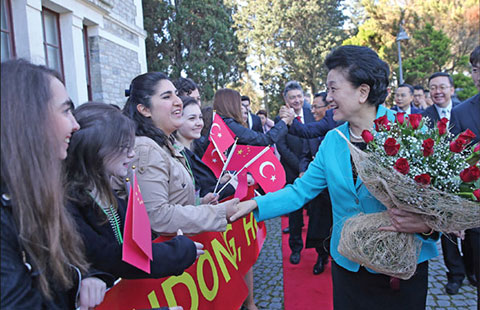
Serbia takes initiative to future ambitions


The Balkan country sees China's 'new Silk Road' as a means of achieving growth via greater involvement in its home region and across the globe.
Editor's Note: This is the sixth in a series of reports focusing on the development of the Belt and Road Initiative, China's proposed extensive trading route linking Asia, Europe and Africa.With a population of 7 million, roughly the same as a number of Chinese cities, Serbia will enjoy rapid economic growth, climbing from last year's 2.8 percent to 3.5 percent in 2019, according to the World Bank.
The bank's latest updates suggest the Balkan country's prospects are even rosier than those of the European Union economies, which will average about 2 percent a year.
The promising outlook is partly a result of the country's plan to become a regional transportation hub, which has seen Serbia deepen investment in roads, rails, the expansion of urban infrastructure and even construction of high-tech business parks-similar to the growth engines used in a number of cities in China.
Chinese investors have contributed to the rising level of investment.
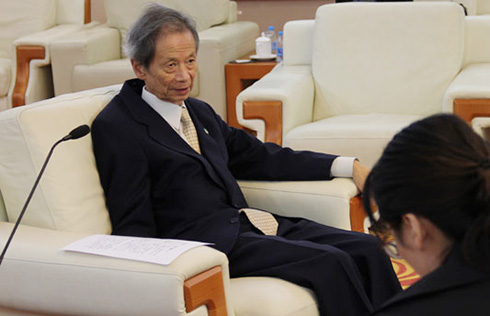
"The scale of China's investment in ongoing projects and in the pipeline totals about $10 billion," Li Manchang, China's ambassador to Serbia, said in an exclusive interview with China Daily in Belgrade, the capital.
Li said the developments are mainly the result of the Serbian leadership's recognition of the significance of the Belt and Road Initiative. The two sides signed a memorandum of cooperation in 2015.
Citing Serbia's President Tomislav Nikolic and Prime Minister Aleksandar Vucic, who is also president-elect, Li said they have repeatedly emphasized that the initiative, proposed by President Xi Jinping in 2013, will help the world economy emerge from stagnation after the 2008 global financial crisis.
"So, Serbia's top leaders urged their country to grasp the opportunity to find synergies with the initiative," he said.
Ivica Dacic, Serbia's first deputy prime minister and foreign minister, confirmed that Vucic will head the country's delegation at the Belt and Road Initiative Forum for International Cooperation, which will be held in Beijing next month.
"This speaks volumes about the importance Serbia attaches to this significant initiative of global character," he said.
Nikolic paid a state visit to China earlier this year, following President Xi's visit to the Balkan country in June. He also attended a ceremony in Beijing in 2015 to commemorate the 70th anniversary of the end of World War II and the War of Resistance against Japanese Aggression (1937-45).
Dacic is looking forward to the start of direct flights between Serbia and China, which are under discussion, while special prominence has been given to the construction of a high-speed rail link between Belgrade and Budapest, the Hungarian capital, which will form a pioneering transportation network along the land-sea link between China and Europe.
"This is an opportunity for regional development, the greater sale of goods and the flow of goods and people," he said.
He added that Serbia aspires to have the closest possible connections with the world: "In that context, we want to see even stronger cooperation momentum with China in infrastructure investment to make Serbia the regional transportation hub."
In response, Li referred to several "firsts" in bilateral cooperation. He noted that the first bridge built by the Chinese in Europe is located on the Serbian stretch of the River Danube, and the high-speed railway linking Belgrade and Budapest will be the first on the continent to be built by the Chinese. The project is expected to be started within the year, once the European Commission completes supervision of loan agreements. Moreover, Serbia was the first country to grant Chinese passport holders visa-free entry for stays of up to 30 days.
According to Li, Chinese companies are building highways and electricity generation plants in Serbia, and Chinese investors have already signed a contract with Belgrade's municipal government for construction of a ring road in the city.
Chinese companies are also working to improve Belgrade's wastewater treatment facilities and heating network. Meanwhile, a number of Chinese businesses are vying to win a contract to construct an electricity generation project, which has total investment of $900 million.
China will also help to construct an industrial park covering 300 hectares in its first phase, Li said, adding that having signed the memorandum of cooperation, both sides are hoping to sign an agreement by the end of the year to pave the way for ground to be broken next year.
"Some other Balkan countries have shown 'envy' towards Serbia, which has taken the opportunity of enhancing cooperation with China," he said. "I think Serbia has taken the lead in that regard, and other European countries may follow suit."
According to Branislav Djordjevic, director of the Institute of International Politics and Economics in Belgrade, given the political and economic situation in the Balkans, it is easy to see how important participation in the Belt and the Road Initiative is, not only for Serbia but for all countries in the region.
He said the institute has long been interested in China, but interest really surged after the conclusion of a strategic partnership between the two countries in 2009. Now, great attention is being focused on the Belt and Road Initiative, which consists of the Silk Road Economic Belt and the 21st-Century Maritime Silk Road.
"It is an old truth that prosperity brings peace and stability," he said, adding that the initiative has helped Serbia become more qualified as an EU member. "Since many countries are looking for EU membership, it would be easier for them to be absorbed as economically and politically stable entities. With certain necessary adjustments, combined with the synergies of the Belt and Road Initiative, Serbia could be an engine of progress."
Radosav Pusic, dean of the Confucius Institute in Belgrade, was in full agreement with that view. He said Serbia is a small Balkan country and at critical moments in history, it has been a hostage to fortune.
"When great powers play games, small countries suffer. Belgrade has been destroyed more than 40 times, and we even suffered wars in the 1990s," he said.
The country's economy stagnated for several years after NATO's military action against Serbia ended in the late 1990s, and the 2008 global financial crisis made things even harder. Those difficulties resulted in many young people leaving the country.
Pusic said this is a "historic moment" for Serbia because the country's economic and investment activities with China have become more frequent than ever, thanks to the cooperation framework for the Belt and Road Initiative.
"This is the result of a firmer political and strategic partnership between the countries, which has laid solid foundations for other encounters," said Pusic, a renowned scholar who has written or translated 30 books about classic Chinese literature, poetry and philosophy. He is currently writing a book about the history of ancient Chinese philosophy.
"Against this background, many people in Serbia have shown an interest in the Belt and Road Initiative," he said. "But if it had been raised 10 years ago, recognition would not have been that easy."
Greater efforts will be required, especially on the cultural and publicity fronts, he said.
"The initiative is a concept with tremendous significance, and it offers another perspective to learn more about China. I will do more to help Serbians understand China's traditional culture."
Zheng Jinqiang in Brussels contributed to this story
Contact the writer at fujing@chinadaily.com.cn