Chefs in China take a deep whiff of dairy


 |
|
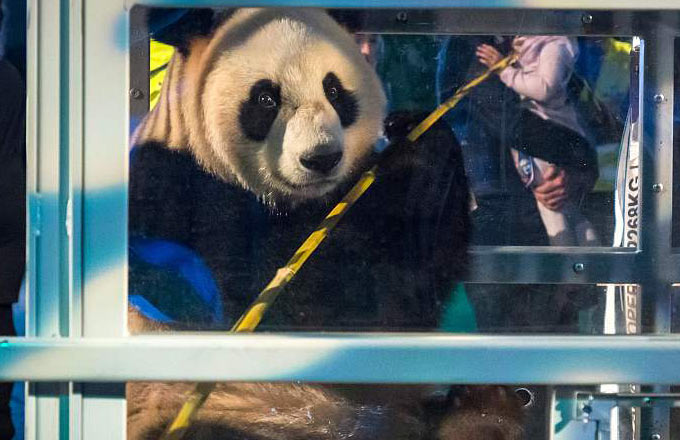
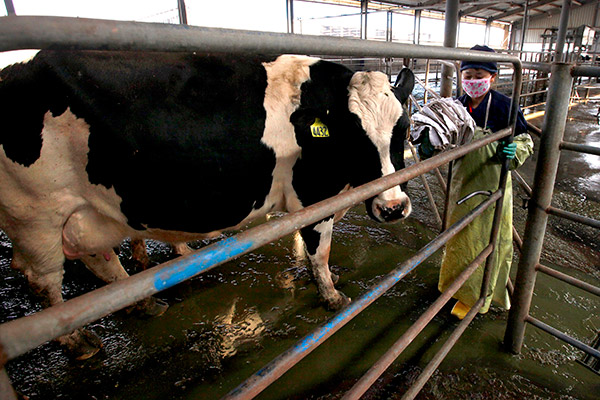
A worker closes a gate after cleaning a cow with towels, in the run-up to milking it, at a dairy farm managed by New Zealand's Fonterra Cooperative Group in Hangu county, east of Beijing. Fonterra is training chefs in China on how to use dairy products. [Photo/Agencies] |
SHANGHAI-In an industrial kitchen in a leafy, residential suburb of central Shanghai, a quiet culinary evolution is taking place.
Beside shelves stacked with butter mounds the size of bread loaves and 11 pound (5 kilogram) cheese wheels, chefs are experimenting with exotic ingredients that their New Zealand supplier, Fonterra Cooperative Group Ltd, wants to become ubiquitous in China: dairy.
While commonplace in Western diets, cream, cheese and butter are seldom used in commercial Chinese kitchens. Dairy exporters are working to change that.
Dutch dairy cooperative Royal FrieslandCampina NV opened a training kitchen in Shanghai in January, joining Fonterra in teaching Chinese cooks how to use milk-based products and incorporate them into popular dishes.
In Hong Kong, where people prefer cheese-baked rice and butter pineapple buns, dairy accounts for about 5 percent of the ingredients used in catering, according to FrieslandCampina. Matching that would create a $7.5 billion-a-year market in China.
"We can see the rise of the middle class and the openness and adjustment to Western foods," said Batthew Pang, FrieslandCampina's vice-president of food service in China. "We haven't had this scale of potential growth in food service anywhere else."
At $150 billion a year, China's food service industry is the largest in the world after the United States and Japan, and Western-style cuisine is growing in popularity, said Sally Peng, senior account manager with research firm NPD Group in Shanghai.
Fonterra, the world's biggest dairy exporter, began training Chinese chefs in 2015 and now hosts workshops in Shanghai, Beijing, Guangzhou and Chengdu for customers, which include the local chains of Holiland bakery and Champion pizza.
On a recent visit to Fonterra's Shanghai kitchen, a food technician was comparing and contrasting the stretchiness of different lines of mozzarella on baked pizza, while another was slathering whipped cream onto a cake to evaluate its composure over time. The aim, the company says, is to help chefs become more confident working with dairy ingredients and, ultimately, to use them more.
Fonterra sold the equivalent of 271 million liters (72 million gallons) of milk in consumer and food service products to China in the quarter ended Oct 31, a 36 percent increase from a year earlier. The gross margin in China across both categories increased to 39 percent from 32 percent, the company said in November.
"A new generation on Chinese mainland has become more admiring of, or adapted to, Western culture, especially in eating," FrieslandCampina's Pang said.
Studies have shown that a high proportion of Chinese people are unable to absorb lactose, the main carbohydrate in milk, causing them to develop bloating, flatulence, cramps and nausea. Intolerance to lactose though is becoming less of a problem as more people are exposed to milk products from a younger age, Pang said.
Even still, the Chinese population won't consume dairy on a per-capita basis to the extent that Americans do, said Jack Chuang, a partner for Greater China with OC&C Strategy Consultants.
"You would rarely see Chinese adults drinking milk," Chuang said. "Alternative dairy products like nut milks, which are now getting popular in the US, have always been a staple in China."
Still, China's food service industry is proving a worthwhile target for dairy companies. Fonterra's sales to caterers and restaurants there are increasing more than 10 percent a year, said Christina Zhu, Fonterrra's managing director in China. Sales of mozzarella cheese surged 66 percent last year.
China now accounts for a quarter of the company's food service business, a share that will expand as the company targets NZ$5 billion ($3.5 billion) in global revenue from that segment by 2023, said Zhu.
It's a lower-value business, with a profit margin 20-to-50 percent, less than selling branded dairy products to consumers via supermarkets and retail stores, according to FrieslandCampina's Pang.
BLOOMBERG